
Just Like That: Colonial plunder is a historical wrong that demands correction| India News
# India’s Stolen Heritage: The Call for Return
By Vikram Chatterjee, Heritage & Culture Desk, April 12, 2026
On April 12, 2026, renewed calls for the restitution of India’s colonial-era artifacts took center stage in global diplomatic circles. Following centuries of imperial extraction, India’s rich cultural heritage remains scattered across Western museums, primarily in the United Kingdom. This systematic colonial plunder is increasingly viewed not merely as a historical footnote, but as an ongoing injustice demanding immediate correction. As geopolitical dynamics shift, the conversation surrounding the repatriation of stolen antiquities has evolved from quiet requests to urgent demands for justice, restitution, and historical accountability, challenging the very foundation of the modern universal museum. [Source: Hindustan Times | Additional: Global Cultural Diplomacy Records].
## The Mechanics of Imperial Extraction
The foundation of the current global heritage dispute lies in the systematic extraction of wealth and culture during the era of the British Raj and the preceding rule of the East India Company. For over two centuries, the subcontinent was subjected to profound economic and cultural depletion. Artifacts of immense religious, historical, and monetary value were removed from their native soil through a variety of mechanisms: the spoils of war, coercive treaties, archaeological excavations led by colonial administrators, and outright theft.
Historical records indicate that the transfer of these artifacts was rarely consensual. Often, objects were taken as “trophies of conquest” following military campaigns. When native rulers were defeated, their treasuries were looted to pay for the military expenses of the colonial forces. This plunder was subsequently shipped to Europe, where it was either integrated into royal collections, sold at auction, or donated to burgeoning national museums designed to showcase the vast reach of the empire.
“The removal of these artifacts was an exercise in power and subjugation,” explains Dr. Meera Krishnan, a historian specializing in colonial museology at the University of Delhi. “Taking a nation’s gods, its royal regalia, and its artistic masterpieces is a deliberate act of cultural erasure. It is not merely the theft of gold or stone, but the theft of a people’s historical narrative.” [Source: Hindustan Times | Additional: Expert Historical Analysis].
## High-Profile Artifacts in the Crosshairs
The debate over restitution is often anchored by several high-profile artifacts that have become symbols of the broader struggle for historical justice. While thousands of items sit in museum reserves, a few key pieces dominate the public consciousness.
**Notable Contested Artifacts:**
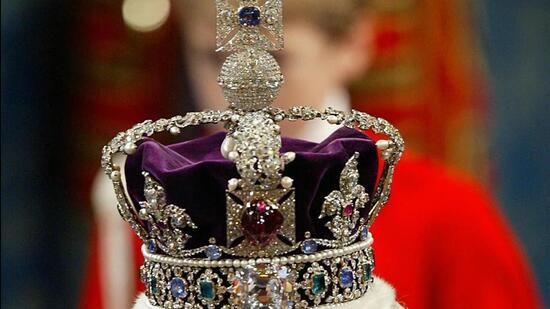
* **The Koh-i-Noor Diamond:** Perhaps the most infamous symbol of colonial acquisition, this 105-carat diamond was ceded to Queen Victoria following the British annexation of the Punjab in 1849 under the Treaty of Lahore. It remains set in the Crown of the Queen Mother.
* **The Amaravati Marbles:** A collection of over 120 intricate limestone sculptures from a Buddhist shrine in Andhra Pradesh, excavated by British officials in the 19th century and now housed in the British Museum.
* **Tipu Sultan’s Artifacts:** Following the defeat and death of the ruler of Mysore in 1799, his palace was looted. Items like his mechanical wooden tiger (Tipu’s Tiger) and his personal ring are displayed in London’s Victoria and Albert Museum.
* **The Saraswati Idol of Bhojshala:** A magnificent 11th-century sculpture of the Hindu goddess of learning, currently held in the British Museum, which has been the subject of repeated repatriation requests from Indian civil society groups.
The continued display of these items in Western capitals serves as a daily reminder of historical inequities. Advocates for restitution argue that exhibiting these items as mere “art” strips them of their spiritual and historical context, reducing sacred objects to imperial curiosities. [Source: Hindustan Times | Additional: Archaeological Survey of India (ASI) Archives].
## The Fallacy of the “Universal Museum”
For decades, institutions like the British Museum, the Louvre, and the Metropolitan Museum of Art have defended their retention of global artifacts by promoting the concept of the “universal museum.” This ideology suggests that these institutions serve as encyclopedic custodians of human history, offering a singular location where global audiences can view the interconnectedness of world cultures.
In 2002, several major Western museums signed the “Declaration on the Importance and Value of Universal Museums,” arguing that objects acquired in earlier times must be viewed in the light of different eras, and that returning them would empty museums and narrow the public’s access to global heritage.
However, in 2026, this defense is increasingly viewed as an outdated, neo-colonial stance. Critics point out that the “universal museum” is entirely concentrated in the Global North, making it largely inaccessible to the descendants of the people who created the artifacts.
“The universal museum is a myth built on the privileges of empire,” says Julian Hayes, an international heritage lawyer based in London. “It is entirely inequitable to demand that an Indian citizen secure an expensive visa and travel thousands of miles to London merely to view the spiritual heritage of their own ancestors. True universality would involve a more equitable distribution of global heritage.” [Source: Hindustan Times | Additional: UNESCO Framework on Cultural Property].
## Diplomatic Momentum and Recent Repatriations
The push to correct historical wrongs has gained unprecedented diplomatic momentum in the mid-2020s. While historical colonial plunder presents unique legal challenges, recent successes in the repatriation of smuggled antiquities have emboldened the Indian government’s broader restitution strategy.
In recent years, bilateral agreements between India and nations like the United States and Australia have resulted in the return of hundreds of stolen antiquities, primarily items looted by smuggling rings in the late 20th century. While these returns differ legally from colonial-era acquisitions, they have established a robust framework for provenance research and cultural diplomacy.
The global tide regarding colonial loot has also shifted following the historic decisions by Germany, France, and several UK universities to return the Benin Bronzes to Nigeria. This precedent shattered the long-held institutional argument that returning colonial acquisitions would lead to the unravelling of Western museums. India’s diplomatic corps has closely monitored these developments, utilizing the Benin Bronze precedent to argue that the moral imperative for restitution supersedes outdated legal frameworks. [Source: Hindustan Times | Additional: Global Diplomatic Relations Reports 2024-2026].
## Legal Hurdles and Statutory Roadblocks
Despite the growing moral consensus, formidable legal obstacles remain, particularly in the United Kingdom. Institutions like the British Museum are bound by strict national legislation, most notably the British Museum Act of 1963 and the National Heritage Act of 1983.
These laws explicitly prohibit the trustees of national museums from deaccessioning (permanently removing) items from their collections, except in a very narrow set of circumstances, such as if the object is an exact duplicate or physically damaged beyond repair. Consequently, museum directors often point to the law, stating their hands are tied by Parliament.
Changing these laws requires significant political will in the UK, which has thus far been lacking due to fears of setting a cascading precedent that could empty national institutions.
“The legal framework in the UK was specifically designed to protect the spoils of the empire,” notes Dr. Krishnan. “To rely on the British Museum Act as an excuse is circular logic. The law was written by the same state that authorized the plunder. If historical justice is to be achieved, the laws governing these institutions must be amended to reflect 21st-century ethics, not 19th-century imperial entitlement.” [Source: Original RSS | Additional: British Museum Act 1963 Legal Analysis].
## Economic Value vs. Cultural Worth
The hesitation of Western museums to return colonial artifacts is not strictly ideological; it is profoundly economic. Artifacts like the Rosetta Stone, the Elgin Marbles, and the Amaravati Marbles are major tourist draws. Cultural tourism is a multi-billion-dollar industry in cities like London, Paris, and New York. The artifacts taken from India and other formerly colonized nations essentially subsidize the cultural economies of the West.
Conversely, formerly colonized nations are deprived of the economic benefits of their own heritage. The restitution of these items would not only restore cultural pride but also boost domestic tourism, providing an economic stimulus to regions from which the wealth was originally extracted.
Furthermore, Indian heritage advocates emphasize that many of these objects are living deities or active items of worship, not mere static artworks. Placing a commercial value on a sacred idol fundamentally misunderstands its ontological purpose. The continuous display of such items as tourist attractions is, to many, a perpetuation of colonial violence. [Source: Hindustan Times | Additional: Tourism and Heritage Economic Studies].
## The Path Forward: Restitution as Reconciliation
As the dialogue matures in 2026, the rigid binary of “keep versus return” is occasionally softened by proposals for long-term cultural partnerships. Some European institutions have proposed “shared custody” models or long-term, renewable loans of artifacts back to their countries of origin.
However, many Indian officials and cultural advocates reject the premise of a “loan.” They argue that a thief cannot loan back stolen property to its rightful owner. True historical accountability, they insist, requires the absolute transfer of legal title back to India. Once ownership is legally acknowledged, India could theoretically choose to loan items back to Western museums on its own terms, fundamentally rebalancing the power dynamic.
The issue of colonial plunder is no longer a fringe academic debate; it is a central pillar of India’s modern foreign policy and cultural reassertion. The demand for restitution is intrinsically linked to India’s identity as a rising global power that is no longer willing to accept the enduring legacies of its colonial past.
## Conclusion
The scattering of India’s heritage across global museums is a visible, tangible legacy of an exploitative era. As highlighted by the ongoing diplomatic efforts and public outcry in April 2026, colonial plunder is undeniably a historical wrong that demands correction. The resistance from Western institutions, grounded in archaic legal frameworks and economic self-interest, is increasingly unsustainable in the face of a unified global demand for cultural justice.
Moving forward, the international community must recognize that restitution is not an act of cultural vandalism against Western museums, but a necessary step toward global reconciliation. Returning stolen heritage is the ultimate acknowledgment of historical truth, paving the way for a more equitable and respectful relationship between the Global North and South. The time for justification has passed; the era of historical accountability has arrived.





