
Elections 2026 live updates: 'TVK is BJP’s B-team,’ says DMK candidate ahead of Tamil Nadu polls| India News
# TN Polls: DMK Calls TVK BJP’s B-Team
**By Staff Reporter, Election Desk, April 12, 2026**
On April 12, 2026, the rhetoric surrounding the Tamil Nadu Assembly elections escalated sharply as a prominent Dravida Munnetra Kazhagam (DMK) candidate publicly branded actor-turned-politician Vijay’s newly formed Tamilaga Vettri Kazhagam (TVK) as the Bharatiya Janata Party’s (BJP) “B-team.” With Tamil Nadu preparing to cast its ballots on April 23, the state’s political climate is reaching a fever pitch. This regional clash constitutes a pivotal chapter in the broader 2026 Assembly elections. Assam, Kerala, and Puducherry have already concluded their voting phases on April 9, while West Bengal voters will head to the polls on April 29. Across the nation, political analysts and citizens alike are looking toward the May 4 counting day, which will decide the fate of these five crucial regions. [Source: Hindustan Times | Additional: Election Commission of India Schedule]
## High Stakes in Tamil Nadu: The “B-Team” Allegation
The DMK’s accusation against the TVK highlights the intense strategic anxieties underlying the 2026 Tamil Nadu Assembly elections. For decades, the political landscape of the southern state has been dominated by two Dravidian behemoths: the ruling DMK and the opposition All India Anna Dravida Munnetra Kazhagam (AIADMK). However, the entry of Tamil cinema superstar Vijay into the electoral arena has disrupted traditional vote-bank calculations.
During a campaign rally in Chennai on Sunday, a senior DMK candidate aimed directly at TVK, suggesting that the new party’s primary function is to fracture the anti-BJP and secular vote share. “They claim to offer an alternative, but their silence on core federal issues and selective criticism reveals their true nature. TVK is nothing but the BJP’s B-team, deployed to divide the Dravidian vote,” the candidate asserted.
This line of attack is not entirely new in Indian politics. Dominant parties frequently accuse emerging third-front challengers of acting as proxies for their primary rivals. The DMK’s strategy appears twofold: to consolidate its traditional voter base by framing the election as a direct ideological battle between Dravidian principles and the BJP’s nationalistic push, and to dissuade undecided voters from treating the TVK as a viable independent alternative.
## TVK’s Electoral Debut and Ideological Pitch
Actor Vijay formally launched the Tamilaga Vettri Kazhagam with the explicit goal of contesting the 2026 elections, stepping back from his highly lucrative film career to focus full-time on grassroots organizing. Responding to the DMK’s allegations, TVK spokespersons have vehemently denied any covert alliances with the BJP or any other national entity.
“The ruling party is visibly rattled by the overwhelming support our leader is receiving from the youth, women, and marginalized communities,” stated a TVK central committee member. “We are nobody’s B-team. We are the A-team for the people of Tamil Nadu, fighting against deep-rooted corruption and administrative stagnation.”
TVK’s platform has attempted to walk a tightrope, distancing itself from both the BJP’s Hindutva ideology and the DMK’s established political machinery. Vijay has campaigned heavily on a promise of clean governance, enhanced educational infrastructure, and equitable economic development. By adopting a stance that respects traditional Tamil identity while appealing to modern democratic aspirations, TVK is hoping to attract first-time voters and those disillusioned with the bi-polar Dravidian hegemony.
Dr. S. Rajendran, a Chennai-based political sociologist, notes the historical context: “Tamil Nadu has a long tradition of cinematic icons transitioning into successful political leaders—from M.G. Ramachandran to J. Jayalalithaa. However, the electorate has also become more discerning. For Vijay, drawing crowds is one thing; translating fan loyalty into a structured electoral mechanism capable of bypassing the DMK and AIADMK’s massive cadre networks is the ultimate test.” [Source: Independent Political Analysis]
## The BJP’s Ambitions and the AIADMK Factor
The Bharatiya Janata Party, under the aggressive state-level leadership it has cultivated over the past few years, views 2026 as a landmark opportunity. Having severed its formal alliance with the AIADMK prior to these elections, the BJP is contesting independently (alongside smaller regional allies), aiming to establish itself as the principal opposition in the state.
The BJP’s campaign has heavily targeted the ruling DMK over allegations of dynastic politics, corruption, and law-and-order issues. Concurrently, they are attempting to project Prime Minister Narendra Modi’s central welfare schemes as an alternative to the state’s socio-economic model. The DMK’s branding of TVK as a BJP proxy is partly designed to tie Vijay to the BJP’s perceived vulnerabilities in the state, particularly regarding controversies over language policy and federal overreach.
Meanwhile, the AIADMK, led by Edappadi K. Palaniswami, is fighting to reclaim its absolute dominance over the anti-DMK space. The party has focused its campaign heavily on its legacy of effective state administration and robust infrastructure development, urging voters not to fragment the opposition vote. The emergence of a four-cornered contest—involving the DMK-led alliance, the AIADMK, the BJP front, and the TVK—has made the political calculus in key constituencies exceptionally complex.
## Broader Picture: Multi-State Elections 2026
While Tamil Nadu braces for its April 23 voting day, the electoral machinery is churning across four other vital regions, as highlighted in recent live updates.
**Assam, Kerala, and Puducherry (Voted April 9):**
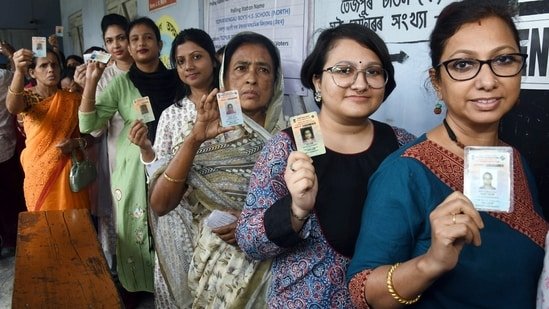
* **Assam:** The northeastern state saw a high voter turnout as the incumbent BJP-led government faced off against a rejuvenated Congress-led opposition block. Key issues included localized infrastructural developments, tribal welfare, and debates surrounding citizenship protocols.
* **Kerala:** True to its cyclical political history, Kerala witnessed a fierce battle between the ruling Left Democratic Front (LDF) and the opposition United Democratic Front (UDF), with the BJP striving to increase its vote share and secure pivotal assembly seats.
* **Puducherry:** The Union Territory’s election featured a direct confrontation between the ruling AINRC-BJP coalition and the Congress-DMK alliance, with local governance and statehood demands taking center stage.
**West Bengal (Voting April 29):**
Following Tamil Nadu, all national attention will pivot to West Bengal. The Trinamool Congress (TMC), led by Mamata Banerjee, is seeking to defend its bastion against a highly organized and sustained offensive from the BJP, alongside challenges from the Left-Congress alliance. The socio-political dynamics in Bengal remain highly polarized, driven by debates on welfare delivery, internal security, and regional identity.
## Key Issues Driving the 2026 Electorate
As India navigates the midpoint of the decade, several macroeconomic and localized themes are dictating voter behavior across these five distinct regions.
1. **Welfare Economics and Cash Transfers:** In states like Tamil Nadu and West Bengal, massive state-sponsored welfare programs, particularly direct cash transfers to women, have become cornerstones of incumbency defense. Evaluating the fiscal sustainability of these schemes versus their undeniable socio-economic benefits remains a primary debate point among think tanks and voters alike.
2. **Unemployment and Youth Aspirations:** With demographic dividends peaking, the demand for white-collar and manufacturing jobs is acute. TVK’s aggressive outreach to the youth in Tamil Nadu capitalizes directly on localized anxieties regarding employment generation.
3. **Federalism and State Autonomy:** Ruling regional parties (DMK in TN, TMC in Bengal, LDF in Kerala) have uniformly campaigned on platforms defending state autonomy against perceived centralization of financial resources and administrative powers by the Union Government.
“The 2026 assembly elections are serving as a crucial barometer for the structural integrity of regional parties,” explains Dr. Meenakshi Iyer, an election analyst specializing in peninsular politics. “Whether it is Stalin in Tamil Nadu or Pinarayi Vijayan in Kerala, regional satraps are testing the endurance of localized welfarism against national narratives. The introduction of populist disruptors like Vijay adds a volatile X-factor to an already complex equation.” [Source: Academic Commentary, 2026]
## Conclusion: A Waiting Game Until May 4
As the clock ticks down to the April 23 polling date in Tamil Nadu, the rhetorical skirmishes will inevitably intensify. The DMK’s characterization of TVK as the BJP’s “B-team” serves as a strategic maneuver to prevent anti-incumbency consolidation away from their primary rival, the AIADMK, while simultaneously attempting to discredit the BJP’s broader ideological push in the state.
For the voters of Tamil Nadu, the choice presents a unique intersection of legacy politics, emerging cinematic populism, and national integrations. Once West Bengal wraps up the final phase of this massive democratic exercise on April 29, a tense silence will fall over the political landscape.
The final verdicts for Assam, Kerala, Puducherry, Tamil Nadu, and West Bengal will be unsealed on the **May 4 counting day**. Until then, the intricate dance of allegations, alliances, and grassroots campaigning will continue to dominate the news cycle, charting the future course of regional dynamics in the world’s largest democracy.





