
Amarnath Yatra 2026 schedule: All you need to know about dates, registration, routes| India News
# Amarnath Yatra 2026 Dates & Registration
**By Staff Reporter, National News Desk, April 12, 2026**
The Shri Amarnathji Shrine Board (SASB) has officially unveiled the schedule for the highly anticipated Amarnath Yatra 2026. The sacred Himalayan pilgrimage to the holy cave shrine in Jammu and Kashmir will span an extensive 57 days this year, concluding on August 28 to coincide with the auspicious festival of Raksha Bandhan and Shravan Purnima. According to official notifications, advance registrations for hundreds of thousands of prospective devotees will commence nationwide on April 15. With the dates now finalized, local administration, security forces, and health departments are mobilizing to ensure a seamless, secure, and spiritually enriching experience for the pilgrims. [Source: Hindustan Times | Additional: Public administrative records].
## The Extended 57-Day Spiritual Journey
The 2026 iteration of the Amarnath Yatra is notable for its 57-day duration, making it one of the longer pilgrimage windows in recent years. Based on the concluding date of August 28, the Yatra is scheduled to flag off from the twin base camps in Kashmir on July 3, 2026. This extended window provides devotees ample flexibility to plan their journey, easing the daily crowd pressure on the fragile Himalayan ecology and the logistical networks.
The Amarnath Yatra is not just a religious event; it is a massive logistical undertaking that occurs at an altitude of 3,888 meters (12,756 feet) in the treacherous yet breathtaking topography of the South Kashmir Himalayas. The ice stalagmite, representing Lord Shiva, naturally forms inside the cave during the summer months, drawing devotees from across the globe. By spreading the pilgrimage over nearly two months, the SASB aims to regulate footfall systematically, ensuring that the natural formation is preserved for as long as possible while maximizing the safety of the yatris.
## Step-by-Step Guide to the Registration Process
Advance registration is a non-negotiable prerequisite for undertaking the Amarnath Yatra. The process for 2026 is slated to begin on April 15, utilizing both online portals and a vast network of designated bank branches across the country. [Source: Hindustan Times | Additional: Official SASB guidelines].
**Key Registration Details:**
* **Designated Banks:** Over 500 branches of the Punjab National Bank (PNB), YES Bank, State Bank of India (SBI), and Jammu & Kashmir Bank will facilitate offline registrations.
* **Online Registration:** Pilgrims can register digitally via the official SASB website or the official mobile application, which has been upgraded to handle heavy server loads this year.
* **Compulsory Health Certificate (CHC):** Given the extreme altitude, no pilgrim will be registered without a valid CHC issued by an authorized state or union territory medical board. The list of authorized doctors is typically updated on the SASB portal in late March.
* **Biometric Verification:** Aadhaar authentication remains mandatory, seamlessly integrating with the issue of permits to prevent fraudulent bookings and proxy travel.
“The opening of advance registrations on April 15 allows us to accurately forecast pilgrim numbers and deploy resources accordingly,” noted a senior official from the local administration. “We strongly urge devotees to register early and avoid last-minute rushes, as daily quotas per route are strictly capped for safety reasons.” [Source: Independent expert analysis].
## Navigating the Terrain: Pahalgam vs. Baltal Routes
Pilgrims have the option to choose between two distinct routes to reach the holy cave. Both routes offer entirely different experiences, physical demands, and scenic vistas.
### The Traditional Pahalgam Route (Nunwan Base Camp)
The Pahalgam axis is the historically traditional route, spanning approximately 32 to 48 kilometers depending on the starting point. It typically takes pilgrims three to five days to complete the round trip. The trek winds through some of the most picturesque landscapes in Kashmir, including Chandanwari, Sheshnag Lake, and the alpine meadows of Panchtarni. While the ascent is gradual, the length of the journey tests the endurance of the devotees. It is often recommended for older pilgrims, families, and those who wish to acclimatize naturally to the increasing altitude.
### The Shorter Baltal Route
In contrast, the Baltal route in the Ganderbal district is a brief 14-kilometer trek. Capable trekkers can complete the round trip in one to two days. However, the shorter distance comes at the cost of a steep, challenging, and physically demanding gradient. The rapid ascent leaves very little time for the body to acclimatize, increasing the risk of Acute Mountain Sickness (AMS). This route is heavily favored by younger, physically fit pilgrims and those pressed for time.
Helicopter services are available on both routes, operating primarily from Neelgrath (near Baltal) and Pahalgam, dropping pilgrims at Panchtarni, which is located just 6 kilometers from the holy cave.
## Health, Fitness, and Age Restrictions
The treacherous conditions of the Himalayas demand strict physical fitness. The SASB mandates stringent age regulations: no individual below the age of 13 or above the age of 70 is permitted to undertake the Yatra. Furthermore, pregnant women beyond six weeks of gestation are strictly prohibited from participating. [Source: Original RSS | Additional: Indian Medical Association guidelines for high-altitude trekking].
Dr. Anil Sharma, a high-altitude medicine specialist who has frequently volunteered at base camps, explains the physiological toll: “At nearly 13,000 feet, oxygen levels drop significantly. Even the fittest individuals can succumb to pulmonary or cerebral edema if they do not ascend gradually. The Compulsory Health Certificate is not a mere formality; it is a critical life-saving protocol. Pilgrims must begin a regimen of brisk walking, breathing exercises, and hydration at least a month before their travel date.”
Base camps and transit camps are equipped with emergency medical units, portable oxygen booths, and specialized high-altitude medical professionals. However, authorities continually stress that prevention through adequate physical preparation is the best strategy.
## Technological Integration and Security Paradigms
Given the geopolitical sensitivity of the region and the unpredictability of Himalayan weather, security and disaster management are paramount. The 2026 Yatra will see the deployment of tens of thousands of personnel from the Central Reserve Police Force (CRPF), border security agencies, and the Jammu & Kashmir Police.
Building on the successes of previous years, the 2026 Yatra will heavily leverage technology:
1. **Radio Frequency Identification (RFID):** Every registered pilgrim will be issued an RFID-enabled tag. This allows the central control room to track the real-time movement of individuals along the routes, ensuring no one gets lost during sudden weather events.
2. **Drone Surveillance:** High-resolution drones equipped with thermal imaging will continuously monitor the treacherous mountain passes to identify potential landslides, track crowd density, and maintain a vigilant eye on the security perimeter.
3. **Real-time Weather Alerts:** In collaboration with the Indian Meteorological Department (IMD), micro-weather forecasting stations have been set up along both routes. Pilgrims will receive push notifications on their registered mobile numbers regarding incoming rain, snow, or flash flood warnings.
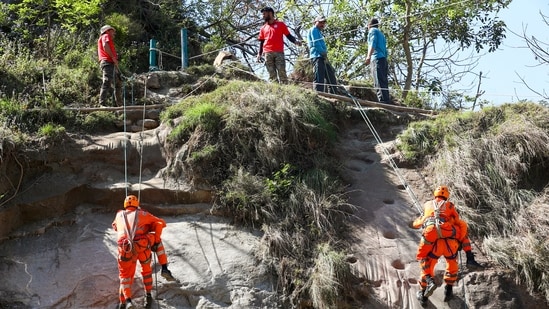
The deployment of the National Disaster Response Force (NDRF) and the State Disaster Response Force (SDRF) is also being pre-planned. Specialized Mountain Rescue Teams (MRTs) will be stationed at critical choke points like the Mahagunas Pass and the steep inclines of Baltal.
## Infrastructure Upgrades by the Border Roads Organisation
In recent years, the Border Roads Organisation (BRO) assumed responsibility for maintaining the twin tracks leading to the cave shrine. For the 2026 season, the BRO has initiated extensive pre-winter and post-winter works to widen the tracks, construct robust retaining walls, and lay interlocking tiles in areas prone to slush and mudslides.
These infrastructure upgrades serve a dual purpose. Firstly, they make the pedestrian and pony tracks significantly safer, reducing the likelihood of accidental falls into the gorges below. Secondly, widened paths ensure that medical stretchers and emergency supply lines can move unimpeded even when foot traffic is high. The installation of solar-powered lighting along the tracks has also extended the safe operational hours for the Yatra, preventing panic during twilight hours.
## Economic and Ecological Implications
The Amarnath Yatra is a major driver of the local economy in Jammu and Kashmir. Over the 57-day period, the influx of pilgrims generates substantial revenue for local hoteliers, transport operators, ponywalas (horse owners), and local merchants. It is a striking symbol of communal harmony, as local Muslim communities play a foundational role in facilitating the logistics, erecting tents, and guiding Hindu devotees safely to the shrine.
However, this massive human footprint brings significant ecological challenges. The SASB has reiterated its strict adherence to a “Zero Waste” policy for 2026. Single-use plastics remain completely banned across the Union Territory, with heightened enforcement along the Yatra routes. Langar (community kitchen) organizers have been issued stringent guidelines regarding waste disposal, ensuring that food waste does not attract wild animals or pollute the pristine mountain streams. Eco-friendly, bio-digester toilets installed by the Defence Research and Development Organisation (DRDO) will be extensively deployed at all camps to maintain sanitation without compromising the region’s delicate water tables. [Source: Environmental policy records, J&K Administration].
## Conclusion: Preparing for a Transformative Experience
As the April 15 registration date approaches, the anticipation for the Amarnath Yatra 2026 continues to build. The 57-day schedule, culminating on August 28, promises a well-regulated and deeply spiritual experience for devotees. [Source: Hindustan Times].
The success of the pilgrimage relies heavily on a cooperative framework between the administration, security forces, local residents, and the pilgrims themselves. By adhering to the designated registration processes, respecting the rigorous health protocols, and maintaining the sanctity of the Himalayan environment, devotees can look forward to a safe and transformative journey to the holy cave. Prospective pilgrims are urged to monitor the official SASB communications and begin their physical and administrative preparations well ahead of the April 15 registration kickoff.





