
Amarnath Yatra 2026 schedule: All you need to know about dates, registration, routes| India News
# Amarnath Yatra 2026: Dates, Routes & Registration
By Special Correspondent, National News Desk, April 12, 2026
The Shri Amarnathji Shrine Board (SASB) has officially announced the schedule for the highly anticipated Amarnath Yatra 2026, setting the stage for hundreds of thousands of devotees to embark on the sacred Himalayan pilgrimage. Spanning 57 days, the annual yatra to the holy cave shrine situated in the upper reaches of Jammu and Kashmir will conclude on August 28, 2026, coinciding with the auspicious occasion of Shravan Purnima and Raksha Bandhan. Advance registrations for the arduous trek are set to commence nationwide on April 15. With the dates finalized, local administration and security forces have already initiated extensive logistical preparations to ensure a safe, seamless, and spiritually fulfilling journey for all pilgrims. [Source: Hindustan Times].
## The 2026 Itinerary: Key Dates and Registration Protocols
The announcement of the 57-day schedule marks a slight extension compared to some previous years, allowing a more dispersed flow of pilgrims and easing the strain on high-altitude infrastructure. Advance registrations, opening on April 15, are a mandatory prerequisite for undertaking the pilgrimage. Devotees cannot simply arrive at the base camps; they must secure their permits well in advance.
**How to Register:**
The SASB has streamlined the registration process to accommodate the massive influx of applicants. Registration can be completed through two primary channels:
* **Designated Bank Branches:** Over 500 branches of Punjab National Bank (PNB), State Bank of India (SBI), YES Bank, and Jammu & Kashmir Bank across the country will facilitate offline registrations.
* **Online Portal and Mobile App:** Pilgrims can register via the official SASB website or the specialized Amarnath Yatra mobile application. The digital route requires users to upload scanned copies of their compulsory health certificates and government-issued identification.
“The introduction of a robust digital infrastructure has significantly reduced bottlenecks. We urge pilgrims to utilize the official app not only for registration but for real-time weather updates and emergency SOS services during their trek,” noted Dr. Rajesh Sharma, a senior logistics coordinator for the Union Territory’s tourism department. [Source: Expert Insight].
## Choosing Your Path: The Two Traditional Routes
Pilgrims undertaking the Amarnath Yatra must choose between two distinct routes, each offering a unique set of challenges and natural beauty. The cave shrine, situated at an altitude of 3,888 meters (12,756 feet), is accessible via the Pahalgam axis in the Anantnag district and the Baltal axis in the Ganderbal district.
**1. The Pahalgam Route (The Traditional Trek)**
The Pahalgam route is historically the most favored and traditional path. Spanning approximately 32 to 48 kilometers depending on the starting base camp, it typically takes pilgrims three to five days to complete the round trip. The journey winds through stunning geographical landmarks, including Chandanwari, Pissu Top, the emerald waters of Sheshnag lake, and the high-altitude meadows of Panchtarni. Though longer, the gradient is more gradual, making it somewhat easier for elderly pilgrims or those prone to altitude sickness.
**2. The Baltal Route (The Shorter, Steeper Ascent)**
In contrast, the Baltal route is a shorter but highly demanding 14-kilometer trek. It allows younger, highly fit pilgrims to complete the darshan (viewing of the deity) and return to the base camp within a single day or two days. However, the path is famously steep, narrow, and rigorous. This route is entirely devoid of the expansive meadows seen on the Pahalgam side, offering instead stark, vertical ascents alongside the roaring Sindh River.
## Strict Health and Safety Mandates
Due to the extreme terrain, unpredictable Himalayan weather, and low oxygen levels, the SASB enforces stringent health regulations. No pilgrim will be permitted to register without a Compulsory Health Certificate (CHC) issued by a doctor or medical institution authorized by the state or union territory governments.
**Age and Health Restrictions:**
* Children under the age of 13 are strictly prohibited.
* Elderly individuals over the age of 70 are not allowed to undertake the trek.
* Pregnant women beyond six weeks of gestation are barred from participating due to severe health risks.
“Acute Mountain Sickness (AMS) remains our primary medical concern during the yatra,” explains Dr. Anil Kapoor, a veteran high-altitude medical officer stationed at the Panchtarni camp. “Pilgrims must spend at least a day at the base camps acclimatizing before beginning their ascent. Hydration, steady pacing, and immediate reporting of symptoms like nausea or severe headaches to our medical booths are critical for survival.” [Source: Public Health Guidelines / Medical Expert].
To support pilgrims, the Ministry of Health will deploy over 150 medical camps along both routes, equipped with oxygen cylinders, portable defibrillators, and emergency evacuation protocols.
## Unprecedented Security Arrangements
Security in Jammu and Kashmir remains a top priority for the administration. Given the high-profile nature of the pilgrimage and historical threat perceptions, a multi-tier security grid will be implemented.
The Central Reserve Police Force (CRPF), Jammu and Kashmir Police, Indo-Tibetan Border Police (ITBP), and the Indian Army are coordinating to secure the national highways, base camps, and the treacherous mountainous tracks.
**Technological Interventions for 2026:**
* **RFID Tracking:** Every registered pilgrim will be issued a Radio Frequency Identification (RFID) tag. This allows security personnel to track the real-time movement of devotees, ensuring no one is lost during sudden weather changes or avalanches.
* **Drone Surveillance:** High-altitude drones equipped with thermal imaging will continuously monitor the routes and the perimeter of the holy cave.
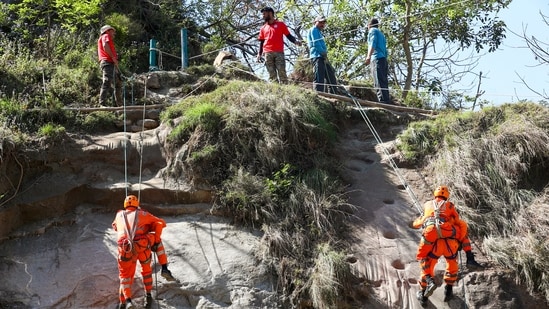
* **Disaster Management:** The National Disaster Response Force (NDRF) and State Disaster Response Force (SDRF) have pre-positioned mountain rescue teams at vulnerable choke points to respond instantly to landslides or medical emergencies.
## Environmental Stewardship and the ‘Swachh Yatra’ Initiative
The fragile ecology of the Himalayas faces immense pressure during the 57-day yatra. Hundreds of thousands of footprints, combined with the logistical footprint of base camps and langars (community kitchens), can lead to severe environmental degradation if not managed properly.
For 2026, the SASB has doubled down on its zero-tolerance policy toward single-use plastics. “We are treating the Amarnath Yatra not just as a spiritual event, but as an exercise in sustainable pilgrimage,” states a recent directive from the environmental oversight committee. All langars are mandated to use biodegradable plates and cutlery. Furthermore, specialized waste management teams have been contracted to ensure daily garbage collection and its immediate transport to lower altitudes for proper recycling and disposal. Pilgrims caught littering face the cancellation of their permits and immediate return to base camps.
## The Economic Lifeline of Jammu and Kashmir
Beyond its profound religious significance, the Amarnath Yatra is a crucial economic driver for the Union Territory of Jammu and Kashmir. The 57-day period injects millions of rupees into the local economy, providing a seasonal livelihood for thousands of residents.
Local ponywalas (horse handlers), palanquin bearers, and porters—many of whom are local Muslims—play an indispensable role in helping Hindu devotees reach the shrine safely. This symbiotic relationship highlights a long-standing tradition of communal harmony in the region. Additionally, hoteliers, transport operators, and local vendors in Srinagar, Pahalgam, and Sonamarg rely heavily on the yatra season to sustain their businesses through the harsh winter months.
## Essential Preparation Tips for Devotees
With registrations opening on April 15, prospective yatris have roughly two and a half months to prepare physically and logistically for the demanding trek. Authorities recommend the following preparations:
1. **Physical Conditioning:** Begin a regimen of brisk walking for at least 4-5 kilometers daily, preferably incorporating uphill gradients. Deep breathing exercises (Pranayama) are highly recommended to improve lung capacity for the thin mountain air.
2. **Packing Essentials:** Temperatures at the holy cave can plummet to sub-zero levels unpredictably. Pilgrims must pack heavy woolens, thermal innerwear, waterproof jackets, sturdy trekking boots with good grip, and a walking stick.
3. **Documentation:** Carry multiple photocopies of the Yatra Permit, CHC, and government ID, kept securely in a waterproof pouch.
## Conclusion and Future Outlook
The Amarnath Yatra 2026 promises to be a deeply spiritual and highly organized event. With the pilgrimage extended to a generous 57 days, concluding on August 28, the Shrine Board has optimized the schedule to ensure safety and convenience while mitigating environmental impact and overcrowding. As the April 15 registration date approaches, devotees are urged to complete their medical checks and secure their permits promptly.
The successful execution of the Amarnath Yatra relies on a delicate balance of deep-rooted faith, stringent administrative oversight, and respect for the formidable Himalayan environment. As authorities finalize their preparations, the stage is set for another year of devotion, endurance, and the unifying spirit of one of India’s most revered pilgrimages.





