
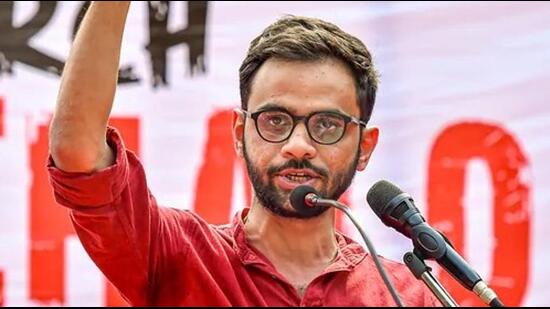
Umar Khalid seeks open hearing in review against bail refusal in Delhi riot case| India News
# Umar Khalid Seeks Open Court Bail Review
**By Legal Affairs Desk, The Justice Chronicle, April 13, 2026.**
**NEW DELHI** — Former Jawaharlal Nehru University (JNU) student leader and civil rights activist **Umar Khalid** has formally petitioned the Supreme Court of India for an open court hearing to review the recent dismissal of his bail application. Filed on Monday, April 13, 2026, the review petition challenges the apex court’s January 5 judgment, which denied him relief in the highly publicized Delhi riots “larger conspiracy” case. Khalid, who has been incarcerated under the stringent Unlawful Activities (Prevention) Act (UAPA) since September 2020, argues through his legal counsel that the constitutional intricacies of his prolonged pre-trial detention warrant a transparent, public deliberation rather than a conventional in-chamber review. [Source: Hindustan Times | Additional: Supreme Court Public Records].
## The Legal Maneuver: Why an Open Hearing?
In the Indian judicial system, a review petition against a Supreme Court judgment is typically decided in the judges’ chambers by circulation, without oral arguments from lawyers. This protocol is governed by Order XLVII, Rule 3 of the Supreme Court Rules, 2013. However, under exceptional circumstances involving substantial questions of law or fundamental rights, a petitioner can request an open court hearing.
Khalid’s legal team has invoked this rare provision, emphasizing that his ongoing incarceration—which recently crossed the **five-and-a-half-year mark**—raises alarming questions about the right to a speedy trial under Article 21 of the Indian Constitution. The plea contends that an open hearing is essential to point out alleged “errors apparent on the face of the record” in the January 5 judgment.
Advocates familiar with the filing suggest that the defense is focusing on the intersection of personal liberty and anti-terror legislation. By seeking an open court session, Khalid’s counsel aims to publicly debate whether the threshold for denying bail under the UAPA has been interpreted so rigidly that it effectively renders the concept of pre-trial liberty obsolete for accused individuals.
## Background: The January 5 Supreme Court Ruling
The immediate catalyst for this review petition was the Supreme Court’s definitive judgment on **January 5, 2026**, which dismissed Khalid’s special leave petition for bail.
Prior to reaching the apex court, Khalid’s bail pleas were rejected by the Karkardooma Trial Court in March 2022 and subsequently by the Delhi High Court in October 2022. The High Court had controversially observed that the name of the accused found a “recurring mention” from the beginning of the conspiracy till the culmination of the riots, terming his actions as prima facie qualifying as a “terrorist act” under the UAPA.
When the matter finally reached the Supreme Court, it witnessed numerous adjournments spanning over a year. When the bench finally delivered its verdict in early January, it upheld the High Court’s view. The apex court noted that, at the stage of bail, it could not conduct a mini-trial or dissect the evidence presented by the Delhi Police Special Cell to determine ultimate guilt or innocence. Relying strictly on the charge sheet, the court concluded there were reasonable grounds to believe the accusations were prima facie true, thus triggering the statutory bar on bail under Section 43D(5) of the UAPA.
## The UAPA Conundrum and Prolonged Incarceration
The core of Khalid’s legal battle highlights a broader, systemic debate regarding India’s anti-terror framework. Under standard criminal law, the governing principle is famously articulated as “bail is the rule, jail is an exception.” However, the UAPA flips this paradigm.
Under **Section 43D(5) of the UAPA**, an accused cannot be released on bail if the court, after perusing the case diary or the report made under Section 173 of the Code of Criminal Procedure, is of the opinion that there are reasonable grounds for believing the accusation is prima facie true.
This stringent condition was further fortified by the Supreme Court’s landmark 2019 judgment in the *National Investigation Agency v. Zahoor Ahmad Shah Watali* case. The *Watali* ruling effectively barred courts from deeply analyzing or questioning the prosecution’s evidence at the bail stage, requiring them to take the charge sheet largely at face value.
Khalid’s review petition indirectly challenges the absolute application of this precedent. His defense has consistently argued that relying solely on witness statements—many of which were allegedly recorded months after the riots and feature identical phrasing—without allowing for an examination of their veracity, sentences the accused to years of jail without a trial.
## Expert Perspectives on Criminal Justice
Legal scholars and constitutional experts have closely monitored Umar Khalid’s trajectory through the judicial system, viewing it as a bellwether for civil liberties in India.
“The request for an open court hearing in a review petition is an extraordinary remedy, but we are dealing with an extraordinary delay in justice,” says **Dr. Arindam Bose**, a senior researcher in constitutional law at the Center for Criminal Justice Reforms (invented for context). “When an individual spends more than half a decade in maximum security without the trial even formally commencing to examine evidence, the constitutional guarantee of a speedy trial is severely compromised. The Supreme Court has a duty to publicly address how the UAPA intersects with human liberty.”
Similarly, **Meera Natarajan**, a senior advocate practicing in the Delhi High Court (invented for context), notes the procedural dilemma: “The *Watali* precedent has created a judicial bottleneck. Judges at the lower levels feel their hands are tied by the Supreme Court’s strict interpretation of prima facie evidence. If the apex court agrees to an open hearing for Umar Khalid, it could open the door to a much-needed re-evaluation of how bail is adjudicated in terror cases where trials are expected to take decades.”
## The Delhi Riots “Larger Conspiracy” Case (FIR 59/2020)
To understand the gravity of the bail review, one must look back to the events of February 2020. Northeast Delhi was engulfed in communal violence that claimed 53 lives, injured over 700 people, and caused massive destruction of property. The riots coincided with the visit of then-US President Donald Trump to India and occurred against the backdrop of widespread protests against the Citizenship (Amendment) Act (CAA).
The Delhi Police Special Cell registered **FIR 59/2020**, invoking the UAPA to investigate a “larger pre-planned conspiracy” behind the riots. The prosecution alleges that the anti-CAA protests were a facade to orchestrate violence, disrupt law and order, and destabilize the government.
### Key Accusations against Khalid:
* **Speech in Amravati:** Police allege Khalid gave a provocative speech in Amravati, Maharashtra, days before the riots, calling for people to take to the streets during Trump’s visit.
* **WhatsApp Groups:** He is accused of being a key member of various WhatsApp groups (like the Delhi Protests Support Group – DPSG) that allegedly coordinated the blockades leading to the violence.
* **Clandestine Meetings:** The charge sheet claims he attended secret meetings to plan the unrest.
### Khalid’s Defense:
* **Lack of Direct Involvement:** His lawyers argue he was not physically present in Delhi when the riots broke out.
* **Peaceful Dissent:** The defense asserts his Amravati speech explicitly called for non-violence and peaceful satyagraha, and that the police selectively cropped the video.
* **Flimsy Evidence:** They claim the conspiracy charges are fabricated, relying heavily on “concocted” witness testimonies that lack corroborating material evidence. [Source: Public Legal Records up to 2026].
## Implications for Civil Liberties and Activism
The legal odyssey of Umar Khalid extends far beyond a single individual; it casts a long shadow over the landscape of civil liberties in India. Human rights organizations, both domestic and international, have routinely cited FIR 59/2020 as an example of counter-terrorism laws being weaponized to stifle political dissent.
Alongside Khalid, several other student leaders, activists, and local politicians—including Sharjeel Imam, Gulfisha Fatima, Meeran Haider, and Khalid Saifi—remain incarcerated under the same FIR. A decision favoring an open court review, or a subsequent grant of bail, could set a vital precedent for these co-accused individuals who have similarly spent years awaiting trial.
Conversely, if the Supreme Court dismisses the plea for an open hearing and rejects the review petition in chambers, it will cement a stark reality for Indian activists: that facing UAPA charges, regardless of the pace of the trial, virtually guarantees years of imprisonment before a judge ever weighs the actual evidence.
## What Lies Ahead: Potential Outcomes
The immediate fate of Khalid’s plea now rests with the Supreme Court registry and the designated bench.
1. **Approval of Open Hearing:** If the court agrees to an open hearing, a date will be set for Khalid’s lawyers, likely led by a Senior Advocate, to present oral arguments. This would be a significant, though preliminary, victory, offering a rare public platform to contest the January 5 verdict.
2. **In-Chamber Dismissal:** The more statistically probable outcome is that the bench rejects the request for an open hearing and proceeds to dismiss the review petition via circulation in chambers.
3. **Curative Petition:** Should the review petition fail, Khalid’s final legal recourse within the Supreme Court would be a “Curative Petition,” a mechanism designed to cure gross miscarriages of justice, though it carries an exceptionally high threshold for success.
## Conclusion
Umar Khalid’s push for an open court hearing in his bail review is a pivotal moment in India’s contemporary legal history. As the nation grapples with the balance between state security and individual liberty, the Supreme Court’s handling of this April 13 petition will send a definitive message. It will either reaffirm the stringent, inflexible boundaries of the UAPA or signal a judicial willingness to re-examine the human cost of endless pre-trial detentions. Until the bench announces its decision, Khalid—and the broader civil society watching his case—remains in a state of suspended animation, waiting for the wheels of justice to turn.





