
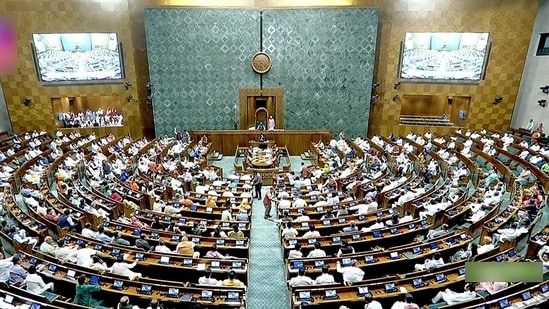
JDU issues three-line whip for MPs ahead of special Parliament session from April 16-18| India News
# JDU Issues Whip for Special House Session
By Special Political Correspondent, India News Desk, April 13, 2026
**New Delhi:** Ahead of a highly anticipated and closely guarded special session of Parliament scheduled from April 16 to 18, 2026, the Janata Dal (United) has issued a strict three-line whip directing all its Members of Parliament to remain present in the House. Issued on Monday morning, the mandate requires full attendance from JDU lawmakers in both the Lok Sabha and the Rajya Sabha to support the ruling National Democratic Alliance (NDA) government’s impending legislative agenda. The sudden convening of the three-day session, coupled with immediate whipping orders from crucial coalition partners, has sparked intense nationwide speculation regarding the introduction of landmark reforms or vital constitutional amendments [Source: Hindustan Times].
## The Significance of the Three-Line Whip Protocol
In the realm of Indian parliamentary procedure, a three-line whip is the most severe and uncompromising directive a political party can issue to its elected representatives. The JDU’s decision to deploy this mechanism underscores the critical nature of the upcoming legislative business.
Under the Tenth Schedule of the Indian Constitution, popularly known as the Anti-Defection Law, defying a three-line whip—either by abstaining from a vote or voting contrary to the party line—can result in the immediate disqualification of the Member of Parliament from the House. By issuing this mandate, JDU President Nitish Kumar and the party’s parliamentary leadership are leaving no room for individual maneuvering or absence due to personal or regional commitments.
The directive mandates that all JDU MPs must not only be physically present inside the newly inaugurated Parliament building from the moment the session commences on April 16 until its adjournment on April 18, but they must also strictly vote in alignment with the NDA’s official stance. This level of floor management indicates that the central government is preparing to introduce bills that may require an absolute majority or a two-thirds majority, standard prerequisites for constitutional amendments [Source: Original RSS | Additional: Public Parliamentary Records].
## Anticipation and Agenda: What Is on the Table?
The official agenda for the mid-April special Parliament session remains tightly under wraps, a tactic frequently utilized by the central government to maintain strategic legislative surprise. This opacity has led to intense speculation across political corridors and media platforms.
Historically, special sessions of short duration—spanning just three to five days—are devoid of standard parliamentary mechanisms like Question Hour or Zero Hour, focusing exclusively on government business. Political analysts speculate that the upcoming session may center around massive structural reforms. Theories currently dominating the New Delhi circuit include the potential tabling of a finalized draft for ‘One Nation, One Election’ operational guidelines, a sweeping Uniform Civil Code (UCC) framework, or critical legislation tied to upcoming national census and delimitation exercises.
Given that these topics are highly debated and require broad consensus—or at least an ironclad numerical advantage—the ruling coalition cannot afford a single missing vote. The prompt issuance of the JDU whip acts as a preemptive strike against any legislative hurdles, ensuring the NDA’s parliamentary arithmetic remains unassailable.
## JDU’s Crucial Role Within the NDA Framework
To understand the weight of the JDU’s directive, one must look at the current dynamics of the National Democratic Alliance. Following the intense political realignments of recent years, regional allies have regained substantial leverage in the central government’s policy formulation. With a significant bloc of MPs in both the lower and upper houses of Parliament, the Janata Dal (United) serves as a kingmaker and a vital pillar of stability for the ruling coalition.
There had been murmurs in local media regarding minor administrative friction between the JDU and the central leadership over state-level funding allocations in Bihar. However, the swift issuance of the three-line whip effectively quashes any rumors of a rift. It sends a resounding message of alliance cohesion. By locking in its MPs, the JDU is publicly reaffirming its commitment to the NDA’s national vision, proving that when it comes to critical central legislation, the alliance operates as a unified front.
## Expert Perspectives on the Political Climate
The strategic nature of the special session and the subsequent whips issued by coalition partners have drawn extensive commentary from constitutional and political experts.
“A three-line whip issued this early by a crucial regional ally like the JDU suggests that the government is preparing to pass legislation that requires an absolute show of numerical strength,” notes Dr. Rajesh Kothari, a senior political analyst at the Centre for Policy Studies in New Delhi. “Nitish Kumar is known for his calculated political maneuvers. By preemptively rallying his MPs, he is sending a clear message to both the central leadership and the opposition: the NDA is impenetrable on this upcoming issue.”
Similarly, constitutional expert Anjali Deshmukh observes, “Special sessions are historically reserved for moments of national significance. The fact that allies are utilizing the highest degree of parliamentary discipline—the three-line whip—indicates that the legislation being introduced will likely have long-lasting constitutional implications. The government is ensuring no technicalities or absent members can derail the passage of the proposed bills.”
## The Opposition’s Stance and Counter-Strategy
While the ruling alliance fortifies its ranks, the opposition INDIA bloc is actively mobilizing its counter-strategy. Leaders from the Indian National Congress, Trinamool Congress (TMC), Samajwadi Party (SP), and other key opposition factions have fiercely criticized the government for the secrecy surrounding the session’s agenda.
Opposition leaders argue that bypassing traditional parliamentary consultation to drop surprise legislation undermines the democratic process. In response to the government’s maneuvers, major opposition parties are expected to issue their own corresponding three-line whips in the coming 48 hours, mandating their MPs to be present to vote against or demand extensive debate on whatever bill is tabled.
Parliamentary strategy meetings are currently underway at the residences of prominent opposition leaders in the capital. The upcoming three days are poised to witness high-voltage debates, potential protests in the well of the House, and aggressive parliamentary maneuvering as both sides prepare for a legislative showdown.
## Historical Context of Special Sessions
The convening of special parliamentary sessions, while not entirely uncommon, is generally reserved for defining moments in Indian political history. Understanding this context helps illuminate why the JDU is taking no chances with MP attendance.
Notable special sessions in the past include the historic midnight session in 2017 to roll out the Goods and Services Tax (GST), signifying a massive overhaul of India’s indirect tax regime. More recently, in September 2023, a five-day special session was called to transition to the new Parliament building and pass the Nari Shakti Vandan Adhiniyam, a landmark bill reserving 33% of seats for women in the Lok Sabha and state assemblies.
Each of these sessions was characterized by a specific, transformative legislative goal that required broad consensus and strict party discipline. The April 2026 session appears to follow this exact blueprint. By keeping the agenda classified until the final hour, the government manages the narrative, prevents premature opposition mobilization, and relies on strict whips to push the legislation through the legislative gauntlet.
## Implications for Bihar’s Regional Politics
Beyond the halls of New Delhi, the JDU’s parliamentary stance carries substantial weight in its home state of Bihar. Nitish Kumar’s political longevity relies heavily on his ability to balance central alliances with the specific socio-economic needs of his primary voter base, which includes Extremely Backward Classes (EBCs) and Mahadalits.
Whatever legislation the NDA plans to introduce will eventually have to be sold to the electorate in Bihar. By committing unconditionally to the central agenda via the three-line whip, the JDU is signaling that the upcoming reforms will likely be mutually beneficial or at least politically viable in state-level optics. If the session unveils major welfare, economic, or electoral reforms, the JDU will aim to project itself as an instrumental partner in bringing those national benefits to the grassroots level in Bihar.
Furthermore, state-level BJP and JDU cadres will be watching the parliamentary session closely to gauge the chemistry between the top leadership, which sets the tone for subsequent regional elections and administrative cooperation.
## Key Takeaways and Future Outlook
As the clock ticks down to April 16, the political atmosphere in New Delhi is highly charged. The key takeaways from the JDU’s latest directive include:
* **Unwavering NDA Cohesion:** The three-line whip proves that the NDA remains a tightly knit coalition capable of enforcing strict discipline among its regional partners.
* **High-Stakes Legislation:** The use of supreme parliamentary directives points to the introduction of a bill requiring constitutional majorities, likely dealing with structural national reforms.
* **Imminent Showdown:** With both the NDA and the opposition locking down their numbers, the special session promises to be intensely competitive and consequential.
The forthcoming three days in Parliament will not merely be an exercise in legislative routine; they are poised to shape the immediate future of India’s constitutional and political landscape. For now, all eyes remain on the government benches as the nation waits for the official agenda to be unsealed.





