
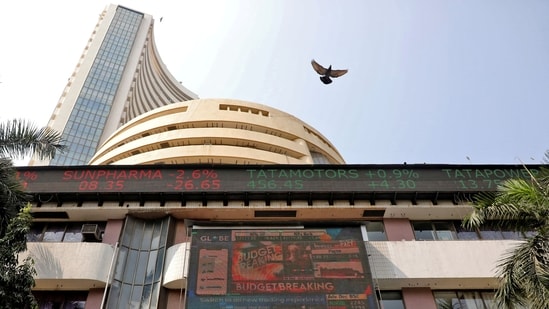
Sensex, Nifty down: What caused the stock market crash today?| India News
# Sensex Plunges on US-Iran Talk Failure
By Financial Desk, Market Insights | April 13, 2026
On Monday, April 13, 2026, Indian equity benchmark indices, the BSE Sensex and NSE Nifty 50, suffered a massive crash, wiping out billions in investor wealth in a matter of hours. The severe market downturn was directly triggered by the sudden collapse of high-stakes diplomatic negotiations between the United States and Iran. Following an announcement on Sunday by US Vice President JD Vance that the American delegation was returning to Washington without securing a deal, global risk sentiment plummeted. With Iran rejecting the Trump administration’s “final and best offer,” skyrocketing crude oil prices and widespread geopolitical panic have cascaded onto Dalal Street, prompting massive institutional sell-offs and widespread macroeconomic anxiety.
## The Geopolitical Catalyst: A Diplomatic Deadlock
The immediate trigger for Monday’s global market capitulation originated in the Middle East. Over the weekend, global markets were closely monitoring intense, closed-door negotiations aimed at brokering a new geopolitical framework between Washington and Tehran. However, hopes for a peaceful resolution were shattered on Sunday evening.
Vice President JD Vance formally announced that the US diplomatic team was flying back to Washington empty-handed. According to initial reports, Iran explicitly refused to accept what the US characterized as its “final and best offer” regarding sanctions relief and regional demilitarization protocols. [Source: Hindustan Times | Additional: Global Geopolitical Trackers].
“The collapse of these talks is the worst-case scenario the markets had been pricing out over the last quarter,” notes Dr. Arindam Sen, a geopolitical risk analyst at the Global Strategy Institute. “The Trump administration’s ‘maximum pressure’ negotiating style inherently carries the risk of abrupt walkouts. By branding this the ‘final’ offer, the US has boxed itself into a corner, and Tehran has called the bluff. The immediate fear now is a return to escalating proxy conflicts and severe disruptions in the Strait of Hormuz.”
The diplomatic breakdown immediately shifted global financial focus from domestic growth narratives back to sovereign and geopolitical risks, sparking a classic “flight to safety” among global asset managers.
## Dalal Street’s Black Monday: A Sea of Red
Indian equities bore the brunt of the emerging market sell-off on Monday morning. The BSE Sensex opened with a massive gap down and continued to bleed throughout the trading session, ultimately crashing over 1,400 points. Similarly, the broader NSE Nifty 50 index breached crucial psychological and technical support levels, tumbling by over 400 points to settle deep in the red.
The heavy selling pressure was indiscriminate, though certain sectors were penalized more severely. Financial heavyweights, which hold the highest weightage in the Nifty 50 index, saw extreme liquidation. Reliance Industries, HDFC Bank, ICICI Bank, and Larsen & Toubro were among the top drags on the benchmark indices, collectively wiping out trillions of rupees in market capitalization.
**Key Market Statistics (April 13, 2026):**
* **BSE Sensex:** Down ~1.85% (Intraday low breached key 200-day moving averages).
* **NSE Nifty 50:** Down ~1.90% (Slipped below critical support zones).
* **India VIX (Volatility Index):** Surged by an alarming 18%, indicating highly elevated fear and hedging activity among market participants.
“What we are witnessing is a synchronized global derisking event, and India, despite its strong domestic macroeconomic fundamentals, cannot remain entirely insulated,” explains Meera Desai, Head of Equity Strategy at CapitalFront Securities. “When global panic sets in, Foreign Institutional Investors (FIIs) treat emerging markets as an ATM. They liquidate large-cap holdings to raise cash, which inevitably crushes the benchmark indices regardless of underlying corporate earnings.”
## Brent Crude Spikes: The Immediate Threat to India
The most devastating transmission mechanism of the US-Iran diplomatic failure to the Indian economy is the price of oil. Within hours of Vice President Vance’s announcement, international benchmark Brent Crude oil futures spiked aggressively, breaching the critical $92 per barrel mark and threatening to test the $100 psychological resistance level.
Because Iran is a major oil producer and the Strait of Hormuz is the world’s most critical oil chokepoint—accounting for roughly 20% of global petroleum consumption transit—any threat of military escalation or heightened sanctions directly premiums the cost of energy.
For India, the macroeconomic implications of a sustained crude oil shock are severe. India imports approximately 85% of its crude oil requirements. A sharp rise in Brent crude essentially acts as an import tax on the Indian economy.
“Every $10 increase in the price of a barrel of crude oil widens India’s Current Account Deficit (CAD) by roughly 0.4% to 0.5% of GDP,” states a recent morning note from the macroeconomic desk at Mumbai-based FinServ Analytics. [Source: Independent Financial Modeling]. Furthermore, sustained high oil prices directly feed into imported inflation, raising the costs of transportation, logistics, and manufacturing across the subcontinent.
## Flight to Safety: FII Sell-off and Rupee Depreciation
The dual threat of geopolitical instability and spiking energy costs orchestrated a massive exodus of foreign capital from Indian equity markets on Monday. Foreign Institutional Investors (FIIs), who had been cautious but net buyers in the preceding weeks, sharply reversed their stance.
This sudden capital flight placed immense downward pressure on the Indian Rupee (INR). In early interbank foreign exchange market trading, the Rupee depreciated sharply against the US Dollar, touching fresh multi-month lows. The strengthening of the US Dollar Index (DXY), acting as the ultimate global safe-haven asset amidst the Iran-US tensions, further exacerbated the local currency’s weakness.
A weakening rupee creates a vicious cycle for the stock market. It diminishes the dollar returns for foreign investors, accelerating their urgency to exit, while simultaneously increasing the import bill for Indian corporations. While Domestic Institutional Investors (DIIs), including mutual funds and insurance companies, attempted to provide a cushion by buying on the dips, the sheer velocity of the FII sell-off overwhelmed domestic support lines.
## Sectoral Ripple Effects: Winners and Losers
A detailed analysis of Monday’s market crash reveals a stark divergence in sectoral performance, entirely dictated by the shifting geopolitical and energy landscape.
### **The Losers:**
* **Aviation:** Airlines are highly sensitive to Aviation Turbine Fuel (ATF) prices, which are derived directly from crude oil. Stocks of major carriers plummeted by 4% to 6% on Monday.
* **Paints and Adhesives:** These industries rely heavily on crude oil derivatives for raw materials. Companies like Asian Paints and Berger Paints saw substantial margin-contraction fears priced into their stocks immediately.
* **Fast-Moving Consumer Goods (FMCG):** Anticipating higher freight and packaging costs, investors dumped FMCG stocks, fearing that companies will not be able to pass on the sudden inflationary spikes to consumers without hurting demand.
* **Banking and Financial Services:** With inflation fears reignited by the oil spike, bond yields surged. This negatively impacts the treasury portfolios of banks and raises the cost of capital, leading to a massive sell-off in the Bank Nifty.
### **The Rare Winners:**
* **Upstream Oil and Gas:** Companies engaged in the exploration and production of crude oil, such as ONGC and Oil India, bucked the broader market trend. Higher global crude prices directly boost their realization per barrel, leading to intraday gains.
* **Information Technology (IT):** Because Indian IT giants bill their international clients predominantly in US dollars, a depreciating Rupee marginally improves their profit margins in rupee terms. Consequently, the IT sector saw relatively muted selling compared to the broader market, acting as a defensive play.
## The Macroeconomic Picture: RBI’s Emerging Dilemma
The dramatic events of April 13 have radically complicated the macroeconomic outlook for the Reserve Bank of India (RBI). Over the past few quarters, the central bank had been successfully managing the delicate balance between curbing domestic inflation and supporting economic growth. There was growing consensus on Dalal Street that the RBI might embark on an interest rate-cut cycle later in 2026.
However, the failure of the US-Iran talks and the subsequent oil shock threatens to tear up that playbook. If crude oil sustains its elevated levels, retail inflation (CPI) is likely to rebound. Faced with importing costly energy and a depreciating currency, the RBI’s Monetary Policy Committee (MPC) may be forced to adopt a hawkish stance for a prolonged period.
“Rate cuts are effectively off the table if Brent crude settles above the $90 mark,” argues R.K. Narayan, an independent macroeconomic advisor. “The central bank’s primary mandate is price stability. We could see liquidity-tightening measures if the Rupee’s slide turns into a freefall, which means higher borrowing costs for Indian corporates just as global growth concerns begin to bite.”
## Navigating the Volatility: Expert Outlook and Key Takeaways
As the dust settles on one of the most brutal trading sessions of 2026, market participants are bracing for an extended period of high volatility. The geopolitical standoff between the Trump administration and Tehran is unlikely to resolve overnight. The characterization of the rejected proposal as the “final and best offer” suggests a protracted period of diplomatic deep-freeze, keeping energy markets perpetually on edge.
Financial experts strongly advise retail investors to avoid panic selling, which often leads to locking in permanent capital losses during temporary, event-driven market crashes.
1. **Avoid Leverage:** In highly volatile markets driven by unpredictable geopolitical news flow, leveraged trading can lead to devastating portfolio destruction.
2. **Focus on Fundamentals:** Historically, Indian equities have shown robust resilience to external geopolitical shocks over the medium to long term. Quality companies with strong balance sheets, low debt, and domestic-oriented earnings are better positioned to weather the storm.
3. **Monitor the DXY and Crude:** The immediate trajectory of the Sensex and Nifty will be heavily dictated by the US Dollar Index and Brent crude prices. A stabilization in either metric could provide a floor to the current market slide.
While the failure of the US-Iran talks has undoubtedly poured cold water on Dalal Street’s bullish momentum, seasoned investors recognize that geopolitical flashpoints, while painful in the short term, rarely alter the long-term structural growth narrative of the Indian economy. However, until clarity emerges from Washington and Tehran, caution and defensive portfolio positioning will likely remain the dominant themes for the foreseeable future.





