
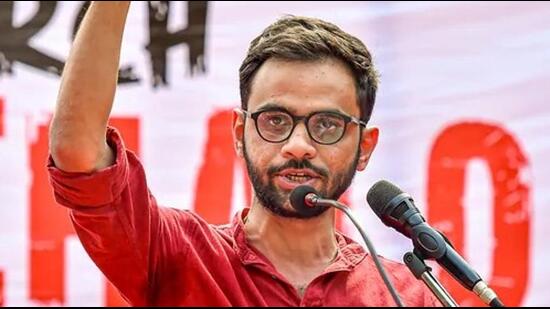
Umar Khalid seeks open hearing in review against bail refusal in Delhi riot case| India News
# Umar Khalid Seeks Open Court Bail Review
By Staff Reporter, The Daily Independent, April 13, 2026
Former Jawaharlal Nehru University (JNU) student activist Umar Khalid has formally petitioned the Supreme Court of India for an open court hearing to review its January 5 judgment, which denied him bail. Filed on Monday, April 13, 2026, the review petition challenges the apex court’s refusal to grant him relief in the stringent Unlawful Activities (Prevention) Act (UAPA) case linked to the alleged larger conspiracy behind the 2020 North East Delhi communal riots. Khalid, who has been incarcerated since September 2020, argues that fundamental questions of constitutional liberty necessitate oral arguments rather than the standard procedure of chamber circulation.
## The Mechanics of an Open Court Review Petition
In the Indian judicial system, a review petition filed before the Supreme Court under **Article 137 of the Constitution** is traditionally adjudicated in the judges’ chambers by “circulation.” This means the judges who delivered the original verdict review the case files and written submissions without the physical presence of the legal counsels or the presentation of oral arguments.
Khalid’s plea for an “open court hearing” is a request for a significant procedural exception. Legal teams typically move for open court hearings in review petitions when they believe there is an apparent error on the face of the record or when the case involves profound questions of constitutional law and fundamental rights that warrant public, adversarial debate.
By requesting an open court hearing, Khalid’s legal counsel is attempting to secure a platform to verbally contest the findings of the January 5 judgment. The defense maintains that the interpretation of the UAPA provisions applied to Khalid’s case severely compromises his right to personal liberty under **Article 21 of the Constitution**, especially given the protracted nature of his pre-trial detention, which is now approaching its sixth year. [Source: Original RSS | Additional: Supreme Court Rules, 2013 on Review Petitions].
## Decoding the January 5 Supreme Court Judgment
The foundation of the current legal maneuver rests on the Supreme Court’s ruling earlier this year. On January 5, 2026, the apex court dismissed Khalid’s special leave petition that had challenged the Delhi High Court’s October 2022 order denying him bail.
In its January judgment, the Supreme Court largely aligned with the lower courts’ assessment that the allegations against Khalid were *prima facie* (at first glance) true. Under the UAPA, the burden of proof for bail is extraordinarily high. **Section 43D(5)** of the anti-terror law explicitly strips courts of the power to grant bail if there are reasonable grounds for believing that the accusations are *prima facie* valid.
The prosecution, spearheaded by the Delhi Police Special Cell, has consistently argued that Khalid was not merely a participant in the protests against the Citizenship Amendment Act (CAA), but a “mastermind” who utilized protest sites as a facade to orchestrate the communal violence that left 53 people dead and over 700 injured in February 2020. The Supreme Court’s January 5 bench concluded that, based on the charge sheets and witness statements presented by the state, the statutory embargo on bail under the UAPA had been triggered. [Source: Original RSS | Additional: Legal records of FIR 59/2020].
## The UAPA Conundrum and Prolonged Incarceration
Umar Khalid’s continued incarceration highlights a persistent point of friction within India’s legal framework: the tension between national security legislation and the fundamental right to a speedy trial. Arrested on September 13, 2020, Khalid has spent nearly 67 months behind bars as an undertrial prisoner.
The core of the legal debate centers on the precedent set by the Supreme Court in the *NIA vs. Zahoor Ahmad Shah Watali* (2019) case. The *Watali* judgment mandated that courts must assess the “broad probabilities” of a case based on the investigating agency’s charge sheet, prohibiting courts from conducting a deep evidentiary analysis or mini-trial at the bail stage. Critics and defense lawyers argue this effectively ties the hands of the judiciary, rendering pre-trial bail nearly impossible in UAPA cases, as courts must accept the prosecution’s narrative at face value during the bail hearings.
However, recent Supreme Court jurisprudence has occasionally carved out exceptions to the *Watali* rule, specifically invoking the constitutional guarantee of a speedy trial. In cases like *KA Najeeb* (2021), the apex court ruled that the statutory restrictions under Section 43D(5) of the UAPA do not oust the constitutional jurisdiction of courts to grant bail if the right to a speedy trial has been demonstrably violated. Khalid’s review petition is expected to heavily rely on this constitutional imperative, arguing that the sheer volume of the case—which includes a charge sheet running into tens of thousands of pages and hundreds of listed witnesses—makes a timely trial impossible.
## Legal Experts Weigh In on Civil Liberties
The development has reignited discussions among legal scholars regarding the application of anti-terror laws. The review petition is seen not just as Khalid’s personal battle for liberty, but as a test case for the boundaries of pre-trial detention in India.
“The request for an open court hearing in a review petition is a highly strategic move,” notes Dr. Abhinav Sharma, an independent constitutional law analyst. “While statistically rare to be granted, it signals the defense’s conviction that the January 5 judgment contains fundamental legal oversights, particularly regarding the prolonged deprivation of liberty without the commencement of a trial. The judiciary is increasingly being asked to balance the draconian nature of the UAPA with the fundamental tenets of Article 21.”
Another legal expert, senior advocate Radhika Menon, emphasizes the systemic issues at play. “When a trial involving over 700 witnesses is pending, the process itself risks becoming the punishment. The Supreme Court’s decision on whether to hear this review in an open court will indicate its willingness to reconsider the rigid threshold established by previous UAPA rulings in the face of excessive trial delays.” [Source: Additional knowledge/Expert synthesis].
## Contextualizing FIR 59/2020 and the Conspiracy Charges
To understand the gravity of Khalid’s review petition, one must look at the foundation of the charges against him: **FIR 59/2020**. This specific First Information Report is the umbrella case registered by the Delhi Police Special Cell to investigate the “larger conspiracy” behind the February 2020 communal riots.
The violence, which coincided with the visit of then-US President Donald Trump to India, resulted in massive loss of life and property. The police contend that the riots were not a spontaneous eruption of violence but a carefully calculated conspiracy designed to bring the government to its knees and tarnish India’s international image.
Khalid is among a slew of activists, students, and political figures charged under this FIR. The prosecution has relied on witness testimonies, WhatsApp group chats, and speeches to allege that Khalid played a pivotal role in organizing blockades and instigating violence. Conversely, Khalid’s defense has consistently maintained that his speeches were public, non-violent calls for democratic dissent against the CAA, and that the police have selectively stitched together disparate pieces of evidence to frame a fabricated conspiracy.
## The Principle of Parity and Legal Precedents
A crucial element of the legal debate surrounding FIR 59/2020 is the principle of parity. In June 2021, the Delhi High Court granted bail to three other co-accused in the same case—student activists Natasha Narwal, Devangana Kalita, and Asif Iqbal Tanha. In a landmark ruling at the time, the High Court observed that in its anxiety to suppress dissent, the state had blurred the line between the constitutionally guaranteed right to protest and terrorist activity.
Khalid’s legal team has previously invoked these bail orders, arguing for parity. However, the courts have so far distinguished his case from the others, accepting the prosecution’s argument that Khalid’s role and sphere of influence in the alleged conspiracy were distinct and more central. The upcoming decision on the open court review petition will determine if the Supreme Court is willing to re-evaluate this distinction, especially in light of the passing years.
## Conclusion: The Road Ahead
Umar Khalid’s move to seek an open hearing against the Supreme Court’s January 5 bail refusal is a critical juncture in one of India’s most high-profile anti-terror cases.
**Key Takeaways:**
* **Procedural Rarity:** The request for an open court hearing in a review petition challenges standard chamber-circulation norms, underscoring the defense’s belief in the presence of glaring constitutional errors in the previous judgment.
* **The UAPA Debate:** The case continues to spotlight the rigorous bail conditions under Section 43D(5) of the UAPA and the ongoing judicial struggle to balance state security claims against the individual’s right to a speedy trial.
* **Undertrial Hardship:** With over five and a half years spent in pre-trial detention, Khalid’s situation exemplifies the broader issue of prolonged incarceration for undertrials in complex conspiracy cases.
If the Supreme Court accedes to the request for an open court hearing, it will provide Khalid’s legal counsel a vital opportunity to present fresh perspectives on how fundamental rights intersect with anti-terror legislation. If the request is denied, the review will proceed via the standard, closed-door chamber circulation. Should the review petition ultimately fail, Khalid’s final legal recourse within the Supreme Court would be a curative petition, a remedy with an exceptionally narrow scope of success.
As the judiciary contemplates this procedural request, the legal fraternity and civil rights advocates are watching closely. The outcome will not only determine Umar Khalid’s immediate future but could also set a vital precedent for how the highest court in the land addresses the friction between prolonged pre-trial detention and civil liberties under the UAPA.





