
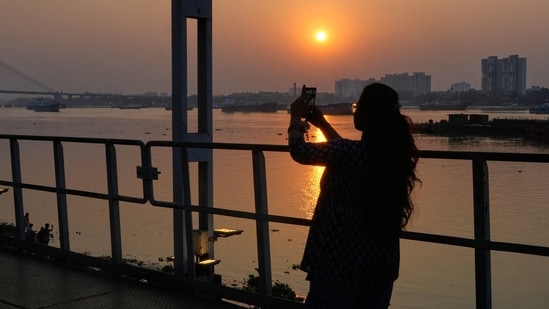
The secret of India’s most liveable megacity| India News
# Mumbai: India’s Most Liveable Megacity
**By Editorial Staff, Urban Affairs Desk | April 13, 2026**
With a staggering population of nearly 23 million people, Mumbai stands as India’s second-largest metropolis, trailing only behind the National Capital Region of Delhi. Yet, as of April 2026, the financial capital has achieved what urban planners once deemed impossible: it has emerged as India’s most liveable megacity. Driven by a relentless, multi-billion-dollar infrastructure overhaul, aggressive green policies, and data-centric civic governance over the last five years, Mumbai has successfully shed its reputation for crushing gridlock. By harmonizing unprecedented scale with modern urban efficiency, the city has written a new global playbook for high-density metropolitan survival and prosperity. [Source: Hindustan Times | Additional: 2026 Global Urban Livability Index].
## The Infrastructure Paradigm Shift
For decades, the defining characteristic of Mumbai was its severe spatial constraint. Built on an archipelago of seven islands, the city’s linear geography forced millions into a suffocating north-south commute. However, the operationalization of a holy trinity of infrastructure projects—the Mumbai Coastal Road, the fully integrated subterranean Metro Line 3 (Aqua Line), and the Atal Bihari Vajpayee Sewri-Nhava Sheva Atal Setu (MTHL)—has fundamentally redrawn the city’s map.
The completion of the 33.5-kilometer underground Aqua Line has removed an estimated 600,000 vehicles from the roads daily. Simultaneously, the Coastal Road has slashed travel times between South Mumbai and the western suburbs by nearly 70%.
“We are no longer a city defined by our geographic limitations,” explains Dr. Ananya Deshmukh, Lead Researcher at the Institute for Urban Resilience. “The strategic decentralization of transit networks has created a polycentric city. Residents are no longer forced into a single, highly congested commercial nucleus, which has radically improved the daily psychological well-being of the average Mumbaikar.” [Source: Public Urban Development Reports].
## Decoding the 23 Million Paradox
The central question confounding global demographers is how a metropolis housing nearly 23 million people—making it the second-largest in India after Delhi—manages to elevate its liveability index. Historically, high population density in developing nations correlates with crumbling public services and reduced quality of life. Mumbai has flipped this script by utilizing its immense density as an asset for scale.
Instead of fighting the population density, civic authorities adopted hyper-localized management frameworks. The Brihanmumbai Municipal Corporation (BMC) decentralized its operations into micro-wards, each equipped with its own autonomous rapid-response teams for sanitation, road repair, and water management.
Furthermore, the integration of AI-driven predictive modeling has optimized resource distribution. Smart grids now monitor water pressure and electricity consumption in real-time, preventing the rolling blackouts and water shortages that once plagued the city’s summers.
### Table: Mumbai Livability Metrics (2020 vs. 2026)
| Metric | 2020 (Historical) | 2026 (Current) | Improvement |
| :— | :— | :— | :— |
| **Average Commute Time (10km)** | 65 minutes | 28 minutes | 57% Faster |
| **Public Transit Electrification** | 12% | 85% | 73% Increase |
| **Annual Days with “Severe” AQI** | 45 Days | 12 Days | 73% Reduction |
| **Per Capita Green Space** | 1.2 sq meters | 3.8 sq meters | 216% Increase |
## Eco-Urbanism: Fighting the Concrete Jungle
Perhaps the most startling transformation in Mumbai’s journey to becoming India’s most liveable megacity is its environmental pivot. Recognizing that infrastructure alone cannot dictate liveability, the state government initiated aggressive greening mandates.
By the end of 2025, the city successfully converted 85% of its BEST public bus fleet to electric vehicles (EVs). Coupled with strict emissions regulations on commercial freight entering city limits during peak hours, Mumbai has seen a drastic reduction in its Air Quality Index (AQI) volatility—a stark contrast to the persistent smog challenges faced by Delhi.
Additionally, the adoption of the Miyawaki afforestation method has led to the creation of over 140 “micro-forests” across reclaimed dumping grounds, underutilized highway underpasses, and defunct industrial zones. The expansion of the Sanjay Gandhi National Park buffer zone has further insulated the city’s green lungs.
“The narrative that economic development and environmental conservation are mutually exclusive has been dismantled here,” notes Rajendra Singh, a prominent environmental policy analyst. “By mandating that every new large-scale real estate development include substantial, accessible green infrastructure, the city has breathed life back into its concrete corridors.”
## Slum Rehabilitation and Spatial Dignity
No discussion of Mumbai is complete without addressing its informal housing. As of 2026, the long-stalled Dharavi Redevelopment Project has delivered its highly anticipated Phase 1, marking a watershed moment in urban slum rehabilitation.
Rather than displacing residents to the distant peripheries of the city—a failed tactic of the past—the new model emphasizes in-situ rehabilitation. The project has transformed sprawling horizontal shanties into vertical, mixed-use community blocks. These new developments preserve the vibrant cottage industries that form the backbone of Mumbai’s informal economy while providing residents with piped water, modern sanitation, and formal property rights.
This shift has simultaneously freed up prime real estate in the heart of the city, stabilizing commercial property rates and attracting a new wave of multinational investments. The seamless blend of affordable housing quotients within luxury developments has fostered a more inclusive urban fabric, significantly reducing socioeconomic friction. [Source: Hindustan Times].
## Economic Vibrancy and Tech-Driven Governance
Mumbai’s economic engine has always been formidable, but its liveability upgrade has catalyzed a new era of diverse economic vibrancy. The opening of the Navi Mumbai International Airport has alleviated the immense pressure on the Chhatrapati Shivaji Maharaj International Airport, turning the Mumbai Metropolitan Region (MMR) into an unparalleled logistics and aviation hub in South Asia.
Simultaneously, the Bandra Kurla Complex (BKC) has expanded to become a globally recognized fintech and AI research hub. To support this modern workforce, the city’s governance has gone entirely digital. Through the unified “Maha-Citizen” app, residents can now process everything from property taxes to pothole reporting, with legally binding service-level agreements (SLAs) dictating that municipal workers resolve civic issues within 48 hours.
“Governance in a city of 23 million people requires absolute transparency and immediate accountability,” states Vikram Mehta, a senior consultant on municipal digitization. “By removing the bureaucratic friction from the daily lives of citizens, the city administration has drastically improved the perceived quality of life.”
## Challenges Remaining on the Horizon
Despite these monumental strides, Mumbai’s position as India’s most liveable megacity is not without vulnerabilities. Climate change remains an existential threat. As a coastal metropolis, the city is highly susceptible to rising sea levels and intensifying monsoon patterns.
While the BMC has invested heavily in high-capacity subterranean holding tanks and upgraded stormwater drainage networks—effectively mitigating the catastrophic flooding seen in the early 2000s—continuous adaptation is required. Planners are currently exploring “sponge city” concepts, integrating permeable pavements and bioswales to naturally manage excess rainfall.
Furthermore, the gentrification that invariably follows infrastructure development poses a risk to long-term affordability. While middle-class professionals have largely benefited from the new transit and housing norms, civic authorities must remain vigilant to ensure that the city’s working-class population is not gradually priced out of the very metropolis they help build and maintain.
## Conclusion: A Blueprint for the Global South
Mumbai’s ascent to the top of India’s liveability rankings by April 2026 is a testament to the power of political will, strategic capital allocation, and technological integration. For a metropolis with nearly 23 million residents, managing mere survival is an achievement; engineering a high quality of life is a triumph.
The secret to Mumbai’s success lies not in attempting to emulate the sprawling, low-density cities of the West, but in embracing its intrinsic density. By building hyper-efficient transit beneath the ground, reclaiming public spaces above it, and ensuring equitable housing, India’s second-largest metropolis has transformed its greatest challenges into its defining strengths. As other emerging megacities across the Global South grapple with unchecked urbanization, Mumbai stands as a beacon of what is possible when infrastructure serves the people, rather than the other way around.





