
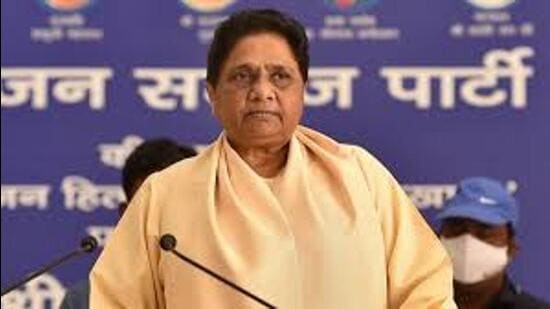
Keeping up with UP: Why Mayawati continues to matter despite BSP’s loss of ground| India News
# Why Mayawati Still Rules UP’s Dalit Vote
**By Special Correspondent, The National Political Desk**
**April 13, 2026**
Lucknow, Uttar Pradesh — As the political machinery gears up for the crucial 2027 Uttar Pradesh Assembly elections, Bahujan Samaj Party (BSP) supremo Mayawati remains the undisputed powerhouse of Dalit politics in India’s most populous state. Despite a documented erosion of the BSP’s broader electoral footprint over the last decade, her iron-clad grip on the Jatav community ensures she cannot be written off. With UP serving as the ultimate battleground, Mayawati’s strategic maneuvering and intensely loyal core vote bank are poised to play a decisive role in dictating whether the ruling Bharatiya Janata Party (BJP) retains its dominance or the opposition reshapes the political landscape next year.
## The Paradox of Electoral Decline and Political Relevance
To the casual observer of Indian politics, the Bahujan Samaj Party’s trajectory over the past ten years might look like a terminal decline. From forming a majority government in Uttar Pradesh in 2007—a historic feat of social engineering that united Dalits, Brahmins, and Muslims—to securing just a single seat in the 2022 Assembly elections, the statistical drop is stark. The 2024 Lok Sabha elections further highlighted the challenges faced by the party, as it struggled to convert its vote share into parliamentary seats amid a highly polarized battle between the BJP-led NDA and the opposition INDIA bloc.
However, viewing Mayawati’s political capital purely through the lens of recent seat counts is a fundamental miscalculation. [Source: Hindustan Times | Additional: Election Commission of India historical data]. While her overall vote share has dipped from a commanding 30% in 2007 to roughly 12.8% in 2022, and fluctuated in the subsequent general elections, the baseline of that vote share represents an immovable demographic block.
“Mayawati’s political capital is not merely electoral; it is deeply psychological and historical,” notes Dr. Rajesh Verma, a Lucknow-based political sociologist. “For millions of Dalits in Uttar Pradesh, the BSP is not just a political party, but a vehicle for social dignity. You can defeat the BSP in an election, but you cannot easily dislodge Mayawati from the socio-cultural pedestal she occupies.”
## The Jatav Factor: An Unshakable Foundation
To understand why Mayawati continues to matter, one must examine the micro-demographics of Uttar Pradesh. Dalits constitute approximately 21% of the state’s population. Within this broad umbrella, the Jatavs (the sub-caste to which Mayawati belongs) make up more than half—roughly 11% to 12% of the state’s total demographic.
While non-Jatav Dalit communities—such as the Pasis, Valmikis, and Khatiks—have shown a willingness to migrate their votes to the BJP over the last decade, attracted by Hindutva outreach and targeted welfare schemes (*labharthi* politics), the Jatavs have remained remarkably steadfast in their loyalty to the BSP.
This steadfastness is the cornerstone of Mayawati’s enduring leverage. In a first-past-the-post electoral system, an absolute, non-fragmented, and highly transferable vote bank of 10-12% is a potent weapon. In closely contested seats, the direction in which this vote swings—or whether it remains stubbornly independent—can easily alter the destiny of 50 to 80 assembly constituencies across the state. The Jatavs view Mayawati not just as a politician, but as a living symbol of Dalit empowerment, making their voting patterns highly resilient against the aggressive campaigning of rival parties.
## The 2027 UP Assembly Polls: A High-Stakes Battle
As Uttar Pradesh marches toward the 2027 Assembly polls, the political arithmetic is becoming increasingly complex. The ruling BJP is seeking to consolidate its formidable coalition of upper castes, non-Yadav OBCs, and non-Jatav Dalits. On the other side, the Samajwadi Party (SP), led by Akhilesh Yadav, is doubling down on its PDA formula—Pichhda (Backward Classes), Dalit, and Alpasankhyak (Minorities).
However, the SP’s attempt to lay claim to the “D” in PDA is inherently limited without the backing of the Jatav community. [Source: Hindustan Times | Additional: UP demographic census estimates].
“The road to Lucknow must pass through Dalit neighborhoods,” explains a senior political analyst. “Akhilesh Yadav knows that to decisively defeat the BJP, he needs a significant chunk of the Dalit vote. The BJP knows that to maintain its supremacy, it must prevent Mayawati’s core voters from tactical voting in favor of the SP. In this tug-of-war, Mayawati holds the ultimate trump card.”
If the BSP contests elections robustly on its own, it turns the contest into a multi-cornered fight, historically a scenario that has benefited the BJP by dividing the anti-incumbency vote. Conversely, if Mayawati orchestrates localized tactical shifts or focuses heavily on specific strongholds, she can single-handedly derail the calculations of both national alliances.
## Strategic Silence or Calculated Maneuvering?
Critics often point to Mayawati’s reduced public visibility compared to her earlier, highly aggressive avatar in the 1990s and 2000s. Her reliance on press releases, social media posts on X (formerly Twitter), and select press conferences is frequently cited as evidence of a leader who has lost touch with grassroots mobilization.
However, insiders within the BSP argue that this is a misinterpretation of her current strategy. Behind the scenes, the BSP maintains an extensive, decentralized network of cadre workers. The party’s grassroots structure—built on the foundational principles laid down by BSP founder Kanshi Ram—operates largely out of the media glare. Sector-level meetings, cadre camps, and intense community outreach within Jatav neighborhoods are ongoing processes that do not rely on large-scale, televised rallies.
Furthermore, Mayawati’s “equidistance” strategy—keeping both the NDA and the INDIA bloc at arm’s length—is a calculated survival mechanism. By refusing to be subsumed into a larger coalition where her party might be marginalized, she protects the independent identity of the Dalit political movement. It is a defensive posture designed to preserve the core until the political climate is ripe for an offensive.
## Generational Shifts and the Akash Anand Equation
A critical factor in the BSP’s preparation for 2027 is the question of succession and youth appeal. Recognizing the need to engage a younger, more aspirational generation of Dalit voters who did not witness the intense social struggles of the 1980s, Mayawati has increasingly integrated her nephew, Akash Anand, into the party’s leadership framework.
Anand represents a modernized face for the BSP. His campaigns are characterized by aggressive rhetoric, direct attacks on rival parties, and a heavy emphasis on digital mobilization. While his elevation has seen strategic pauses—a trademark of Mayawati’s strict control over the party hierarchy—his ongoing role signifies the BSP’s acknowledgment that it must evolve.
**Key strategic goals for the BSP’s new generation leadership include:**
* **Reclaiming the Youth:** Addressing unemployment, education, and representation to draw back young Dalits who may be swayed by national parties.
* **Digital Integration:** Moving beyond traditional cadre camps to build robust WhatsApp and social media networks.
* **Aggressive Positioning:** Matching the street-level aggression of the SP and the organized machinery of the BJP.
## The Push and Pull from Rivals
The enduring relevance of Mayawati is most evident in how her rivals treat her. Despite her diminished seat tally, neither the BJP nor the SP launch sustained, vitriolic attacks against her personally. This cautious approach is born out of fear; alienating the Jatav community through perceived disrespect toward their tallest leader would be electoral suicide in Uttar Pradesh.
The BJP has attempted to bypass the BSP by heavily promoting its free-ration schemes, housing initiatives (PM Awas Yojana), and direct cash transfers, hoping to create a caste-neutral *labharthi* (beneficiary) class. The Congress, meanwhile, has been trying to revive its historical connection with Dalits through national narratives around protecting the Constitution and securing reservations.
Yet, when the ballot is cast, identity and representation often override pure welfarism. [Source: Hindustan Times]. Mayawati’s presence ensures that the Dalit identity remains a distinct, autonomous political entity rather than an appendage to a broader national narrative.
## Conclusion: The Indispensable Leader
As the countdown to the 2027 Uttar Pradesh elections begins, political pundits who draft obituaries for the Bahujan Samaj Party do so at their own peril. While it is true that the BSP faces immense structural and electoral challenges, the foundational reality of Uttar Pradesh politics remains unaltered: the Jatav vote is the anchor of the state’s electoral math, and Mayawati is its sole commander.
Her continued relevance is a testament to the deep roots of the Bahujan movement. Whether the BSP stages an electoral comeback, plays the role of a kingmaker in a hung assembly, or indirectly decides the victor by holding her core vote intact, Mayawati will dictate the terms of engagement. In the complex, hyper-competitive theater of Uttar Pradesh, keeping up with UP inherently means keeping up with Mayawati.





