
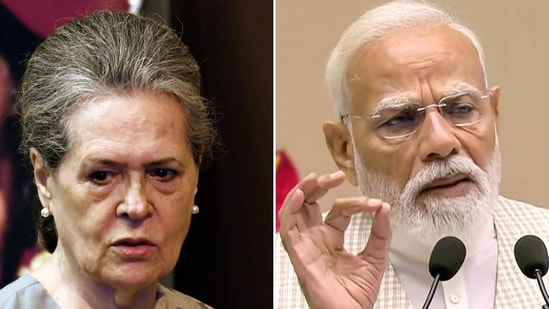
‘Women's quota is fine. Issue is delimitation’: Sonia vs PM Modi on Lok Sabha expansion
# Women’s Quota: Delimitation Debate
By Editorial Staff, National Desk, April 14, 2026
On April 13, 2026, the ongoing political deadlock surrounding India’s Women’s Reservation Bill intensified as senior Congress leader Sonia Gandhi and Prime Minister Narendra Modi articulated starkly contrasting views on its implementation timeline. At the core of the dispute is the constitutionally mandated delimitation exercise—the redrawing of Lok Sabha constituency boundaries. While the Modi administration maintains that updating electoral maps based on fresh census data is a non-negotiable constitutional prerequisite for activating the 33% gender quota, opposition leaders are pushing back. Tamil Nadu Chief Minister M.K. Stalin and Sonia Gandhi are demanding the immediate rollout of the reservation within the existing 543-seat framework, citing fears of severe regional disenfranchisement if maps are redrawn. [Source: Hindustan Times]
## The Core Legislative Framework
To understand the current political impasse, one must look back to September 2023, when the Indian Parliament overwhelmingly passed the **106th Constitutional Amendment Act**, officially known as the *Nari Shakti Vandan Adhiniyam*. The landmark legislation guarantees 33% reservation for women in the Lok Sabha (the lower house of Parliament) and all state legislative assemblies.
However, the implementation of this historic quota was not designed to be immediate. According to the text of the amendment, the reservation will only come into effect after a new national census is conducted, followed by a subsequent delimitation exercise. Delimitation is the process of fixing limits or boundaries of territorial constituencies in a country to reflect changes in population.
This specific sequencing—census, followed by delimitation, followed by the implementation of the women’s quota—has transformed what was universally celebrated legislation into a fiercely contested political battleground. The requirement effectively delays the entry of thousands of female legislators into state and national politics until the late 2020s or early 2030s, depending on administrative timelines. [Additional Source: Parliamentary PRS Legislative Research]
## The Opposition’s Push for Immediate Action
For the political opposition, particularly the Indian National Congress, the linkage between women’s reservation and delimitation is viewed as an unnecessary delay tactic. Former Congress President Sonia Gandhi has repeatedly emphasized that the women of India have waited decades for adequate political representation, and further institutional delays are unjustifiable.
The Opposition argues that the reservation could easily be applied to the current electoral map. By randomly allocating 33% of the existing 543 Lok Sabha seats as reserved for women—similar to how seats are currently reserved for Scheduled Castes (SC) and Scheduled Tribes (ST) at the local panchayat level—the government could bypass the lengthy delimitation process.
Proponents of this immediate rollout argue that linking a fundamental issue of gender equity to a complex demographic exercise dilutes the immediate impact of the legislation. They assert that the government possesses the legislative majority necessary to amend the implementation clause, thereby fulfilling the core promise of the *Nari Shakti Vandan Adhiniyam* without subjecting it to the uncertain timeline of a national census.
## The Government’s Procedural Standpoint
Contrasting the Opposition’s demands, Prime Minister Narendra Modi and the ruling administration maintain a firm stance on following established constitutional procedures. The government argues that implementing a sweeping 33% reservation without accurately mapping current demographic realities would lead to deep structural inequalities in electoral representation.
From a procedural perspective, the government points out that the **Delimitation Commission**—an independent body whose orders cannot be challenged in a court of law—is the only entity equipped to scientifically and impartially identify which specific constituencies should be reserved for women. The government argues that applying an arbitrary reservation framework onto deeply outdated demographic maps (the last major seat-allocation delimitation was based on the 1971 census) would be legally precarious and democratically unsound.
Furthermore, officials argue that the philosophy of “one person, one vote” requires constituencies to be roughly equal in population size. Before reserving one-third of the nation’s political power for women, the government insists that the foundational architecture of the electoral map must be stabilized and modernized to reflect the population shifts of the last fifty years.
## Southern Apprehension and the Demographic Penalty
The debate extends far beyond gender equity, bleeding into one of India’s most sensitive political fault lines: the demographic divide between the North and the South. This aspect was forcefully highlighted by Tamil Nadu Chief Minister M.K. Stalin, who argued for granting the women’s quota without “tinkering with the number of seats and their maps.” [Source: Hindustan Times]
Southern states such as Tamil Nadu, Kerala, Andhra Pradesh, and Karnataka have successfully implemented family planning and population control measures over the past few decades. Consequently, their population growth rates have significantly stabilized compared to heavily populated northern states like Uttar Pradesh, Bihar, and Rajasthan.
If the upcoming delimitation exercise reallocates Lok Sabha seats purely based on the new census data, southern states face the genuine prospect of losing a significant percentage of their political representation in Parliament. This phenomenon is often termed the “demographic penalty”—where states are effectively punished with reduced political power for successfully adhering to national population control policies.
**Projected Implications of Population-Based Delimitation:**
* **Northern Expansion:** States with high population growth could see their Lok Sabha seat counts surge, consolidating political power in the Hindi heartland.
* **Southern Contraction:** Southern states could see their proportional share of the 543 seats shrink, reducing their legislative influence in national policy-making.
* **Financial Leverage:** Regional leaders fear that a loss of parliamentary seats will directly translate to a loss of federal funding and bargaining power in the Finance Commission allocations.
For leaders like M.K. Stalin, coupling the widely supported Women’s Reservation Bill with the deeply feared delimitation process is seen as a strategic maneuver that forces regional parties into a difficult corner: either accept a redrawn map that dilutes their power, or be perceived as opposing women’s rights.
## 2026: The Constitutional Milestone
The year 2026 is critical to this unfolding political drama. During the Emergency in 1976, the **42nd Amendment Act** froze the number of Lok Sabha seats based on the 1971 census. This was done explicitly to encourage states to pursue population control without the fear of losing political representation. In 2001, the **84th Amendment Act** extended this freeze for another 25 years.
Specifically, the constitution mandates that the freeze will remain in place until the relevant figures for the first census taken *after* the year 2026 have been published. With 2026 currently underway, the constitutional embargo on altering the total number of parliamentary seats is technically reaching its expiration horizon.
Because the scheduled 2021 national census was delayed, the next census will serve as the statistical foundation for the impending delimitation. The Modi government’s linkage of the women’s quota to this post-2026 reality ensures that the two most significant electoral shifts in modern Indian history—a massive redistribution of regional political power and a historic infusion of female representation—will happen simultaneously.
## Expert Perspectives on Electoral Reform
Political scientists and constitutional experts note that both sides of the aisle are presenting valid, though competing, democratic principles.
“The government is technically correct that rationalizing electoral boundaries through delimitation ensures demographic parity, which is a core tenet of a representative democracy,” notes Dr. Kavita Rao, an independent constitutional researcher in New Delhi. “However, the Opposition’s argument holds ethical weight. The objective of the Women’s Reservation Bill is historical course-correction. Tying a corrective gender measure to a highly volatile regional dispute risks delaying it indefinitely.”
Legal analysts also point out that untangling the two issues, as suggested by Tamil Nadu’s Chief Minister, presents its own set of constitutional hurdles. “To decouple the quota from delimitation now would require a new constitutional amendment modifying the very text of the 106th Amendment passed in 2023,” explains Supreme Court advocate Vikram Desai. “While politically feasible if the government possessed the will, it would open a Pandora’s box of litigation regarding how those immediate reserved seats are mathematically chosen without a Delimitation Commission’s input.”
## Conclusion and Future Outlook
The clash between Sonia Gandhi and PM Modi over the Women’s Reservation Bill illuminates a fundamental tension in Indian democracy: balancing the urgent need for gender equity with complex regional and demographic realities.
As of April 2026, the issue remains a major sticking point between the ruling coalition and the Opposition bloc. The Modi administration is holding firm on its commitment to a sequentially sound process—census first, maps second, quotas third. Meanwhile, regional powers and Opposition figures continue to amplify their demands to separate the empowerment of women from the contentious redrawing of electoral borders.
Moving forward, the national discourse will heavily depend on how the upcoming census is executed and whether the central government proposes a formula to protect the political representation of southern states. Until a consensus is reached on the delimitation formula, the actual seating of 33% female lawmakers in the halls of the Lok Sabha remains a promised future rather than a present reality.





