
Will South India lose Lok Sabha seats after delimitation? The math explained| India News
# Delimitation 2026: South India’s Election Math
By Political Correspondent, National Policy Review, April 17, 2026
The impending 2026 unfreezing of India’s parliamentary delimitation has sparked a fierce debate over federal equity, demographic shifts, and regional representation. According to recent legislative proposals, the total number of Lok Sabha seats is projected to expand significantly to accommodate India’s growing population. However, the exact mathematical distribution has become a primary point of contention. Southern states are proposed to see their representation rise from 129 to 195 seats, while the remaining 621 seats will be allocated to other regions, predominantly in the North [Source: Hindustan Times]. This long-awaited demographic reapportionment, fundamentally tied to the implementation of the Women’s Reservation Act, raises profound constitutional questions about whether South India will lose its proportional political voice.
## The Demographic Dilemma Unpacked
To understand the current political anxiety, one must look back to the constitutional history of India’s electoral boundaries. The allocation of Lok Sabha seats to various states was originally based on the principle of proportional representation by population, as mandated by Article 81 of the Constitution. However, the 42nd Amendment in 1976 paused this process, freezing state-wise seat allocations based on the 1971 Census. This freeze was later extended by the 84th Amendment in 2001 until the year 2026.
The underlying rationale for the freeze was to ensure that states successfully implementing family planning and population control measures were not penalized with a reduction in their parliamentary representation. The Southern states—Kerala, Tamil Nadu, Karnataka, Andhra Pradesh, and Telangana—heeded the central government’s call to curb population growth, achieving replacement-level fertility rates (TFR of 2.1) decades ahead of the northern belt, particularly Uttar Pradesh and Bihar [Additional Source: National Family Health Survey Data].
As the 2026 deadline arrives, India faces a stark demographic divergence. If the Lok Sabha were to be reapportioned strictly on current population figures without any structural safeguards, the South’s share of the national parliament would plummet. The current proposals seeking to balance this inequity aim to increase the absolute number of seats for all regions while trying to cushion the proportional blow to the South.
## Decoding the Proposed Numbers
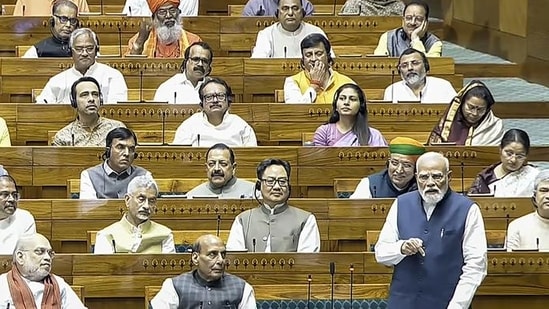
The newly inaugurated Parliament building was purposefully designed with a Lok Sabha chamber capable of seating 888 members, anticipating a massive expansion post-2026. The latest proposed delimitation math reveals an expansion to an 816-seat Lower House.
According to the proposal circulating in legislative circles, the distribution aims to provide an absolute increase in seats for every state to prevent localized political unrest.
**Projected Delimitation Math:**
* **Current Total Seats:** 543
* **Proposed Total Seats:** 816
* **Current Southern Seats:** 129 (approx. 23.7% of the House)
* **Proposed Southern Seats:** 195 (approx. 23.8% of the House)
* **Current Rest of India Seats:** 414
* **Proposed Rest of India Seats:** 621
[Source: Hindustan Times | Additional Analysis: Parliamentary Projections 2026]
What makes this proposed mathematical formula particularly fascinating is that it appears to function as a constitutional compromise. A strict application of 2026 projected population figures would reduce the Southern states’ share of Lok Sabha seats to roughly 17-19%. However, by guaranteeing 195 seats out of 816, the proposal ensures that the Southern states maintain their historical ~23% proportional weight.
While the South retains its percentage, the “Rest of India” block—driven largely by the Hindi heartland—gains a staggering 207 seats. This immense concentration of absolute numbers in the North guarantees that future national governments can theoretically be formed with minimal to zero coalition support from the peninsular states.
## The “Penalty for Progress” Argument
Despite the proportional protection in the proposed formula, deep-seated anxiety remains among Southern political leaders. The fear of being marginalized in the national discourse is palpable.
“If the fundamental democratic doctrine of ‘one person, one vote’ is applied brutally through an updated census, the South essentially faces a penalty for progress,” explains Dr. Arvind Krishnan, a Chennai-based constitutional scholar and federalism expert. “The proposed jump to 195 seats is a palliative measure. It gives Southern politicians more constituencies to contest, but it does not change the reality that over 600 seats will be decided outside their borders. The center of political gravity will definitively tilt further North.”
The crux of the Southern argument is that socio-economic indicators—such as literacy, public health, poverty alleviation, and female workforce participation—are substantially higher in the South precisely because these states controlled their population growth. Re-empowering states that failed to implement state-sponsored family planning initiatives contradicts the federal incentives set forth in 1976.
## The Women’s Reservation Act Connection
The urgency to finalize the delimitation formula is inextricably tied to the Nari Shakti Vandan Adhiniyam, commonly known as the Women’s Reservation Act. Passed in 2023, the landmark legislation guarantees a 33% quota for women in the Lok Sabha and state legislative assemblies. However, a specific clause in the Act stipulated that the reservation would only come into effect following the next delimitation exercise based on the first census conducted after 2026 [Source: Original RSS / Hindustan Times].
Because the political capital of the ruling coalition is heavily invested in delivering on the promise of women’s reservation, the delimitation exercise can no longer be kicked down the road. Expanding the house to 816 seats allows the government to introduce the 33% female quota (roughly 269 seats) without drastically unseating incumbent male parliamentarians.
This expansion essentially solves the political headache of incumbent displacement while simultaneously triggering the federal headache of regional seat distribution. The government must thread a microscopic needle: fulfilling its promise to women voters nationwide while averting a massive federal crisis with the Southern states.
## Economic Contributions vs. Political Power
Beyond demographic arguments, the financial relationship between the Union and the states forms the secondary battleground in the delimitation debate. Southern states frequently highlight their disproportionate contribution to the national exchequer.
For instance, states like Maharashtra, Karnataka, and Tamil Nadu are among the highest contributors to direct taxes and the Goods and Services Tax (GST) pool. Yet, under the Finance Commission’s devolution formulas, a significant portion of this revenue is redistributed to less developed, highly populated Northern and Eastern states to foster equitable national development [Additional Source: 16th Finance Commission Preliminary Reports].
Southern political leaders argue that an increase in the North’s parliamentary seats will inevitably lead to a further skewing of economic policies, infrastructure investments, and tax devolutions in favor of the newly created Northern constituencies.
“We are entering an era where the economic engines of India will have the weakest steering wheels,” notes a recent editorial from an economic think-tank in Bengaluru. “If the states contributing the most to the national GDP find their parliamentary leverage diluted to a mere 23% in an 816-seat House, their ability to negotiate favorable industrial, linguistic, and economic policies will be severely compromised.”
## Finding a Constitutional Compromise
Resolving the 2026 delimitation crisis requires more than just clever mathematics; it requires constitutional innovation. Several policy frameworks are currently being debated by lawmakers and constitutional experts to prevent the fracturing of federal trust:
1. **The Proportional Cap:** The proposed 195/621 split appears to utilize a proportional cap, guaranteeing that while the absolute number of seats increases based on new demographic boundaries, the relative percentage of seats held by each state remains closely aligned with the 1971 ratios.
2. **Reforming the Rajya Sabha:** Some experts suggest balancing the Lok Sabha’s population-based expansion by reforming the Rajya Sabha (Council of States). Modeled similarly to the United States Senate, where every state gets equal representation regardless of size, an empowered and equally distributed Rajya Sabha could serve as a veto-wielding safeguard for Southern states against majoritarian northern dominance.
3. **Decentralization of Union Powers:** Another proposed compromise involves moving several items from the Concurrent List back to the State List. By giving states more autonomy over education, agriculture, and internal commerce, the sting of losing national legislative leverage might be mitigated.
## Future Outlook
As the April 2026 deadline looms, the question of whether South India will “lose” seats is fundamentally a question of semantics. In absolute terms, the South is set to gain 66 new representatives. Yet, in the brutal calculus of parliamentary democracy, influence is determined not by total numbers, but by margins.
The proposed transition from a 543-seat to an 816-seat Lok Sabha represents the most significant restructuring of India’s democratic architecture since independence. The mathematical formula that ultimately gets codified into law will need to masterfully balance the democratic ideal of “one person, one vote” with the federal necessity of honoring states that acted in the long-term demographic interest of the nation.
Ultimately, ensuring that the Southern states feel adequately represented is not just about political fairness; it is a critical prerequisite for maintaining the unity, economic stability, and cohesive federal structure of the world’s largest democracy.





