
India will get back PoK after Delimitation Bill is passed: BJP leader| India News
# PoK Seats in Delimitation Bill Sparks Debate
**By Senior Political Correspondent, The National Brief, April 17, 2026**
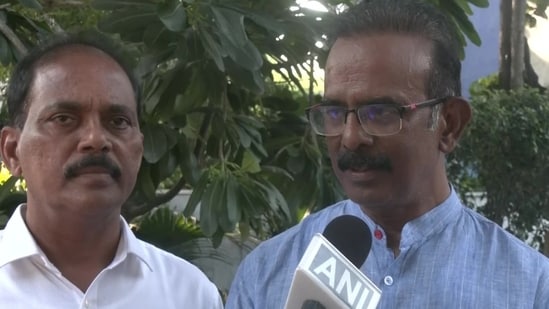
On April 17, 2026, Bharatiya Janata Party (BJP) leader Boora Narsaiah Goud stated that India will officially reclaim Pakistan-Occupied Kashmir (PoK) following the passage of the highly anticipated national Delimitation Bill. Speaking to the press, Goud highlighted that a primary feature of the proposed legislation involves the formal allocation of parliamentary seats to the PoK region. This assertion reignites long-standing geopolitical debates over the disputed territory, signaling the ruling party’s assertive legislative strategy. As New Delhi approaches the historic post-2026 parliamentary realignment, Goud’s comments blend domestic political messaging with India’s overarching strategic posture regarding Kashmir. [Source: Hindustan Times].
## Understanding the Delimitation Bill’s Scope
The concept of delimitation—the process of redrawing the boundaries of Lok Sabha and state assembly constituencies to represent changes in population—has been a focal point of Indian politics. With the constitutional freeze on altering Lok Sabha seats lifting in 2026, the upcoming Delimitation Bill represents one of the most significant electoral reorganizations in modern Indian history.
Historically, the legislative assembly of Jammu and Kashmir maintained 24 vacant seats designated specifically for PoK, a symbolic and legal placeholder affirming India’s claim over the region. However, Goud’s recent remarks suggest a potential escalation of this framework to the national level. By proposing the allocation of Lok Sabha (lower house of Parliament) seats to the territory currently administered by Pakistan, the ruling BJP appears to be translating a long-held territorial claim into federal legislative architecture.
**Key legislative dynamics include:**
* **Constitutional Mandate:** Article 82 of the Indian Constitution empowers Parliament to enact a Delimitation Act after every census.
* **The Post-2026 Realignment:** The current distribution of Lok Sabha seats has been frozen based on the 1971 census to encourage population control measures. The thaw in 2026 allows for a complete national restructuring.
* **PoK Representation:** Allocating federal seats to an area outside India’s de facto administrative control would require unique constitutional provisions, as census data for the region relies on historical estimates rather than current on-the-ground enumeration. [Source: Public Constitutional Records | Additional: Electoral Commission Framework].
## The Strategic Intent Behind Goud’s Remarks
Boora Narsaiah Goud’s statement that “India will get back PoK after the Delimitation Bill is passed” operates simultaneously on domestic and diplomatic levels. Domestically, it caters to the BJP’s core constituency, reinforcing the party’s nationalist credentials and delivering on the ideological promise of a fully integrated, undivided Jammu and Kashmir.
Following the landmark abrogation of Article 370 in August 2019—which stripped Jammu and Kashmir of its special autonomous status and reorganized it into two Union Territories—the political narrative in New Delhi shifted toward the status of PoK. Senior government figures, including Home Minister Amit Shah and Defence Minister Rajnath Singh, have repeatedly asserted in parliamentary sessions and public rallies that PoK remains an integral part of India. Goud’s statement serves as a continuation of this rhetoric, effectively using the technical exercise of delimitation as a vehicle for territorial assertion.
However, political analysts urge caution in interpreting campaign rhetoric as immediate state policy. Dr. Rajiv Sharma, a political scientist specializing in South Asian affairs, notes, *”Including PoK seats in a national Delimitation Bill is a masterclass in domestic political signaling. It legally cements India’s territorial claims in the parliamentary record, though the physical reclamation of the territory involves complex geopolitical realities far beyond a domestic legislative act.”* [Source: Additional Expert Analysis].
## Historical Precedents and the 1994 Resolution
The dispute over Kashmir dates back to the partition of the Indian subcontinent in 1947. To understand the gravity of allocating seats for PoK in a 2026 legislative bill, one must look at the historical timeline of India’s parliamentary stance on the region.
The most definitive legal and political bedrock for India’s claim is the **unanimous resolution passed by both Houses of the Indian Parliament on February 22, 1994**. This resolution firmly declared that the entire state of Jammu and Kashmir, including the area under Pakistani administration, has been, is, and shall remain an integral part of India. It further demanded that Pakistan vacate the areas of the Indian State it had occupied through aggression.
### Table: Key Milestones in the PoK Dispute
| Year | Event | Significance |
| :— | :— | :— |
| **1947** | Instrument of Accession | Maharaja Hari Singh signs the document acceding J&K to India. |
| **1949** | Karachi Agreement | Established the ceasefire line, later evolving into the Line of Control (LoC). |
| **1994** | Parliament Resolution | Unanimous Indian parliamentary declaration that PoK is an integral part of India. |
| **2019** | Abrogation of Article 370 | Total integration of J&K into the Indian Union; reorganization into Union Territories. |
| **2022** | J&K Delimitation Report | Finalized boundaries for J&K assembly, formally reserving 24 vacant seats for PoK. |
| **2026** | Delimitation Bill Proposal | Discussions begin on assigning federal Lok Sabha seats to the PoK region. |
By invoking the Delimitation Bill as the mechanism for bringing PoK back into the fold, Goud is drawing directly from this 1994 consensus, updating it for the modern legislative era.
## Diplomatic Repercussions and International View
Any legislative move by India to formalize parliamentary representation for PoK is guaranteed to elicit sharp reactions globally, particularly from Islamabad and Beijing. Pakistan administers the region—which it refers to as Azad Jammu and Kashmir (AJK) and Gilgit-Baltistan—and maintains its own distinct administrative and legislative frameworks there.
From a diplomatic standpoint, Pakistan is expected to reject the Delimitation Bill as a unilateral and illegal maneuver that violates United Nations Security Council (UNSC) resolutions. Islamabad has historically viewed Indian legislative actions regarding Kashmir, including the 2019 abrogation of Article 370, as null and void.
Furthermore, China holds a vested interest in the region. The multi-billion-dollar **China-Pakistan Economic Corridor (CPEC)**, a flagship project of Beijing’s Belt and Road Initiative (BRI), heavily transits through Gilgit-Baltistan.
*”The internationalization of India’s internal delimitation process is inevitable if PoK is granted federal seats,”* says Ambassador Meera Sanyal, a former Indian diplomat. *”While India strictly views this as an internal matter governed by its Constitution, China and Pakistan will likely frame it at international forums as a provocation that threatens the stability of the Line of Control.”* [Source: Geopolitical Policy Think Tanks].
## Mechanics of Seat Allocation in Disputed Areas
The practical implementation of Goud’s claim raises significant constitutional and logistical questions. The core mechanism of the Delimitation Commission relies on objective census data to ensure equal representation—the principle of “one person, one vote.”
Because the Indian government cannot conduct a physical census in PoK, the Delimitation Commission would be forced to rely on historical population estimates, extrapolations, or a fixed arbitrary number of seats. If the Parliament decides to allocate Lok Sabha seats to PoK, these seats would remain vacant—mirroring the current setup in the J&K legislative assembly.
Critics of the move point out that creating vacant seats in the Lok Sabha alters the total strength of the house without altering the actual voting dynamics. It lowers the practical majority threshold while ballooning the theoretical size of the Parliament. However, proponents argue that the symbolic weight of these seats is necessary to continuously legitimize India’s sovereign claims on the global stage.
## Opposition Responses and Domestic Politics
The Indian political opposition has traditionally maintained a unified stance with the government on the territorial integrity of the nation, explicitly agreeing that PoK is part of India. However, the use of the Delimitation Bill as a political tool has drawn scrutiny.
Opposition parties, including the Indian National Congress (INC) and regional outfits, have frequently accused the ruling BJP of utilizing the Kashmir issue for electoral grandstanding. In response to statements similar to Goud’s, opposition leaders have challenged the government to provide a practical, strategic blueprint for physically reclaiming the territory, rather than merely passing domestic laws that leave seats perpetually vacant.
There are also broader concerns regarding the post-2026 delimitation process itself. Southern Indian states have expressed apprehension that a pure population-based delimitation will disproportionately favor northern states, thereby reducing the political leverage of the south. The introduction of PoK seats into this already volatile debate adds another layer of complexity, as it injects a highly emotional, hyper-nationalist issue into what is essentially a dispute over federal representation and state rights. [Source: Indian Parliamentary Debates Archives].
## The Road Ahead for Regional Stability
The implications of Goud’s statements extend far beyond the halls of Parliament. The Line of Control (LoC) separating Indian and Pakistani forces in Kashmir has seen a relatively successful ceasefire holding since February 2021. Both militaries have largely adhered to the truce, bringing much-needed relief to civilians living along the border.
Security analysts warn that aggressive legislative maneuvers, accompanied by bold political declarations regarding the reclamation of PoK, could strain this fragile peace. The rhetoric forces the military and diplomatic establishments of both nations into defensive postures, increasing the risk of miscalculation.
While BJP leaders like Boora Narsaiah Goud frame the Delimitation Bill as the catalyst for reclaiming PoK, defense experts maintain that territorial changes in nuclear-armed South Asia are highly improbable through unilateral domestic legislation alone. Any physical alteration of the status quo would require either unprecedented diplomatic breakthroughs or significant military confrontation—neither of which is currently on the immediate horizon.
## Conclusion
BJP leader Boora Narsaiah Goud’s assertion that the passage of the Delimitation Bill will pave the way for India to reclaim PoK highlights the deep intersection of domestic law, electoral politics, and international diplomacy in South Asia. By officially allocating parliamentary representation to the disputed region, New Delhi would legally cement its 1994 parliamentary resolution into the everyday functioning of the Lok Sabha.
**Key Takeaways:**
* **Legislative Strategy:** The upcoming Delimitation Bill may formalize Lok Sabha seats for PoK, expanding upon the precedent set by the J&K state assembly.
* **Political Messaging:** Statements promising the return of PoK serve to consolidate the ruling party’s nationalist base ahead of future electoral battles.
* **Diplomatic Friction:** The move is expected to draw condemnation from Pakistan and China, potentially complicating regional stability and the 2021 ceasefire agreement.
* **Logistical Challenges:** Without census access to PoK, any allocated parliamentary seats would remain vacant, functioning purely as a symbolic assertion of sovereignty.
As 2026 unfolds, the contours of the Delimitation Bill will become clearer. Whether this legislation remains a symbolic constitutional exercise or serves as the foundation for a more assertive geopolitical strategy, it ensures that the status of Pakistan-Occupied Kashmir will remain at the forefront of India’s national discourse for the foreseeable future.





