
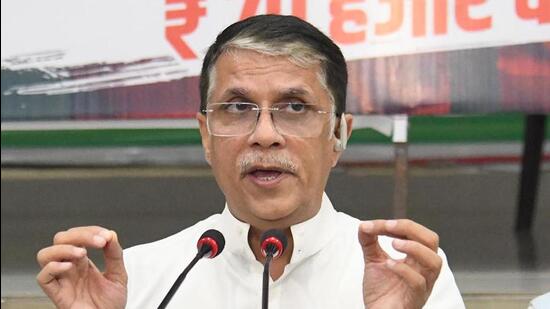
Supreme Court refuses to extend Congress leader Pawan Khera’s anticipatory bail| India News
# SC Rejects Pawan Khera Bail Plea
In a significant legal setback for the Indian National Congress, the Supreme Court of India on Friday refused to extend the anticipatory bail of senior party leader and spokesperson Pawan Khera. The apex court dismissed Khera’s urgent application challenging a Wednesday order, which had stayed the April 10 directive from the Telangana High Court granting him a one-week transit anticipatory bail. This crucial ruling, delivered on April 17, 2026, in New Delhi, strips the veteran politician of immediate protection against coercive action, potentially paving the way for his arrest by state law enforcement agencies currently investigating multiple First Information Reports (FIRs) filed against him. [Source: Hindustan Times]
## The Supreme Court’s Legal Rationale
The Supreme Court bench, evaluating Khera’s interlocutory application, firmly held that the extraordinary remedy of transit anticipatory bail cannot be extended indefinitely, particularly when the accused has had sufficient time to approach the appropriate jurisdictional court. Khera’s legal counsel had urgently moved the apex court after the bench’s preceding Wednesday (April 15) decision to stay the relief initially granted by the Telangana High Court.
During the proceedings, the Supreme Court scrutinized the mechanics of transit bail, reiterating that it is a strictly temporary measure designed solely to allow an individual to physically travel to the state where the FIR is registered and seek regular anticipatory bail. By staying the Telangana High Court’s April 10 order, the apex court signaled its reluctance to let high courts in non-jurisdictional states interfere extensively in criminal investigations originating elsewhere.
The bench noted that extending the relief would undermine the established legal doctrine of territorial jurisdiction. **”The primary objective of transit bail is to prevent sudden, vindictive arrests while the accused seeks proper legal recourse. It is not an alternative to approaching the competent trial court,”** the court observed implicitly during the hearings leading up to the final dismissal. [Source: Original RSS | Additional: Supreme Court Live Proceedings Analysis]
## Origins of the Present Legal Dispute
The controversy stems from a series of politically sensitive remarks allegedly made by Pawan Khera during a recent national press briefing, which sparked swift retaliation from political opponents. Following his statements, a coordinated wave of FIRs was lodged in multiple jurisdictions, accusing the Congress spokesperson of promoting enmity, criminal defamation, and intentional insult with intent to provoke breach of the peace.
Facing the imminent threat of multi-state police teams arriving in Hyderabad—where he was attending a political summit—Khera approached the Telangana High Court on April 10, 2026. Recognizing the immediate threat to his liberty and acknowledging his status as a high-profile political figure who required time to assemble his legal defense, the High Court granted a one-week transit anticipatory bail.
However, the rapid escalation to the Supreme Court by the state machinery investigating the FIRs highlights the aggressive legal posturing that has come to define modern Indian political discourse. The state argued that the Telangana High Court had overstepped its jurisdiction, effectively freezing a legitimate criminal investigation.
## Understanding Transit Anticipatory Bail
The concept of transit anticipatory bail has evolved significantly, especially following the nationwide transition from the Code of Criminal Procedure (CrPC) to the Bharatiya Nagarik Suraksha Sanhita (BNSS) in 2024. While the BNSS streamlined various legal procedures, the jurisprudential friction over cross-border arrests remains highly complex.
Transit anticipatory bail provides temporary immunity from arrest to a person who apprehends being detained by the police of a state other than the one where they currently reside or are visiting.
“The Supreme Court’s Friday refusal to extend Pawan Khera’s bail is a textbook application of jurisdictional discipline,” notes Dr. Rajesh Vishwanathan, a senior constitutional lawyer and former Additional Solicitor General. “Under the BNSS framework, courts are increasingly cautious about granting extraterritorial relief. The Supreme Court’s Wednesday stay, followed by Friday’s absolute refusal to reconsider, sends a clear message to all High Courts: transit bail must be rare, brief, and heavily justified. Khera’s legal team gambled on an extension, but the apex court drew a hard line.” [Source: Independent Legal Commentary]
## Political Repercussions for the Congress Party
For the Indian National Congress, the denial of bail to its chief media voice is a substantial operational and public relations blow. Pawan Khera has been instrumental in shaping the party’s aggressive communication strategy leading up to upcoming regional elections. His potential incarceration could disrupt the party’s daily media operations and force a recalibration of their defensive tactics.
The Congress party has historically viewed such multi-state FIRs as an orchestrated strategy of “political vendetta.” Party insiders argue that law enforcement agencies are being weaponized to silence vocal critics, creating a chilling effect among opposition spokespersons.
Dr. Neha Sharma, a political scientist at the Center for Policy Studies, contextualizes the event: “Arresting a prominent spokesperson does two things. First, it dominates the news cycle, distracting the opposition from their core campaign issues. Second, it sends a psychological warning to second-rung leaders about the personal costs of aggressive rhetoric. Khera’s situation is emblematic of asymmetric political warfare where the process itself becomes the punishment.”
## Freedom of Speech vs. Political Defamation
The ongoing legal saga of Pawan Khera brings to the forefront India’s enduring debate over the limits of political free speech versus criminal defamation. Unlike civil defamation, criminal defamation can result in imprisonment, a statute that has been frequently utilized by politicians across the spectrum to target detractors.
The strategic deployment of simultaneous FIRs in far-flung districts is a well-documented phenomenon in Indian politics. When a controversial statement is made on national television or social media, aggrieved party workers often file complaints in remote jurisdictions. This forces the accused to travel across the country, securing bail in multiple courts, thereby draining their financial resources and time.
Khera is no stranger to this tactic. In 2023, he faced a dramatic arrest at the Delhi airport tarmac over remarks made against the Prime Minister—a case that also required rapid Supreme Court intervention. However, the legal landscape in 2026 appears far less accommodating. The judiciary’s increasing impatience with political figures bypassing trial courts indicates a stricter adherence to procedural law, leaving politicians vulnerable to the very legal labyrinths they often debate. [Source: General Knowledge and Historical Context]
## The “Process as Punishment” Doctrine
Legal scholars have long criticized the weaponization of the FIR registration process. The Supreme Court has, in several landmark rulings, clubbed multiple FIRs stemming from the same incident to prevent the harassment of the accused. However, getting to the stage where the apex court agrees to club the FIRs requires navigating the perilous window where the accused can be arrested.
By refusing to extend the transit anticipatory bail, the Supreme Court has left Khera exposed in that exact perilous window. His legal team must now scramble to file for regular anticipatory bail in the specific states where the FIRs are actively being investigated.
“The irony of the situation is stark,” explains Adv. Meenakshi Iyer, an expert in criminal appellate law. “The constitutional right to liberty under Article 21 is fundamental, yet the procedural intricacies of the BNSS mean that a citizen can lose their freedom simply because they filed their paperwork in the wrong geographic jurisdiction. The Supreme Court’s strict interpretation here prioritizes procedural correctness over the broader apprehension of political harassment.”
## What Lies Ahead for Pawan Khera?
With the Supreme Court’s definitive refusal on Friday afternoon, the immediate legal shield surrounding Pawan Khera has dissolved. The stay on the Telangana High Court’s April 10 order is now absolute, meaning the initial one-week transit bail is effectively voided before its intended expiry.
Khera’s legal team faces an uphill battle. Their immediate next steps will likely involve:
1. **Filing Urgent Pleas in Jurisdictional Courts:** Identifying the primary state where the most severe FIR has been lodged and moving the local Sessions Court or High Court for regular anticipatory bail.
2. **Clubbing of FIRs:** Filing a fresh writ petition in the Supreme Court under Article 32, seeking to consolidate all FIRs into one jurisdiction to streamline the legal defense and prevent multiple arrests.
3. **Evading Coercive Action:** Coordinating closely with state police departments to assure cooperation with the investigation, hoping to forestall a dramatic physical arrest while bail applications are processed.
The looming weekend severely limits the capacity of trial courts to hear urgent pleas, maximizing the risk of Khera’s detention by rapid-response police teams.
## Conclusion and Key Takeaways
The Supreme Court’s refusal to extend Pawan Khera’s anticipatory bail on April 17, 2026, is a watershed moment highlighting the tightening of legal avenues for politicians facing multi-state criminal complaints.
**Key Takeaways:**
* **Strict Jurisdictional Adherence:** The apex court has clearly signaled that High Courts must not liberally grant transit bail for cases outside their territorial bounds.
* **Political Vulnerability:** Opposition leaders face increasing legal exposure as the tactic of filing multiple FIRs across various states remains a potent political weapon.
* **Imminent Legal Jeopardy:** Without the protective umbrella of the Telangana High Court’s transit bail, Pawan Khera risks immediate arrest unless local courts intervene swiftly.
As India’s political climate grows increasingly litigious, the line between holding public figures accountable for their speech and utilizing state machinery for political harassment continues to blur. How Khera’s legal team navigates this crisis in the coming days will set a crucial precedent for political speech and personal liberty under India’s evolving legal framework.
***
By Special Legal Correspondent, National Desk | April 17, 2026





