
ED raids nine places in Bengal in Public Distribution System 'scam' case| India News
# Bengal PDS Scam: ED Raids 9 Locations
By Special Correspondent | National Affairs Desk | April 25, 2026
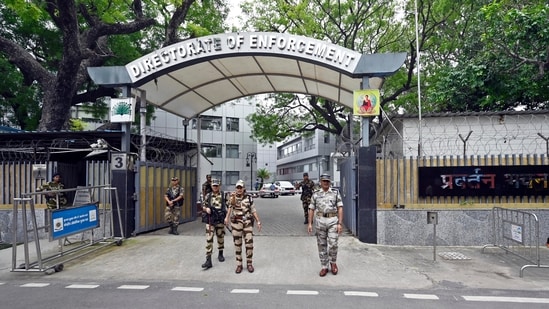
The Enforcement Directorate (ED) launched a series of extensive, coordinated search operations across nine locations in West Bengal early Saturday, April 25, 2026, in connection with the multi-crore Public Distribution System (PDS) scam. Acting on actionable intelligence regarding large-scale money laundering and cross-border smuggling, ED sleuths raided premises linked to prominent food grain suppliers, rice millers, and exporters. The ongoing raids are heavily concentrated in Kolkata, the agricultural hub of Burdwan, and the border-adjacent town of Habra. This aggressive crackdown aims to unearth the complex financial networks facilitating the diversion of highly subsidized ration grains to domestic open markets and international buyers, marking a critical escalation in the federal probe into systemic corruption within the state’s food safety net. [Source: Hindustan Times].
## Anatomy of the Saturday Crackdown
The raids commenced at dawn, with multiple teams of ED officials, flanked by heavily armed personnel from the Central Reserve Police Force (CRPF), descending simultaneously upon the target locations. The geographical spread of Saturday’s operations provides a clear map of the illicit supply chain being investigated.
In **Kolkata**, the focus has been on corporate offices and luxury residences of prominent exporters suspected of running front companies. In **Burdwan**—often referred to as the “rice bowl” of West Bengal—the agency targeted massive rice milling complexes where the physical diversion of grain allegedly takes place. Meanwhile, raids in **Habra**, located strategically in the North 24 Parganas district near the Bangladesh border, are focused on logistical operators who allegedly facilitated the smuggling of the stolen grain out of the country.
According to preliminary reports, investigators are primarily searching for digital footprints, forged procurement ledgers, and financial documents linking local grain distributors to international export syndicates. The federal agency is utilizing the stringent provisions of the Prevention of Money Laundering Act (PMLA) to trace the proceeds of the crime, which are estimated to run into thousands of crores of rupees over the past several years. [Source: Hindustan Times | Additional: Public records on PMLA procedures].
## Tracing the Roots of the Ration Scam
To understand the magnitude of Saturday’s raids, one must contextualize the evolution of the West Bengal PDS scam. The Public Distribution System is a vital lifeline for millions of impoverished citizens, designed to provide essential food grains like rice and wheat at highly subsidized rates through a network of Fair Price Shops (FPS).
The alleged scam involves a deep-rooted nexus among politicians, bureaucrats, rice mill owners, and local ration distributors. The modus operandi, as detailed in earlier charge sheets filed by federal agencies, begins at the procurement stage. Farmers are often coerced into selling their paddy at distress prices to middlemen, bypassing the Minimum Support Price (MSP) mechanism. The millers then allegedly process this grain, but instead of routing the required quota back to the state’s PDS grid, a massive percentage is siphoned off.
This siphoned grain is then either sold in the domestic open market at premium prices or packaged by exporters to be smuggled across international borders. The subsidized grain meant for the state’s poorest citizens is systematically stolen, creating an artificial scarcity that forces the very same citizens to buy food at inflated market rates.
## The Exporter Connection: A New Frontier
The most significant development in the April 2026 raids is the explicit targeting of “exporters.” For years, the investigation primarily hovered around local politicians and district-level millers. However, the realization that diverted PDS grains were being sold in foreign markets represents a massive structural shift in the probe.
“The evolution of the PDS scam from local village-level pilferage to an organized international smuggling operation highlights a highly sophisticated syndicate,” notes Vikram Singh, a New Delhi-based financial forensic analyst and former investigator. “When you bring exporters into the mix, you are no longer just dealing with stolen rice; you are dealing with hawala transactions, trade-based money laundering, and shell companies registered in tax havens. The ED’s move to target these exporters is aimed at cutting off the syndicate’s financial head.”
Investigators believe that the cash generated from the illicit sale of PDS grains is routed back into the formal banking system through a labyrinth of shell entities. These phantom companies, often operating out of cramped commercial spaces in Kolkata’s Burrabazar area, show fake trade invoices to legitimize the dirty money, eventually filtering it into real estate, offshore accounts, and political funding.
## Impact on the Marginalized Economy
Beyond the staggering financial figures, the PDS scam has a profound human cost. West Bengal has a significant population living below the poverty line, heavily dependent on the rations provided under both the National Food Security Act (NFSA) and state-sponsored schemes like the *Khadya Sathi* program.
When millions of tonnes of rice and wheat are diverted, the immediate victims are daily wage laborers, marginalized farmers, and impoverished urban families. Reports from rural districts over the past few years have frequently highlighted instances of beneficiaries receiving lesser quantities of grain than their entitlement, or receiving grain of vastly inferior quality.
Dr. Anirban Chatterjee, a prominent political-economy analyst based in Kolkata, emphasizes the socio-economic devastation caused by such systemic graft. “The Public Distribution System is the ultimate safety net against starvation in rural India,” Dr. Chatterjee explains. “When syndicates loot this system, it directly impacts the nutritional security of a generation. The fact that subsidized grain bought with taxpayers’ money is ending up in foreign markets is a gross violation of human rights masquerading as a financial crime.”
## Political Repercussions in a Crucial Year
The timing and scale of these raids cannot be divorced from the broader political landscape of West Bengal. As the state gears up for crucial legislative assembly elections in 2026, the actions of central investigative agencies like the ED and the Central Bureau of Investigation (CBI) remain a highly polarizing issue.
The ruling Trinamool Congress (TMC) has consistently accused the Bharatiya Janata Party (BJP)-led Union Government of weaponizing federal agencies to harass political opponents and destabilize the state administration. State ministers have frequently pointed out that while corruption should be rooted out, the selective targeting of businesses and leaders associated with the ruling state dispensation smacks of political vendetta.
Conversely, the BJP and other opposition parties in the state, including the CPI(M) and Congress, have lauded the ED’s efforts. They argue that the sheer volume of cash, property deeds, and gold previously seized from individuals connected to the scam is undeniable proof of state-sponsored institutional corruption. The opposition has built its current electoral narrative heavily around the twin planks of the PDS scam and the earlier school recruitment scam, urging voters to demand accountability.
## Data Breakdown: The Scope of the Scam
While exact figures of Saturday’s seizures are yet to be officially released, historical data from the ongoing PMLA investigation paints a grim picture of the scam’s magnitude.
| **Entity / Category** | **Estimated Impact / Seizure to Date** | **Role in the PDS Syndicate** |
| :— | :— | :— |
| **Rice Millers** | Hundreds of active bank accounts frozen | Showed fake procurement; diverted milled grain to the open market instead of state godowns. |
| **Ration Distributors** | Extensive property attachments | Maintained ghost ration cards; under-weighed grains to beneficiaries; sold excess to black marketeers. |
| **Exporters / Logisticians** | Under ED scanner in current raids | Facilitated the physical movement of stolen grain across borders using falsified customs declarations. |
| **Shell Companies** | ₹1,000+ Crores (estimated routing) | Used exclusively for trade-based money laundering to integrate illicit cash into the formal economy. |
*Disclaimer: Data reflects generalized estimates based on the cumulative progression of the PDS probe up to mid-2026. Official agency confirmations pending for Saturday’s specific seizures.*
## Implications for Corporate Compliance
Saturday’s raids also send a chilling warning to corporate entities, specifically in the logistics, export, and food processing sectors. The ED’s willingness to go after the “corporate layer” of the PDS scam indicates a tightening regulatory environment.
Companies engaging in the bulk export of agricultural commodities from eastern India are likely to face heightened scrutiny regarding their supply chain transparency. Banks and financial institutions are also being forced to implement stricter Know Your Customer (KYC) and Anti-Money Laundering (AML) checks, particularly for accounts exhibiting rapid, high-volume cash transactions linked to agricultural trade.
The legal burden of proof under the PMLA is famously stringent, often placing the onus on the accused to prove that their assets are untainted. For the exporters and suppliers currently facing the heat in Kolkata, Burdwan, and Habra, the coming days will likely involve intense interrogations, the potential freezing of corporate bank accounts, and a thorough forensic audit of their digital ledgers.
## Conclusion: Key Takeaways and Future Outlook
The Enforcement Directorate’s nine-location raid across West Bengal on April 25, 2026, marks a decisive new chapter in the investigation of the state’s PDS scam. By shifting the focus from local distributors to the powerful nexus of millers and international exporters, the agency is attempting to dismantle the very financial infrastructure that made the massive diversion of food grains possible.
**Key Takeaways:**
* **Expansion of Scope:** The probe has officially moved beyond domestic borders, acknowledging that stolen ration grain was systematically exported to neighboring countries.
* **Geographic Targeting:** Raids in Burdwan (supply hub), Habra (border logistics), and Kolkata (corporate/financial control) show a comprehensive approach to tackling the entire supply chain.
* **Political Repercussions:** With state elections looming, the ongoing ED actions will continue to serve as a massive flashpoint between the state government and the political opposition.
As the CRPF continues to secure the perimeters of the raided properties and ED officials pore over seized hard drives and ledger books, the citizens of West Bengal watch closely. The ultimate success of this investigation will not be measured merely by the volume of cash seized or the prominence of the individuals arrested, but by whether these actions can finally plug the leaks in a system designed to feed the poorest of the poor. The coming weeks are likely to see summons issued to corporate directors, potentially leading to a fresh wave of high-profile arrests as the federal agency connects the dots of this vast financial labyrinth.





