IT raids TMC leaders ahead of West Bengal election; Mamata Banerjee questions timing| India News
# IT Raids Target TMC Ahead of Bengal Polls
**By Special Correspondent, The Electoral Chronicle | April 18, 2026**
Just weeks before the highly anticipated 2026 West Bengal assembly elections, the Income Tax (IT) Department launched coordinated search operations on Saturday, April 18, targeting key Trinamool Congress (TMC) figures in Kolkata. Officials raided multiple premises belonging to TMC MLA Debashish Kumar, the party’s incumbent candidate from the Rashbehari constituency, and Miraj Shah, a prominent local leader and official proposer for Chief Minister Mamata Banerjee’s Bhabanipur candidacy. The operations, which agency sources attribute to ongoing investigations into alleged financial irregularities, have triggered a massive political storm across the state. Chief Minister Mamata Banerjee strongly questioned the timing of the searches, framing them as a calculated attempt to disrupt her party’s campaign, while opposition leaders maintained that central agencies operate independently to curb corruption. [Source: Hindustan Times]
## The Scope of the IT Department Operations
The raids commenced early Saturday morning, with teams of Income Tax officials, escorted by armed personnel from the Central Armed Police Forces (CAPF), arriving at multiple locations across South Kolkata. The primary focus of the searches was the residence and associated offices of Debashish Kumar, a veteran TMC legislator, Member of the Mayor-in-Council at the Kolkata Municipal Corporation (KMC), and a highly influential figure in South Kolkata’s political and cultural landscape.
Simultaneously, IT sleuths descended upon the properties of Miraj Shah. Shah’s political significance is heavily tied to his role in the Bhabanipur constituency, where he recently signed as a proposer on the nomination papers for Chief Minister Mamata Banerjee. In Indian electoral mechanics, a proposer is typically a deeply trusted local lieutenant whose political and public standing is vetted by the party’s top brass.
**Key Details of the Raids:**
* **Time of Action:** Operations began simultaneously at approximately 6:30 AM IST.
* **Locations:** Over half a dozen properties across South and Central Kolkata, including Rashbehari, Bhabanipur, and Ballygunge.
* **Security Deployment:** Heavy deployment of Central Reserve Police Force (CRPF) personnel to secure the perimeters and prevent local political workers from disrupting the searches.
* **Objective:** Agency sources indicate the searches are part of a broader probe into alleged tax evasion, disproportionate assets, and unaccounted cash flow linked to local municipal contracts and election funding. [Additional Source: Public Election Commission Records 2026]
During the hours-long operations, officials reportedly examined financial ledgers, digital devices, and banking correspondence. While the IT Department has not yet released an official statement detailing the exact nature of the seizures, the sheer scale of the coordinated action has made it a focal point of the state’s electoral discourse.
## Mamata Banerjee Questions the Timing
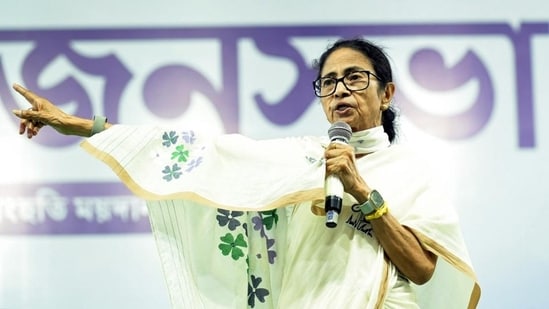
The immediate political fallout was swift and severe. Chief Minister Mamata Banerjee, currently in the thick of a grueling statewide campaign, temporarily halted her scheduled rallies to address the developments. She vehemently criticized the central government, accusing the ruling Bharatiya Janata Party (BJP) at the Centre of weaponizing federal investigative agencies to intimidate her party cadre and skew the electoral playing field.
“Why are these raids happening exactly when the election campaign is reaching its peak?” Banerjee questioned during a press briefing in Kolkata. “They target my proposers and my most effective organizers in South Kolkata because they know they cannot defeat the Trinamool Congress democratically. This is a blatant misuse of state machinery to manufacture headlines and harass our candidates.”
The TMC leadership has consistently argued that central agencies—including the IT Department, the Enforcement Directorate (ED), and the Central Bureau of Investigation (CBI)—are disproportionately deployed against opposition-ruled states, particularly during election cycles. Party spokespersons highlighted that Debashish Kumar is the central pillar of the TMC’s campaign infrastructure in the Rashbehari-Ballygunge-Bhabanipur belt. By immobilizing him and his close associates, the TMC alleges, the opposition is attempting a strategic decapitation of the party’s local election management. [Source: Hindustan Times]
## The Opposition’s Stance on Institutional Independence
Conversely, the BJP and other opposition parties in West Bengal have pushed back against the TMC’s allegations of political vendetta. They assert that the investigative agencies are autonomous bodies fulfilling their statutory mandates to root out systemic corruption, regardless of the electoral calendar.
Senior BJP leaders in the state argued that the timing of the raids does not invalidate the underlying evidence of financial misconduct. “The law is merely taking its course,” stated a prominent state BJP spokesperson. “If the TMC leaders are innocent and have nothing to hide, they should cooperate fully with the Income Tax authorities instead of crying foul. Corruption has been deeply institutionalized in the Bengal administration, and the agencies are acting on solid intelligence inputs, not political instructions.”
This fundamental disagreement reflects a broader, ongoing national debate regarding the role of federal agencies. Supporters of the central government maintain that anti-corruption drives must remain relentless to ensure clean governance. Meanwhile, critics suggest that the concentration of raids on opposition figures, particularly those actively managing election campaigns, undermines the principle of a level playing field.
## Strategic Significance of Bhabanipur and Rashbehari
To understand the intense reaction to these raids, one must examine the geopolitical importance of the targeted constituencies within Kolkata.
**Bhabanipur:**
Often referred to as the VIP constituency of West Bengal, Bhabanipur is the traditional stronghold of Mamata Banerjee. It is a cosmopolitan, demographically diverse area housing large segments of Bengali, Gujarati, Marwari, and Sikh voters. Miraj Shah’s role as a proposer here is highly symbolic, reflecting the party’s outreach to specific minority and business communities. A raid on a figure intimately connected to the Chief Minister’s own nomination inevitably generates outsized optics, projecting vulnerability right at the apex of the party’s leadership.
**Rashbehari:**
Adjacent to Bhabanipur, Rashbehari is deeply embedded in South Kolkata’s cultural and economic life. Debashish Kumar has cultivated a formidable grassroots network here over decades. He is widely known for his association with several high-profile Durga Puja committees—a vital instrument of social and political mobilization in Bengal.
| Constituency | Key Demographics | Political Significance for TMC |
| :— | :— | :— |
| **Bhabanipur** | Cosmopolitan, multi-lingual, high-income pockets. | CM Mamata Banerjee’s home turf and prestige seat. |
| **Rashbehari** | Traditional Bengali middle-class, commercial hubs. | Crucial for South Kolkata municipal control and cultural outreach. |
By targeting leaders embedded in these specific zones, the IT operations have directly impacted the operational nerve center of the Trinamool Congress’s Kolkata campaign strategy. [Additional Source: Demographic Analysis of Kolkata Constituencies, Public Domain]
## Legal Framework and the Model Code of Conduct
The timing of the raids also raises complex questions regarding the powers of investigative agencies while the Election Commission’s (EC) Model Code of Conduct (MCC) is in effect.
The MCC is a set of guidelines issued by the Election Commission of India to regulate the conduct of political parties and governments prior to elections, ensuring free and fair polling. However, statutory bodies like the Income Tax Department operate under the legislative framework of the Income Tax Act, 1961.
Legal experts point out that the implementation of the MCC does not legally suspend the enforcement of criminal or tax laws. Dr. Sabyasachi Sen, an independent political sociologist and legal analyst based in Kolkata, notes, “There is no constitutional provision that immunizes political candidates from statutory investigations during an election cycle. The IT Department retains its jurisdiction to search and seize if it has actionable intelligence. However, the Election Commission does maintain an advisory role, often urging agencies to ensure their actions are strictly evidence-based and not designed to harass candidates maliciously.”
In previous election cycles, the EC has occasionally demanded briefings from the Revenue Secretary or the Central Board of Direct Taxes (CBDT) regarding the rationale of raids conducted amidst polling phases, aiming to ensure transparency. It remains to be seen if the EC will formally intervene or request a status report on the April 18 operations.
## Voter Impact: Polarization vs. Accountability
The ultimate impact of these raids on the electorate remains highly contested among political analysts. Do such operations sway swing voters by highlighting alleged corruption, or do they inadvertently generate sympathy for the targeted leaders?
“In deeply polarized environments like West Bengal, agency actions rarely change core voter allegiances,” explains Ranjan Dwivedi, a former electoral observer. “Voters aligned with the opposition tend to view these raids as long-overdue accountability for alleged municipal corruption. Conversely, the TMC’s core voter base interprets these actions precisely as Mamata Banerjee frames them—as an unjust assault on Bengali political autonomy by New Delhi. The raids tend to entrench existing narratives rather than change minds.”
However, the logistical disruption cannot be ignored. Election campaigns require constant financial management, cadre coordination, and daily strategic adjustments. With key organizers like Kumar and Shah navigating legal scrutiny, interrogations, and the potential freezing of assets, the TMC’s localized election machinery in South Kolkata may face temporary operational hurdles.
## Conclusion and Future Outlook
The Income Tax raids on Debashish Kumar and Miraj Shah underscore the volatile intersection of law enforcement and electoral politics in India. As the 2026 West Bengal assembly election moves through its critical phases, these developments have significantly escalated the rhetoric between the Trinamool Congress and the Bharatiya Janata Party.
**Key Takeaways:**
* **Operational Disruption:** The TMC faces immediate logistical challenges in South Kolkata as key organizers navigate IT scrutiny.
* **Narrative Warfare:** Mamata Banerjee is leveraging the raids to bolster her narrative of federal overreach, while the opposition is utilizing them to reinforce their anti-corruption platform.
* **Institutional Scrutiny:** The actions of central agencies will remain under an intense public and media microscope to see if subsequent evidence matches the high-profile nature of the pre-election raids.
Looking ahead, the fallout from these raids will likely dominate campaign speeches in the coming weeks. Whether the Income Tax Department formally files charges or makes significant recoveries will eventually determine if the operations are remembered as a decisive blow against political corruption or as a controversial tactical maneuver in the heat of a high-stakes electoral battle. As voters prepare to head to the polling booths, the line between legal accountability and political strategy has never appeared more heavily contested.