PM Narendra Modi to address the nation at 8:30 pm today| India News
# PM Modi’s 8:30 PM Address: Women’s Quota in Focus
**By Senior Political Correspondent, The National Desk | April 18, 2026**
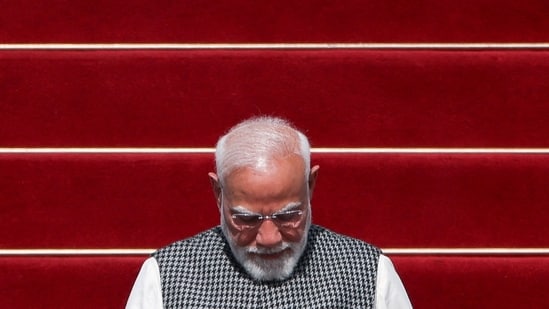
Prime Minister Narendra Modi is scheduled to address the nation at 8:30 PM tonight, April 18, 2026, to outline the government’s roadmap for implementing the long-awaited women’s reservation quota and to address recent legislative developments in Parliament. Broadcast live from the Prime Minister’s Office in New Delhi, this highly anticipated televised speech is expected to clarify the timeline for the 33 percent electoral quota for women in the Lok Sabha and state assemblies. Triggered by intense parliamentary debates over the past week, tonight’s address aims to answer pressing questions regarding the upcoming national census, the delimitation exercise, and the future of India’s democratic framework. [Source: Hindustan Times].
## The Context of the Prime Ministerial Broadcast
When the *Nari Shakti Vandan Adhiniyam* (Women’s Reservation Bill) was passed overwhelmingly by both houses of Parliament in September 2023, it was hailed as a watershed moment for Indian democracy. However, a crucial caveat was woven into the legislation: the implementation of the 33 percent quota was explicitly made contingent upon the completion of the next decadal census and the subsequent delimitation of parliamentary and assembly constituencies.
Now, in April 2026, the constitutional freeze on the delimitation of parliamentary seats—put in place by the 84th Amendment to the Constitution—is set to expire. The convergence of this expiring freeze, the pending census, and the monumental women’s quota has created a complex constitutional and political puzzle.
Tonight’s address by Prime Minister Modi is widely anticipated to break the silence on how the ruling government plans to synchronize these three massive administrative exercises. Political corridors have been buzzing with speculation that the PM will formally announce the commencement dates for the digital census, thereby initiating the first domino in the chain of events required to bring the women’s quota into active effect before the 2029 general elections. [Additional Source: Public Policy Records 2023-2026].
## Navigating the Delimitation and Census Hurdles
Implementing a policy that reserves one-third of all legislative seats for women requires an accurate baseline of demographic data, which India currently lacks due to the delay of the 2021 census. The Prime Minister is expected to address this bottleneck directly.
“The logistical reality of the women’s reservation bill is that it cannot exist in a vacuum. It requires a newly drawn electoral map,” explains Dr. Meenakshi Iyer, a Senior Fellow of Constitutional Law at the Center for Democratic Studies. “If Prime Minister Modi announces the schedule for the census tonight, he is essentially setting the stopwatch for the Delimitation Commission. The subsequent redrawing of constituencies will determine exactly which seats will be reserved for women candidates.”
However, delimitation is fraught with its own geopolitical sensitivities, particularly regarding the demographic divide between India’s northern and southern states. Southern states, which have successfully implemented population control measures over the last four decades, have consistently expressed apprehension that a population-based redrawing of Lok Sabha seats will disproportionately shift political power to the more populous northern states.
During his 8:30 PM broadcast, PM Modi is expected to touch upon this delicate balance. Assuaging the fears of southern states while pushing forward with the administrative requirements of the women’s quota will require a nuanced policy approach, and analysts will be closely parsing the Prime Minister’s words for guarantees of regional political parity.
## Recent Parliamentary Flashpoints
The Hindustan Times snippet correctly notes that the Prime Minister’s address will also delve into “developments in Parliament.” The current parliamentary session has witnessed heated exchanges, with opposition alliances demanding immediate implementation of the women’s quota without waiting for the census and delimitation exercises.
Furthermore, the opposition has consistently lobbied for a “quota within a quota,” demanding that a specific percentage of the reserved seats be explicitly allocated to women from Other Backward Classes (OBCs). While the original bill includes reservations for women belonging to Scheduled Castes (SC) and Scheduled Tribes (ST) in line with constitutional mandates, the OBC sub-quota has remained a significant point of legislative friction.
Recent walkouts and disruptions in the Lok Sabha have underscored the urgency of the matter. By choosing to address the nation directly, PM Modi is likely attempting to bypass the parliamentary gridlock and communicate his administration’s rationale directly to the electorate.
“Addressing the nation at 8:30 PM is a classic communication strategy utilized by the Prime Minister for sweeping, structural announcements,” notes Rajeev Sharma, a veteran political analyst. “By framing the parliamentary disruptions as impediments to women’s empowerment, the government aims to seize the moral high ground and present a definitive roadmap that puts the onus of cooperation back onto the opposition.” [Additional Source: Independent Political Analysis].
## What to Expect from Tonight’s Address
While the exact text of the speech remains a closely guarded secret within the PMO, government insiders and structural analysts point to several probable policy declarations:
1. **Census Timelines:** The most anticipated announcement is the official kickoff for the long-delayed Census, which is projected to be India’s first entirely digital census operation. A clear timeline here sets the foundation for the entire quota implementation.
2. **Delimitation Commission Framework:** The Prime Minister may announce the formation or the guiding principles of the upcoming Delimitation Commission, possibly offering structural reassurances to southern states to prevent a loss of proportional representation.
3. **Phased Rollout Strategy:** Given the immense scale of reserving 33 percent of seats across state assemblies and the Lok Sabha, the PM might introduce a phased or rotational strategy to ensure seamless integration into the electoral process.
4. **Addressing the OBC Sub-Quota Debate:** Modi may use the platform to clarify the government’s official stance on the opposition’s demands for an OBC carve-out, potentially outlining alternative socio-economic welfare schemes aimed at backward classes to balance the political narrative.
## Shifting the Democratic Paradigm
The successful implementation of the women’s quota represents a tectonic shift in Indian politics. Once active, the presence of women in the Lok Sabha will jump to over 181 members, fundamentally altering the demographic makeup of the highest legislative body in the country.
This policy goes beyond mere representation; it is expected to influence the very nature of policy formulation. Global political data suggests that higher female representation in national legislatures correlates strongly with increased investment in healthcare, education, and community infrastructure. In the context of India, bringing the women’s quota to fruition ties deeply into the Modi administration’s overarching “Nari Shakti” (Women Empowerment) narrative, which has been a cornerstone of their electoral strategy and economic planning.
However, the transition from legislative intent to ground-level reality requires overcoming deep-seated patriarchal structures within regional party politics. Ensuring that the reserved seats empower grassroots women leaders—rather than acting as proxies for established male politicians—will be the true test of the *Nari Shakti Vandan Adhiniyam*. Tonight’s address may provide insight into how the government plans to enforce the spirit, not just the letter, of the law.
## Conclusion and Future Outlook
As the clock ticks closer to 8:30 PM, the nation waits with bated breath. Prime Minister Narendra Modi’s address is poised to be far more than a routine update; it is expected to be a definitive action plan that will redraw India’s electoral map and alter its legislative destiny.
**Key Takeaways to watch for:**
* **Actionable Dates:** Look for specific months and years regarding the census rollout and the commencement of the delimitation process.
* **Regional Reassurances:** Pay close attention to any constitutional safeguards proposed to protect the political weight of southern states.
* **Political Maneuvering:** Observe how the Prime Minister contextualizes the recent parliamentary disruptions and addresses the opposition’s demands for an OBC sub-quota.
Ultimately, tonight’s broadcast will signal whether India is ready to take the final, decisive steps toward enacting one of the most profound democratic reforms in its independent history. The roadmap laid out this evening will not only shape the legislative agenda for the remainder of the year but will set the definitive political battleground for the 2029 Lok Sabha elections.