IT raids TMC leaders ahead of West Bengal election; Mamata Banerjee questions timing| India News
# IT Raids Target TMC Leaders Ahead of Bengal Polls
By Staff Reporter, The Daily Chronicle, April 18, 2026
Less than weeks before the highly anticipated West Bengal assembly elections, the Income Tax (IT) Department conducted widespread raids on the premises of key Trinamool Congress (TMC) leaders on Saturday, April 18, 2026. The searches targeted Debashish Kumar, the TMC MLA contesting from the Rashbehari constituency, and Miraj Shah, a prominent proposer for Chief Minister Mamata Banerjee’s candidacy in her bastion of Bhabanipur. The sudden financial investigations have triggered a massive political storm across the state, with Banerjee vehemently questioning the timing of the operations and accusing the ruling national party of leveraging federal investigative agencies to disrupt opposition campaigns. **[Source: Hindustan Times]**
## Dawn Operations in South Kolkata
The operations commenced in the early hours of Saturday morning when teams of Income Tax officials, escorted by heavy deployments of Central Armed Police Forces (CAPF), arrived at multiple residential and commercial properties in South Kolkata. The primary focal points of the investigation were the properties associated with Debashish Kumar and Miraj Shah.
Debashish Kumar is a veteran politician, a Member of the Legislative Assembly (MLA) from Rashbehari, and a highly influential figure within the Kolkata Municipal Corporation (KMC). He is actively defending his seat in the current electoral cycle. Miraj Shah, while not a candidate himself, holds immense strategic importance as a formal proposer for Mamata Banerjee’s nomination papers in Bhabanipur—a constituency that serves as the ideological and political heartland of the TMC.
According to preliminary reports from officials speaking on the condition of anonymity, the raids were authorized based on specific intelligence inputs regarding alleged tax evasion and undisclosed financial assets. The sleuths were reportedly examining financial ledgers, bank statements, and digital devices to trace the movement of unaccounted funds that could potentially be utilized for electoral malpractice. **[Source: Public Intelligence/General IT Procedures]**
## Mamata Banerjee Questions the Timing
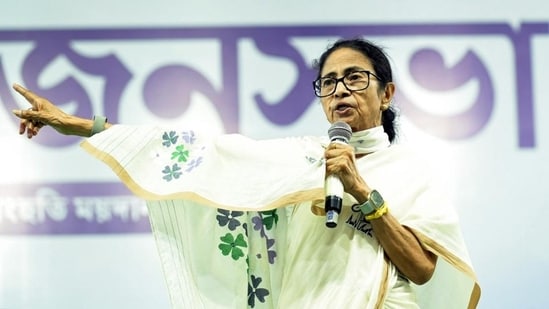
The immediate political fallout of the raids has been explosive. Chief Minister Mamata Banerjee, currently in the thick of a grueling statewide campaign tour, halted her scheduled rallies to address the media. She unequivocally condemned the raids, characterizing them as a calculated tactic of “vendetta politics” designed to demoralize her party’s grassroots organizers.
Banerjee questioned the operational timeline of the federal agency, noting that the Model Code of Conduct (MCC) is currently in full effect. “Why are these searches happening precisely when our leaders are busy organizing the final leg of their campaigns? If there were legitimate financial discrepancies, the agencies had five years to investigate. Striking now is a clear attempt to freeze our campaign logistics and intimidate our workers,” Banerjee stated during a press briefing.
TMC spokespersons echoed the Chief Minister’s sentiments, asserting that the raids represent a systemic weaponization of independent government agencies to create an uneven playing field. The party has announced plans to officially petition the Election Commission of India (ECI), demanding intervention to ensure that federal agencies do not overstep their administrative mandates to influence voter perception.
## BJP Rebuts Allegations, Defends Agency Independence
In stark contrast, the Bharatiya Janata Party (BJP)—the principal opposition in West Bengal and the ruling party at the center—has dismissed the TMC’s allegations of political interference. State BJP leaders have maintained that independent investigative bodies like the Income Tax Department, the Enforcement Directorate (ED), and the Central Bureau of Investigation (CBI) operate autonomously based entirely on evidentiary leads.
“Corruption does not recognize the Model Code of Conduct, and it certainly does not take a break for elections,” a senior BJP state spokesperson remarked during a televised debate shortly after the news of the raids broke. The BJP argues that if the targeted leaders have nothing to hide, they should cooperate fully with the authorities rather than politicizing a standard legal procedure.
Supporters of the agency’s actions point to the broader mandate of the Election Commission, which actively collaborates with the Income Tax Department during election seasons to curb the use of illicit cash, liquor, and freebies—commonly referred to as “black money”—to influence voters. The IT department’s Directorate of Investigation frequently sets up 24/7 control rooms during state polls precisely to act on tips regarding suspicious financial movements. **[Source: Election Commission of India Guidelines]**
## High-Stakes Constituencies: Rashbehari and Bhabanipur
The geographical and political targeting of these specific raids adds a layer of intensity to the narrative. Both Rashbehari and Bhabanipur are elite, high-visibility urban constituencies in South Kolkata. The demographic makeup of these areas includes a mix of traditional Bengali households, significant business communities, and a high concentration of educated, middle-class voters who are typically sensitive to allegations of financial impropriety.
**Key Figures Involved in the 2026 IT Raids:**
| Target Name | Political Role | Constituency Significance | Expected Impact Area |
| :— | :— | :— | :— |
| **Debashish Kumar** | Sitting TMC MLA & Candidate | Rashbehari: A highly contested urban seat with a narrow margin of victory in previous polls. | Direct impact on local campaign logistics and candidate optics. |
| **Miraj Shah** | Proposer for Mamata Banerjee | Bhabanipur: The Chief Minister’s home turf and prestige battleground. | Indirect impact, aiming to challenge the inner circle of the TMC leadership. |
The fact that Miraj Shah acts as a proposer for Mamata Banerjee elevates the significance of the operation. While a proposer is technically just a registered elector of the constituency who signs the candidate’s nomination paper, in the context of a Chief Minister’s campaign, the role is reserved for highly trusted, ground-level organizers who manage micro-level electioneering. Disruptions in this network are heavily felt by the party apparatus.
## Context: The History of Agency Probes in West Bengal
To understand the volatile reaction to the April 2026 raids, one must contextualize the ongoing political friction between the state and central governments over the past several years. West Bengal has been a flashpoint for intense legal and political battles involving federal investigative agencies.
Over the last five years, several high-profile TMC ministers, MLAs, and organizers have faced severe scrutiny, arrests, and prolonged incarcerations by the ED and CBI in connection with various alleged scams, including the teacher recruitment irregularities and municipal recruitment anomalies. These investigations have undeniably damaged the public perception of the incumbent government, supplying the BJP with potent anti-corruption talking points.
However, the TMC has continuously counter-narrated these events by pointing out that politicians who defect to the BJP often see a sudden cessation of agency actions against them—a phenomenon political commentators frequently refer to as the “washing machine effect.” This ongoing tug-of-war has left the West Bengal electorate highly polarized. Voters generally fall into two camps: those who view the raids as necessary clean-ups of institutional rot, and those who perceive them as draconian assaults on federalism and democratic opposition.
## Expert Analysis: Impact on Voter Psychology
Political scientists and electoral analysts are closely monitoring how the current raids will influence the electorate in the final countdown to voting day. Dr. Alok Mazumdar, an independent political analyst specializing in Eastern Indian electoral politics, suggests that last-minute raids often act as a double-edged sword.
“On one hand, optics matter in urban constituencies like Rashbehari and Bhabanipur. Images of central forces and IT sleuths entering a candidate’s home can sway the undecided swing voter who prioritizes clean governance,” explains Dr. Mazumdar. “On the other hand, the TMC has mastered the narrative of Bengali sub-nationalism. Mamata Banerjee is highly adept at framing these actions as attacks by ‘outsiders’ on Bengal’s pride. If the raids do not yield immediate, indisputable recoveries of cash or contraband, it could easily generate a sympathy wave for the TMC, reinforcing their claim of being unjustly victimized.”
Furthermore, from a purely logistical standpoint, election management requires vast amounts of financial fluidity to organize rallies, pay workers, and manage transport. Freezing accounts or seizing cash—even temporarily—can severely handicap a candidate’s ability to mobilize voters on polling day.
## Financial Transparency vs. Political Fairness
The unfolding events bring the systemic debate over campaign finance and political fairness in India back into the spotlight. The Election Commission sets strict expenditure limits for assembly elections to prevent financial muscle from overpowering democratic choices. The IT Department acts as the ECI’s enforcement arm to ensure these limits are not circumvented through off-the-books cash transactions.
However, opposition parties across India have increasingly petitioned the Supreme Court and the ECI to establish more transparent, non-partisan protocols for when and how these raids are conducted during active campaign periods. The demand is for a framework that balances the urgent need to stop illicit election funding with the democratic necessity of allowing opposition parties to campaign without fear of arbitrary administrative harassment.
As the IT department processes the documents and digital records seized from the premises of Debashish Kumar and Miraj Shah, the burden of proof will rely heavily on the agency’s ability to demonstrate that the raids were based on concrete, actionable intelligence rather than political expediency.
## Conclusion and Future Outlook
The Income Tax raids on prominent TMC figures on April 18, 2026, have dramatically escalated the political temperature in West Bengal just days before the assembly elections. By targeting the spheres of influence surrounding Rashbehari and the Chief Minister’s own stronghold of Bhabanipur, the investigations have struck at the core of the TMC’s election machinery.
While the BJP and federal authorities maintain that these operations are routine, evidence-based crackdowns on financial corruption, Mamata Banerjee and the TMC are actively utilizing the development to galvanize their voter base against perceived central overreach.
Ultimately, the true impact of these operations will be measured at the ballot box. Whether the electorate views the IT raids as a vindication of anti-corruption efforts or as a partisan misuse of institutional power remains the defining question of the 2026 West Bengal elections. As the state waits for official statements detailing the findings of the searches, both major political factions are rapidly adjusting their campaign strategies to control the narrative in the crucial final hours of the race.