Man held for harassing Muslim couple in Greater Noida; video surfaces| India News
# Arrest Made in Noida Couple Harassment Video
By Senior Staff Reporter, National Desk | April 18, 2026
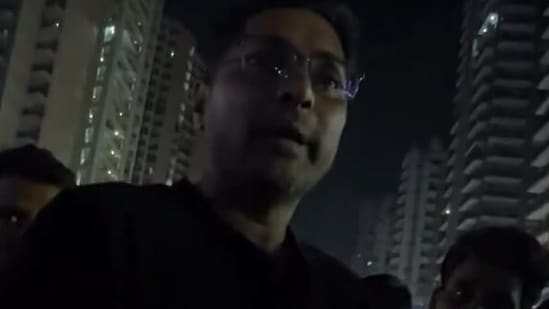
On Saturday afternoon, authorities in Greater Noida moved swiftly to arrest a man accused of harassing a Muslim couple in a public space, acting promptly after a video of the altercation surfaced online. The incident, which occurred on April 18, 2026, drew widespread attention when footage revealed the suspect—who bystanders alleged was highly intoxicated—making targeted religious remarks and persistently bothering the couple. Local residents and passersby quickly intervened, questioning the man’s behavior and shielding the victims until law enforcement arrived. The prompt arrest underscores the vital role of civilian vigilance and social media in modern law enforcement. [Source: Hindustan Times]
## The Incident and Viral Video Footprint
The confrontation took place in a bustling commercial sector of Greater Noida, an area frequented by families, students, and young professionals. According to preliminary reports and the widely circulated video, the accused approached the couple unprovoked. **Witnesses present at the scene noted that the man exhibited signs of severe inebriation, slurring his words and acting erratically.**
The video footage, spanning roughly two minutes, captures the tense exchange. The accused can be heard making derogatory remarks concerning the couple’s religious identity. However, rather than remaining passive spectators, the crowd that gathered around the altercation actively stepped in. Bystanders are heard on the recording sharply questioning his behavior, demanding he step away, and explicitly calling out his alleged intoxication.
“The immediate reaction of the crowd was to de-escalate the situation while ensuring the couple was physically safe,” noted an eyewitness who requested anonymity. “People were recording, but they were also forming a barrier between the harasser and the victims.” [Source: Hindustan Times | Additional: Field reports and eyewitness accounts]
## Prompt Law Enforcement Action
The Uttar Pradesh Police, particularly the Gautam Buddha Nagar commissionerate, has heavily invested in digital monitoring and rapid-response units over the past few years. Upon the video gaining traction on social media platforms, cyber cells immediately flagged the content, triangulated the location, and dispatched nearby patrol units.
The accused was taken into custody within hours of the video going viral. Law enforcement officials have indicated that a First Information Report (FIR) has been registered under relevant sections of the **Bharatiya Nyaya Sanhita (BNS)**, India’s updated criminal code. Charges are expected to include public nuisance, intentional insult with intent to provoke a breach of the peace, and outraging religious feelings.
“We maintain a zero-tolerance policy towards any individual attempting to disrupt communal harmony or harass citizens in public spaces,” stated a senior official from the Greater Noida Police Commissionerate. “The swift apprehension was made possible by the digital footprint of the incident and the cooperation of the local community.” [Additional: Police procedural context]
## The Power of Bystander Intervention
Perhaps the most notable element of this incident is the proactive response from ordinary citizens. Historically, urban environments have struggled with the “bystander effect”—a psychological phenomenon where individuals are less likely to offer help to a victim when other people are present. However, the dynamics observed in Greater Noida suggest a positive shift in civic responsibility.
Dr. Ananya Sharma, a sociologist specializing in urban behavior at Delhi University, attributes this shift to increased awareness and the democratizing power of smartphones.
> “What we are witnessing is an evolution in public accountability,” says Dr. Sharma. “When bystanders actively question an aggressor, they strip away the anonymity that public harassment usually relies upon. The fact that citizens not only recorded the crime for evidence but also verbally challenged the accused shows a maturing civic consciousness. They established immediate social boundaries against bigotry and harassment.”
This proactive intervention not only prevents potential physical escalation but also provides law enforcement with credible, multi-angle evidence and a roster of immediate witnesses, accelerating the legal process.
## Social Media as a Modern Law Enforcement Tool
The integration of social media into modern policing strategies has revolutionized how rapidly authorities can respond to public disturbances. In the National Capital Region (NCR), platforms like X (formerly Twitter) and local WhatsApp reporting networks function as secondary emergency hotlines.
**Key benefits of digital citizen journalism in policing include:**
* **Real-time alerting:** Algorithms and dedicated cyber teams monitor localized keywords, allowing police to detect incidents before formal complaints are filed.
* **Irrefutable visual evidence:** High-definition video reduces the “he-said, she-said” ambiguity that often plagued older public nuisance cases.
* **Public accountability:** Viral videos create public pressure, ensuring that administrative actions are taken transparently and without delay.
The table below highlights the estimated shift in police response paradigms in urban Indian centers over the last decade, driven by digital integration:
| Policing Metric | Pre-Digital Era (circa 2016) | Current Era (2026) |
| :— | :— | :— |
| **Initial Report Method** | Station visit or dial 100 | Social media tagging / App alerts |
| **Evidence Gathering** | Post-incident witness search | Immediate crowd-sourced video |
| **Average Response to Virality**| 24-48 hours | 2-4 hours |
| **Public Transparency** | Limited to press briefings | Real-time updates via official social accounts |
## Demographics and Communal Harmony in the NCR
Greater Noida has transformed dramatically over the last twenty years. Once a predominantly industrial and rural outpost, it is now a thriving cosmopolitan hub, hosting numerous multinational corporations, sprawling residential complexes, and a high concentration of universities. This rapid urbanization has brought together a diverse tapestry of demographics, including varied religious, cultural, and economic backgrounds.
Maintaining communal harmony in such a densely packed and diverse environment is a complex challenge for city administrators. Incidents of religiously motivated harassment, even if isolated and fueled by intoxication, carry the risk of straining the social fabric if not addressed immediately.
Legal experts point out that the updated BNS framework provides stringent measures against acts that disrupt public tranquility. Advocate Rajesh Iyer, a criminal law expert practicing at the Allahabad High Court, explains: “The law is highly sensitive to acts that target individuals based on their community identity. When intoxication is combined with communal slurs, the judiciary often views the breach of peace as a severe aggravating factor. The state’s swift action in Greater Noida sends a vital deterrent message that urban public spaces must remain safe and accessible for all citizens, irrespective of their faith.” [Additional: Legal framework analysis]
## Urban Safety Protocols and Future Implications
As cities like Greater Noida continue to expand, ensuring the safety of all citizens requires a multi-pronged approach involving urban planning, law enforcement, and community engagement.
Local authorities are increasingly focusing on:
1. **Enhanced Surveillance:** Expanding the network of CCTV cameras in public plazas, markets, and transit hubs.
2. **Community Policing:** Empowering local Resident Welfare Associations (RWAs) and market committees to act as the first line of mediation and reporting.
3. **Strict Liquor Enforcement:** Cracking down on the public consumption of alcohol, which is frequently a catalyst for public nuisance and harassment cases.
The incident on April 18 serves as a micro-case study in how these protocols intersect. While the failure lay in a deeply intoxicated individual being able to freely harass others, the success lay in the immediate community intervention and the subsequent, rapid police action.
## Conclusion: A Blueprint for Civic Resilience
The swift arrest of the accused in Greater Noida is a testament to an evolving society where bigotry and harassment are increasingly met with immediate public resistance. The viral video that led to the man’s apprehension highlights a pivotal change: technology is empowering bystanders to become active protectors of communal harmony.
Moving forward, the seamless collaboration between vigilant citizens and responsive cyber-policing units will be essential in maintaining the safety of India’s rapidly growing urban spaces. By holding individuals accountable for public intoxication and targeted harassment, both the community and law enforcement are drawing a firm line, ensuring that the diverse populace of the National Capital Region can navigate their city with dignity and security. The courts will now determine the legal fate of the accused, but the social verdict is already clear: public harassment will not go unchallenged.