Hurdle in Maldives’ currency swap bid with India| India News
# Maldives-India Currency Swap Hits Major Hurdle
**By Financial Desk, South Asian Economic Review, April 20, 2026**
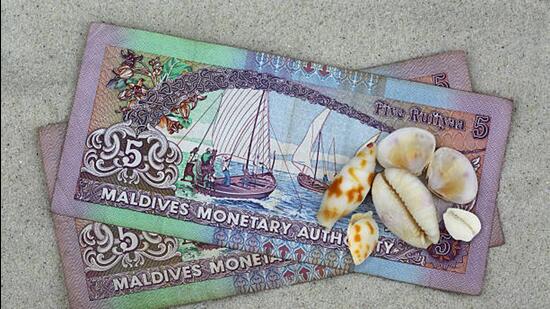
In a critical test of bilateral economic diplomacy, the Maldives’ urgent request to extend its currency swap agreement with India has encountered significant regulatory roadblocks. As Male grapples with escalating external debt and severe liquidity stress in April 2026, the Reserve Bank of India’s (RBI) strict technical guidelines under the SAARC framework may preclude immediate relief. This impasse threatens to exacerbate the island nation’s dwindling foreign exchange reserves, forcing the government of President Mohamed Muizzu to seek high-level political interventions to avert a broader macroeconomic crisis in the strategically vital Indian Ocean archipelago. [Source: Hindustan Times | Additional: Regional Economic Data]
## The Anatomy of Male’s Liquidity Crunch
The Maldives is currently navigating one of its most precarious economic periods in recent history. Heavily reliant on tourism, the archipelago’s economy is structurally vulnerable to external shocks, high import bills, and volatile global commodity prices. Despite a steady influx of international tourists throughout 2025 and early 2026, the foreign currency receipts have not been sufficient to offset the massive outflow required to service the nation’s mounting sovereign debt.
Male’s foreign exchange reserves have reportedly dipped to levels that barely cover a month and a half of essential imports, including food, fuel, and medical supplies. This severe dollar shortage has put immense pressure on the Maldivian Rufiyaa (MVR), creating a parallel black market for foreign currency that threatens domestic price stability. In this volatile climate, the currency swap arrangement with India—a facility designed to provide short-term foreign exchange liquidity—has been a vital lifeline for the Maldives Monetary Authority (MMA).
However, relying on short-term swap lines to manage long-term structural debt has created a precarious financial architecture. The Maldivian government’s attempt to secure an extension on the repayment of these swapped funds highlights a desperate need for breathing room as major bilateral loans and international Islamic Sukuk bonds approach their maturity dates later this year. [Source: Hindustan Times | Additional: Global Macroeconomic Reports]
## Regulatory Roadblocks in the RBI Framework
The primary hurdle in extending the relief lies not in a lack of diplomatic goodwill from New Delhi, but in the rigid technical statutes governing the Reserve Bank of India’s operations. The currency swap between the two nations is executed under the SAARC (South Asian Association for Regional Cooperation) Currency Swap Framework. Initially established in 2012 and periodically revised, this framework allows SAARC central banks to make withdrawals in US Dollars, Euros, or Indian Rupees up to a cumulative maximum limit—typically capped at **$400 million** for the Maldives.
Under RBI guidelines, these swaps are strictly intended as stop-gap measures to address temporary balance of payment crises until long-term structural arrangements—such as International Monetary Fund (IMF) bailouts—can be secured. The rules explicitly limit the number of times a swap can be rolled over or extended without triggering mandatory repayment clauses.
According to financial insiders, the Maldives has exhausted its standard rollover limits. Granting a further extension would require the RBI to bypass its own prudential norms. Central banking authorities in India are historically cautious about creating precedents of regulatory forbearance, fearing it could introduce moral hazard and encourage fiscal indiscipline among borrowing nations. While the Indian government has the authority to request special exemptions, the RBI’s mandate to protect the integrity of India’s foreign exchange reserves necessitates stringent adherence to existing financial guardrails.
## Geopolitical Undercurrents and Pragmatic Diplomacy
The financial impasse cannot be viewed in isolation from the complex geopolitical dynamics of the Indian Ocean Region. When President Mohamed Muizzu assumed office in late 2023, his administration aggressively pursued an “India Out” campaign, demanding the withdrawal of Indian military personnel stationed in the Maldives and conspicuously pivoting toward Beijing for infrastructure investments and bilateral ties.
However, the harsh realities of sovereign debt and geographical proximity have forced a recalibration. By 2025, confronting the stark limitations of relying solely on Chinese financial institutions—which have tightened their own overseas lending criteria amid domestic economic slowdowns—Male adopted a more pragmatic approach toward New Delhi. India, adhering to its “Neighbourhood First” policy, responded magnanimously by rolling over previous Treasury bills and increasing export quotas for essential commodities to the Maldives.
Yet, there is a distinct line between diplomatic accommodation and central bank compliance. While India’s Ministry of External Affairs (MEA) views the economic stability of the Maldives as a vital national security interest—preventing a vacuum that hostile actors might exploit—the Ministry of Finance and the RBI must treat the swap extension as a purely fiscal transaction. This dichotomy places New Delhi in a delicate position: it must balance its strategic desire to anchor the Maldives firmly within its sphere of influence against the necessity of upholding strict regional financial standards.
## Perspectives from Macroeconomic Analysts
Financial experts observing the situation warn that the current hurdle is a symptom of a much deeper malaise in the Maldivian economy.
“The SAARC currency swap facility was never designed to be a permanent crutch for systemic debt,” notes Dr. Aarav Sengupta, a senior geo-economist at the New Delhi-based Centre for Asian Financial Studies. “If the RBI bends its rules without Male committing to rigorous, IMF-style fiscal consolidation, it risks turning a short-term liquidity facility into an unrecoverable bilateral grant. India wants to help, but it cannot underwrite an unsustainable economic model.”
From the Maldivian perspective, the urgency is palpable. Fathimath Didi, an independent financial analyst based in Male, points out the domestic stakes: “Our government is caught between a rock and a hard place. If the swap is not extended, the MMA will have to deplete its meager physical dollar reserves to settle the RBI account. That could trigger an immediate downgrade by global rating agencies, making our upcoming sovereign bond rollovers prohibitively expensive or entirely impossible.” [Source: Independent Expert Analysis, 2026]
## The Burden of Sovereign Debt
To understand why the denial of a swap extension is so critical, one must examine the broader debt profile of the Maldives in early 2026. The nation’s external debt servicing obligations have peaked, driven by a combination of infrastructure loans acquired over the past decade and pandemic-era borrowing.
**Estimated Maldivian Macroeconomic Indicators (Q2 2026):**
| Economic Indicator | Current Status / Estimate |
| :— | :— |
| **Total Public Debt-to-GDP** | > 115% |
| **Usable Forex Reserves** | Critically Low (Est. < $250 Million) |
| **Import Cover** | Approx. 1.2 Months |
| **Upcoming Bond Maturities** | High (Including 2026 Islamic Sukuk) |
| **Inflation Rate (YoY)** | Rising due to imported inflation |
*Note: Data reflects aggregated regional economic forecasts for Q2 2026.*
The impending maturity of a massive Islamic Sukuk bond later this year is the elephant in the room. The Maldivian government desperately needs every available dollar to convince international investors that it will not default. Refunding the RBI swap right now would drain the exact liquidity required to project financial stability to global bondholders.
## Potential Diplomatic Workarounds
Despite the stringent rules blocking a direct extension of the SAARC swap facility, diplomatic channels remain highly active. If the RBI's regulatory framework proves too rigid to bypass, New Delhi and Male may explore alternative financial engineering to provide relief without violating institutional mandates.
One potential workaround involves the Government of India issuing a sovereign-backed **Line of Credit (LoC)** through the Export-Import Bank of India (EXIM Bank). This would allow the Maldives to transition its short-term central bank obligations into a longer-term, lower-interest bilateral loan. Another option is a direct Treasury-to-Treasury bilateral bailout, bypassing the central banks entirely, though this would require parliamentary oversight and budgetary allocation from the Indian side.
Furthermore, India may leverage its influence to help the Maldives negotiate better terms with multilateral institutions like the Asian Development Bank (ADB) or the World Bank. However, these institutions will inevitably demand unpopular austerity measures from Male—such as cutting public subsidies and increasing the Goods and Services Tax (GST)—reforms that President Muizzu's administration has been hesitant to implement due to domestic political pressures.
## Conclusion: A Test of Strategic Statecraft
The hurdle in the Maldives’ currency swap bid with India is a stark reminder of the limits of geopolitical maneuvering when confronted with hard economic data. While the political relationship between Male and New Delhi has stabilized following a rocky period, the technical barriers imposed by the RBI underscore a fundamental truth: regional financial stability requires structural discipline, not just diplomatic goodwill.
As April draws to a close, the clock is ticking for the Maldives. The resolution of this liquidity crisis will serve as a defining moment for Indian economic statecraft. If New Delhi finds a creative, legally sound way to support Male without compromising its banking principles, it will solidify its status as the indispensable net security and economic provider in the Indian Ocean. Conversely, if Male is forced into a harsh default or drastic austerity, the socioeconomic fallout could reshape the political landscape of the archipelago for years to come.