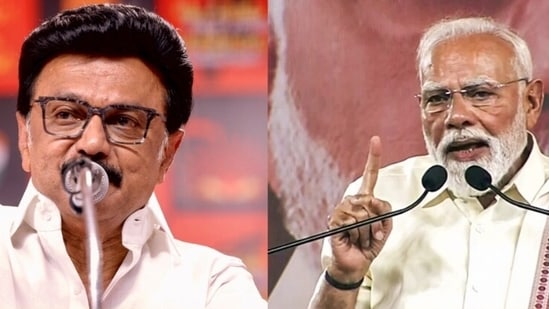
Century-old ‘Hindi imposition’ debate back ahead of Tamil Nadu assembly elections
# TN Election 2026: Hindi Debate Reignites
**By Special Correspondent, National News Desk**
**April 19, 2026**
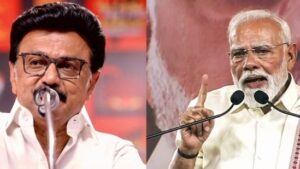
As Tamil Nadu prepares for the high-stakes state assembly elections slated for mid-2026, a century-old political storm over linguistic identity has surged back to the forefront. On April 19, the MK Stalin-led Dravida Munnetra Kazhagam (DMK) government categorically reiterated its historical stance, declaring that Tamil Nadu “will never accept” the Union government’s three-language policy. Rooted in deep-seated allegations of ‘Hindi imposition’ by the Centre, this renewed friction highlights a profound ideological clash over federalism. With political battle lines being drawn across the southern state, the DMK is strategically leveraging linguistic pride to counter the Bharatiya Janata Party’s (BJP) national integration narratives, setting the stage for a heavily polarized electoral contest.
[Source: Hindustan Times | Additional: Historical Archives of Tamil Nadu Legislative Assembly]
## The Core of the Centre-State Clash
At the heart of the current political tempest is the fundamental disagreement over language instruction in schools and the operational language of government machinery. The Union government, through the **National Education Policy (NEP) 2020**, has continuously advocated for a three-language formula. This framework suggests that students should learn three languages: their mother tongue (or regional language), English, and a third modern Indian language—which, in non-Hindi speaking states, defaults predominantly to Hindi.
Conversely, Tamil Nadu operates on a strict **two-language formula**—comprising only Tamil and English—a policy legally enshrined by former Chief Minister C.N. Annadurai in 1968. The current DMK administration argues that compelling a third language places an undue cognitive burden on students and serves as a covert mechanism to elevate Hindi at the expense of regional languages.
Chief Minister MK Stalin and his cabinet have frequently pointed to recent central directives—such as the renaming of India’s criminal codes to the Bharatiya Nyaya Sanhita, the issuance of central government circulars exclusively in Hindi and English, and the mandate of Hindi in specific central examinations—as evidence of systemic linguistic hegemony. For the state, the rejection of the three-language policy is not merely an educational dispute; it is a vital defense of Tamil cultural autonomy.
## A Century of Linguistic Pride
To understand the emotional resonance of the ‘Hindi imposition’ debate in 2026, one must trace its roots back almost a century. Tamil Nadu’s linguistic pride is intrinsically tied to the Dravidian movement, which views the Tamil language as the cornerstone of its cultural and political identity.
The resistance began in **1937** when the Indian National Congress government, led by C. Rajagopalachari in the Madras Presidency, attempted to introduce Hindi as a compulsory subject in schools. This sparked massive protests led by social reformer **Periyar E.V. Ramasamy**, resulting in widespread arrests and the eventual withdrawal of the mandate.
The most violent and defining chapter occurred in **1965**. As the 15-year grace period for the use of English alongside Hindi for official Union purposes (as stipulated in the Indian Constitution) came to an end, anxiety swept through non-Hindi states. Tamil Nadu witnessed massive student-led agitations, riots, and tragic self-immolations. The sheer scale of the unrest forced then-Prime Minister Lal Bahadur Shastri to assure the nation that English would continue to be used as long as non-Hindi speaking states desired it, leading to the **Official Languages (Amendment) Act of 1967**.
### Timeline of Anti-Hindi Agitations in Tamil Nadu
| Year | Milestone Event | Political and Social Implication |
|—|—|—|
| **1937** | First Anti-Hindi Agitation | Periyar E.V. Ramasamy mobilizes masses against compulsory Hindi instruction, linking language to Dravidian self-respect. |
| **1965** | Statewide Language Riots | Massive student uprisings prevent Hindi from becoming the sole official language of the Union. |
| **1968** | Two-Language Policy Ratified | State legislature institutionalizes a strict Tamil-English educational framework, banning the three-language formula. |
| **1986** | Navodaya Vidyalaya Blockade | State government refuses the entry of central Navodaya schools due to compulsory Hindi provisions. |
| **2020** | NEP 2020 Rejection | Renewed clash over the National Education Policy’s renewed attempt to integrate a third language in state schools. |
| **2026** | Pre-Election Resurgence | DMK draws a hard line against central funding conditions linked to language mandates ahead of assembly polls. |
[Source: Historical records on Dravidian Politics | Additional: Public Policy Institute of India]
## The NEP 2020 Flashpoint and Financial Stalemates
The debate has shifted from violent street protests to bureaucratic and financial battlegrounds. The current standoff is heavily tied to the implementation of the **PM SHRI (PM Schools for Rising India)** scheme. Under this initiative, the Union Ministry of Education provides substantial funding to upgrade state schools. However, signing a Memorandum of Understanding (MoU) to implement the NEP 2020 in its entirety—including the three-language formula—is a prerequisite for accessing these central funds.
Tamil Nadu has categorically refused to sign the MoU under the current terms, resulting in the withholding of hundreds of crores of rupees in educational grants. The DMK government has accused the Centre of weaponizing federal funds to force state compliance on an ideologically sensitive issue. The state insists that it will only accept the funding if it is allowed to retain its historic two-language formula, creating a bureaucratic deadlock that affects the infrastructure development of thousands of schools across the state.
## Electoral Calculus Ahead of 2026
As the 2026 Tamil Nadu Assembly elections loom, the language debate has transitioned into a powerful electoral tool. The DMK is seeking to consolidate its base by positioning itself as the sole guardian of Tamil identity against a perceived “monolithic, Hindi-Hindu-centric” push by the BJP.
For the BJP, making electoral inroads into Tamil Nadu has been a long-standing strategic objective. The party’s state leadership has repeatedly attempted to clarify that it respects Tamil culture, pointing to initiatives like the **Kashi Tamil Sangamam** and the placement of the sacred **Sengol** in the new Parliament building as proof of its reverence for Tamil heritage. The BJP accuses the DMK of manufacturing the ‘Hindi imposition’ bogeyman to distract voters from anti-incumbency sentiments and governance issues.
Meanwhile, the principal opposition party, the All India Anna Dravida Munnetra Kazhagam (AIADMK), finds itself walking a tightrope. Having severed its alliance with the BJP in late 2023, the AIADMK is aggressively trying to reclaim its Dravidian credentials. The party’s leadership has also voiced opposition to Hindi imposition, ensuring the DMK does not monopolize the language sentiment, while simultaneously criticizing the Stalin administration for failing to secure vital educational funds from the Centre.
## Voices from the Ground: Experts Weigh In
Political analysts and linguists observe that the resurgence of the language debate is as much about economic survival and federalism as it is about cultural pride.
“The language debate in Tamil Nadu is the ultimate litmus test for Dravidian authenticity,” notes **Dr. S. R. Venkatraman**, a Chennai-based political scientist. “By reviving the ‘Hindi imposition’ narrative months before the 2026 elections, the DMK is forcing the BJP to play on a pitch where the regional party holds all the historical advantage. It effectively neutralizes nationalistic narratives that work for the BJP in northern states.”
From a linguistic and socio-economic perspective, the defense of English alongside Tamil is viewed as a pragmatic choice. **Dr. K. Meenakshi**, a linguist and policy researcher, explains: “Tamil Nadu’s adherence to English has historically given its youth a competitive edge in the global IT and service sectors. The resistance to compulsory Hindi is not just emotional; there is a tangible fear that shifting focus to a third language will dilute English proficiency, thereby harming the economic prospects of the state’s workforce.”
[Source: Independent Political Analysis | Additional: Sociological Studies on Dravidian Demographics]
## Broader Implications for Federalism
The ripple effects of Tamil Nadu’s defiance extend far beyond its borders, touching upon the broader framework of cooperative federalism in India. Several other non-Hindi speaking states, including Karnataka, Kerala, and West Bengal, are closely monitoring the standoff. Historically, Tamil Nadu has served as the vanguard for states’ rights regarding linguistic autonomy.
The increasing practice of linking critical state funding to the adoption of centralized policies (such as the NEP) has sparked a nationwide debate on the limits of central authority in domains that fall under the Concurrent List of the Indian Constitution, like education. Critics argue that this centralizing tendency undermines the asymmetric federalism that has held India’s diverse linguistic mosaic together.
If Tamil Nadu successfully negotiates an exemption or forces the Centre to release educational funds without conceding its two-language policy, it could set a powerful legal and administrative precedent. Conversely, if the Centre stands firm, it may deepen the political alienation felt in the southern states, fueling broader coalitions against the central government ahead of future national elections.
## Conclusion and Future Outlook
As the calendar inches closer to the May 2026 assembly polls, the discourse around language in Tamil Nadu will inevitably become more vociferous. The DMK’s absolute refusal to accept the three-language policy reaffirms that in Dravidian politics, linguistic identity remains an uncompromisable tenet.
The upcoming election will essentially serve as a referendum not only on the DMK’s five-year governance record but also on its ability to protect the state’s cultural borders from perceived central overreach. For the BJP, the challenge lies in bridging the massive communication and cultural gap, proving that its vision for national integration does not equate to regional assimilation.
Ultimately, the century-old ‘Hindi imposition’ debate proves that in the intricate tapestry of Indian democracy, language is far more than a medium of communication—it is the very essence of political power, historical identity, and federal equity. How the Union and State governments navigate this delicate deadlock in the coming months will shape the socio-political landscape of South India for decades to come.