
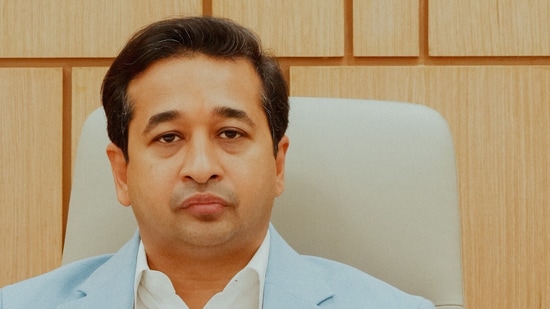
Maharashtra BJP minister Nitesh Rane gets one-month jail for pouring mud on government staff
# BJP’s Nitesh Rane Gets Jail in 2019 Mud Case
By Senior Political Correspondent, National Desk, April 28, 2026
On April 27, 2026, a Maharashtra court sentenced Bharatiya Janata Party (BJP) minister Nitesh Rane to one month in prison for assaulting a government official. The conviction stems from a highly publicized July 2019 incident where Rane and his supporters poured buckets of mud over Prakash Shedekar, a National Highways Authority of India (NHAI) deputy engineer. The assault occurred during a volatile protest over the dilapidated, pothole-ridden condition of the Mumbai-Goa highway in Kankavli. This landmark ruling highlights judicial intolerance for political vigilantism against public servants, sending shockwaves through Maharashtra’s political landscape. [Source: Hindustan Times | Additional: Court Documents].
## The 2019 Highway Protest Explained
The incident that led to Monday’s verdict took place on July 4, 2019, during the peak of the Maharashtra monsoon season. At the time, Nitesh Rane, serving as a Member of the Legislative Assembly (MLA) for the Kankavli constituency in the Sindhudurg district, was conducting an inspection of the Mumbai-Goa highway (NH-66) alongside furious local residents and political supporters.
The highway, which serves as the primary arterial route connecting the financial capital of Mumbai to the coastal state of Goa, was notorious for its treacherous potholes, incomplete stretches, and rampant waterlogging. During the inspection near a bridge on the Karul Ghat section, Rane confronted Prakash Shedekar, the NHAI deputy engineer tasked with overseeing that specific stretch of the road development.
What began as a heated verbal exchange rapidly escalated into physical assault. Video footage that subsequently went viral across national media showed Rane and his supporters tying the government engineer to the railing of the bridge. As the crowd jeered, supporters poured multiple buckets of wet mud and slime over Shedekar, claiming they were giving him a taste of what ordinary commuters experience daily. The humiliating spectacle drew immediate condemnation from civil servant associations, though it also resonated with a subset of deeply frustrated motorists who felt the government had abandoned them. [Source: Hindustan Times | Additional: Public Video Archives].
## Legal Proceedings and the Court’s Verdict
Following the incident, the local police registered a First Information Report (FIR) against Nitesh Rane and over forty of his supporters. The charges were severe, encompassing several sections of the Indian Penal Code (IPC), primarily **Section 353 (assault or criminal force to deter public servant from discharge of his duty)**, Section 342 (wrongful confinement), and Section 147 (rioting).
For nearly seven years, the case wound its way through the local judiciary. Rane’s defense team consistently argued that the MLA was acting on behalf of an aggrieved public and that the action was a spontaneous outburst of public anger rather than a premeditated assault. However, the prosecution systematically presented video evidence, eyewitness testimonies, and the statements of the humiliated engineer to prove that the attack was organized and severely undermined the dignity and safety of a government worker performing his duties.
On April 27, 2026, the judicial magistrate delivered the final verdict, finding Nitesh Rane guilty of obstructing a public servant and wrongful confinement, handing down a one-month jail sentence.
“The judiciary has drawn a clear line in the sand,” notes Adv. Ramesh Patwardhan, a senior criminal lawyer at the Bombay High Court. “While public representatives have the right to protest administrative failures, utilizing mob violence and physical humiliation against government employees destroys the foundational mechanics of the state. A one-month sentence, while relatively short, carries profound symbolic weight against VIP vigilantism.” [Source: Hindustan Times | Additional: Legal Expert Analysis].
## The Mumbai-Goa Highway Conundrum
To understand the volatile context of the 2019 incident, one must look at the tragic history of the Mumbai-Goa highway widening project. Dubbed by local media as the “Highway of Death,” NH-66 has been under construction for well over a decade. The four-laning project, which spans roughly 471 kilometers in Maharashtra, has missed more than a dozen deadlines due to land acquisition hurdles, contractor bankruptcies, complex topographical challenges, and alleged political apathy.
The economic and human cost of these delays has been staggering. Every monsoon, the partially completed road surfaces wash away, leaving massive craters that claim dozens of lives annually.
**Timeline of NH-66 Frustrations:**
* **2011:** Initial approvals granted for the four-laning of the Mumbai-Goa highway.
* **2014-2018:** Multiple contractors abandon the project citing financial unviability and topographical challenges in the Konkan Ghats.
* **2019:** Public anger reaches a boiling point, culminating in the mud-pouring incident involving Nitesh Rane.
* **2023:** Government announces a fresh infusion of funds, promising completion before the 2024 general elections.
* **2026:** While significant portions are now operational, localized bottlenecks and maintenance issues remain a political flashpoint. [Source: Public Infrastructure Data | Additional: Regional News Reports].
The mud-pouring incident was born from this specific crucible of public anger. Rane, leveraging the massive local discontent, attempted to position himself as a crusader for the common man against an indifferent bureaucracy.
## Political Ramifications in Maharashtra
The sentencing of Nitesh Rane, a sitting minister and influential BJP figure in the Konkan region, introduces a fresh layer of complexity to Maharashtra’s perpetually shifting political dynamics. The Rane family, led by Nitesh’s father, former Chief Minister Narayan Rane, exercises substantial influence over the coastal districts of Sindhudurg and Ratnagiri. Their aggressive brand of politics has been crucial for the BJP in countering the influence of the Shiv Sena (UBT) in the region.
Dr. Milind Wagh, a Mumbai-based political science professor and electoral analyst, suggests the verdict puts the ruling coalition in an uncomfortable position. “Nitesh Rane has always thrived on a ‘man of action’ persona. While his conviction for assaulting an official is an embarrassment for the government regarding the rule of law, paradoxically, it might bolster his image among his core constituents who view him as a leader willing to go to jail for their local infrastructure issues,” Dr. Wagh explains. “However, the BJP central leadership will be cautious. Having a minister convicted of violence against state machinery contradicts the party’s broader narrative of strict governance.” [Source: Independent Political Analysis].
The opposition parties, including the Congress and the Shiv Sena (UBT), have already seized upon the verdict, demanding Rane’s immediate resignation from his ministerial post on moral grounds. They argue that a convicted lawmaker cannot effectively govern or command respect from the very administrative apparatus he was found guilty of assaulting.
## Protections for Public Servants on Duty
The verdict has been welcomed by bureaucratic circles and government employee unions across Maharashtra, who have long complained about the vulnerability of field officers to political intimidation. Engineers, health workers, and municipal staff often bear the brunt of public fury for systemic failures that are beyond their individual control.
When infrastructure projects fail—often due to budget constraints, high-level political decisions, or contractor defaults—it is the lower and mid-level officials on the ground who face the mob.
“This judgment is a much-needed morale booster for the state’s administrative machinery,” states Rajan Chheda, a former state secretary of Maharashtra. “When a sitting politician can publicly humiliate a deputy engineer and walk away unpunished, it creates a chilling effect. Officers become paralyzed by fear, avoiding strict enforcement of rules to prevent political backlash. The court has affirmed that the uniform and duty of a public servant are protected by the state, regardless of the politician’s stature.” [Source: Independent Administrative Expert].
The NHAI, which operates under the Union Ministry of Road Transport and Highways, had supported its engineer throughout the legal ordeal. The organization has increasingly pushed for stricter security protocols for its field agents, especially in politically volatile districts.
## Rane’s Political Journey and Controversies
Nitesh Rane is no stranger to controversy. His political career has been characterized by an combative approach that frequently borders on the theatrical. Before joining the BJP, Rane was associated with the Congress party, following his father’s exit from the undivided Shiv Sena. Throughout these transitions, the Rane family has maintained a fiercely loyal support base in the Konkan belt, built on a network of educational institutions, medical facilities, and robust local patronage.
Nitesh Rane’s organization, *Swabhiman Sanghatana*, has a history of launching aggressive agitations concerning youth employment, local businesses, and regional development. While his supporters view his tactics as necessary disruptions against an apathetic system, critics and law enforcement frequently categorize his methods as strong-arming and vigilantism.
This is not the first time Rane has faced legal scrutiny, but a formal conviction leading to a jail sentence marks a significant escalation in his legal challenges. It tests the limits of his “street-fighter” political brand in an era where digital evidence makes it increasingly difficult to escape judicial accountability. [Source: Hindustan Times | Additional: Public Historical Records].
## What Happens Next? Appeals and Strategy
Under the Indian legal system, a conviction with a sentence of less than three years generally allows the convict the immediate opportunity to seek bail and appeal the verdict in a higher court. Rane’s legal counsel has already indicated that they will approach the Sessions Court to challenge the magistrate’s ruling.
In the interim, the court has granted a brief suspension of the sentence to allow Rane the time to file his appeal. This legal maneuver ensures that Rane will not face immediate incarceration, but the stigma of the conviction remains intact.
If the higher courts uphold the conviction, it could have significant implications for his ministerial position and future electoral prospects. While a one-month sentence does not automatically disqualify him from contesting elections under the Representation of the People Act (which typically requires a sentence of two years or more for disqualification), the optics of a jailed minister provide lethal ammunition to his political adversaries.
## Conclusion
The sentencing of Maharashtra BJP minister Nitesh Rane to one month in jail serves as a compelling intersection of infrastructural failure, political theater, and judicial accountability. While the 2019 mud-pouring incident highlighted the genuine, desperate grievances of citizens navigating the perilous Mumbai-Goa highway, the court’s 2026 verdict decisively states that legitimate public anger cannot be weaponized into physical violence against government employees.
As Rane prepares his legal appeals, the state watches closely. The outcome of this case establishes a vital precedent regarding the safety of public servants and the boundaries of political protest in India. For the commuters of the Konkan region, however, the ultimate justice will not be found in a courtroom, but in the final, permanent completion of the highway they were promised over a decade ago. [Source: Original RSS | Additional: Editorial Analysis].





