
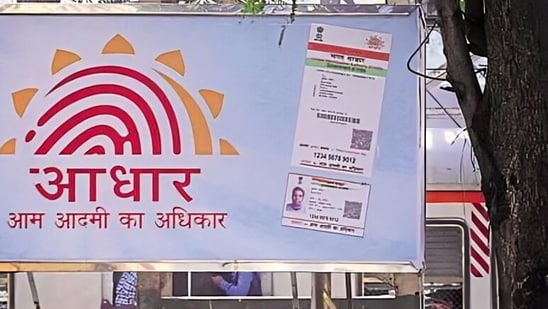
Aadhaar no longer valid as proof of date of birth: What you need to know
# Aadhaar No Longer Valid As DOB Proof
By Special Correspondent, India News Herald, April 28, 2026
The Unique Identification Authority of India (UIDAI) has officially directed that the Aadhaar card can no longer be used as legally acceptable proof of a citizen’s Date of Birth (DOB). In a detailed clarification issued in late April 2026, the regulatory body emphasized that the Aadhaar Act of 2016 makes no provision for the biometric identity to serve as a statutory birth record. This sweeping regulatory shift affects millions of Indians who routinely use the 12-digit number for age verification, prompting major state institutions like the Employees’ Provident Fund Organisation (EPFO) to immediately revise their accepted document protocols.
## The UIDAI Directive Explained
For over a decade, Aadhaar has served as the de facto identification document for the Indian populace. However, its ubiquitous use led to a widespread misconception that it is an all-encompassing document verifying every aspect of a citizen’s vital statistics. To curb this administrative overreach, UIDAI has released a comprehensive circular to clarify the legal boundaries of the biometric ID.
According to a report originally published by the Hindustan Times, UIDAI noted in its detailed clarification document that the Aadhaar Act, 2016 “is silent with regard to its acceptance as proof of date of birth.” [Source: Hindustan Times].
The circular unequivocally states that Aadhaar is primarily designed to establish the identity of an individual through biometric and demographic authentication. It does not certify the time or place of a person’s birth. Furthermore, the UIDAI highlighted that during the initial phases of Aadhaar enrollment, a vast majority of dates of birth were recorded based on the self-declaration of the residents, lacking the rigorous verification processes associated with formal civil registries.
This directive strictly instructs all Authentication User Agencies (AUAs) and e-KYC reliant organizations to remove Aadhaar from their lists of approved documents for birth date verification. [Source: Hindustan Times | Additional: UIDAI Official Master Circulars].
## Identity vs. Vital Statistics: The Core Difference
To understand why this change is necessary, one must look at the structural difference between establishing identity and recording vital statistics. The Aadhaar ecosystem operates on a principle of uniqueness. It guarantees that the person holding the card is indeed the person associated with the biometrics (fingerprints and iris scans) stored in the Central Identities Data Repository (CIDR).
However, Aadhaar does not verify historical events. When a citizen enrolled for Aadhaar, their date of birth was categorized in one of two ways: “Declared” or “Verified.”
* **Declared:** The resident provided a verbal date without supporting documentation, which the operator inputted.
* **Verified:** The resident provided an alternate document (like a PAN card or school certificate) to back up their claim.
Because the UIDAI’s core mandate was never to act as a registrar of births and deaths, even the “Verified” status simply meant another document was shown, not that UIDAI authenticated the birth with civil authorities. By stripping Aadhaar of its perceived status as a birth certificate, the government aims to channel citizens back toward legally sound vital statistic registries, fundamentally improving the integrity of India’s demographic data.
## Ripple Effects on EPFO, Banking, and Pensions
The immediate administrative fallout of this clarification is already being felt across the financial and employment sectors. The Employees’ Provident Fund Organisation (EPFO), which manages retirement savings for India’s massive organized workforce, was the first major domino to fall.
The EPFO recently issued internal directives to all its zonal offices instructing them to remove Aadhaar from “Table B” of acceptable documents for correcting the date of birth in EPF accounts. Previously, employees could easily correct discrepancies between their employer records and their PF accounts using their Aadhaar cards. That avenue is now permanently closed.
Beyond EPFO, the banking sector is gearing up for a massive overhaul in its KYC (Know Your Customer) update mechanisms. Senior citizens seeking to open fixed deposits with higher interest rates, or individuals applying for life insurance policies where premiums are strictly tied to age, will now face stricter scrutiny.
“The removal of Aadhaar as a valid DOB proof is a necessary correction, but it will undoubtedly create short-term friction in the banking sector,” states Rajesh Chari, a senior banking compliance analyst based in Mumbai. “Banks relied heavily on e-KYC because it was instantaneous and cost-effective. Now, for age-sensitive products, compliance officers must physically or digitally verify secondary documents, which extends the onboarding lifecycle.” [Source: Industry Analysis].
## Approved Alternatives: What Citizens Must Use Now
With Aadhaar effectively sidelined for age-verification purposes, citizens must look to statutory documents specifically designed to record and verify birth data. Authorities have standardized a list of universally accepted alternatives.
If you are applying for a passport, updating financial records, or enrolling in educational institutions, you must now present one of the following valid documents:
* **Birth Certificate:** Issued by the Registrar of Births and Deaths or the local municipal authority. This remains the highest tier of legal proof.
* **Educational Certificates:** SSLC/10th Standard Marks Card, Matriculation Certificate, or a recognized school leaving certificate that bears the candidate’s date of birth.
* **Passport:** Issued by the Ministry of External Affairs.
* **PAN Card:** Issued by the Income Tax Department.
* **Service Records:** Certified extract of a service record for government employees, or a Pension Payment Order (PPO).
* **Medical Certificates:** For certain rural or unorganized sector workers lacking formal documents, a medical certificate issued by a Civil Surgeon may be accepted in specific edge cases, subject to local administrative rules.
**Quick Reference Document Matrix**
| Document Type | Valid for Identity Proof? | Valid for Address Proof? | Valid for Date of Birth Proof? |
| :— | :—: | :—: | :—: |
| **Aadhaar Card** | Yes | Yes | **No** |
| **Birth Certificate**| No | No | **Yes** |
| **Passport** | Yes | Yes | **Yes** |
| **PAN Card** | Yes | No | **Yes** |
| **Voter ID (EPIC)** | Yes | Yes | No (Generally) |
## Challenges for Rural India and the Elderly
While the legal rationale behind UIDAI’s directive is sound, the practical implementation poses a severe challenge for specific demographics—most notably rural citizens and the elderly.
India’s civil registration system has improved dramatically in the last two decades, but historically, the registration of births was severely lacking, particularly in remote villages. Millions of citizens over the age of 50 do not possess formal birth certificates. For these individuals, Aadhaar was a revolutionary equalizer, allowing them to access state subsidies, open bank accounts, and claim pensions based on an estimated date of birth.
Dr. Meera Sanyal, a public policy advocate at the Centre for Demographic Studies in New Delhi, points out the looming socio-economic hurdle. “For an urban professional, substituting Aadhaar with a passport or a 10th-grade board certificate is merely an administrative nuisance. But for an elderly farm worker applying for an old-age pension, the sudden invalidation of Aadhaar as age proof is a bureaucratic nightmare,” Dr. Sanyal explains.
Obtaining a delayed birth certificate for an adult in India requires an affidavit, an inquiry by the local revenue officer, and ultimately an order from a First Class Magistrate—a process that is time-consuming, complex, and intimidating for the unlettered populace. State governments will need to introduce temporary amnesty windows or simplified tribunals to help legacy citizens secure valid age documentation without losing their welfare benefits.
## Alignment with the 2023 Civil Registration Act
The UIDAI’s April 2026 circular does not exist in a vacuum. It is deeply intertwined with the government’s broader legislative roadmap, specifically the full implementation of the Registration of Births and Deaths (Amendment) Act, 2023.
The 2023 amendment was a landmark piece of legislation that mandated the Birth Certificate as the single, all-encompassing document required for practically every civic necessity—from admission to educational institutions, issuance of driving licenses, voter registration, marriage registration, and appointment to government jobs.
By explicitly declaring that Aadhaar cannot perform this function, the government is forcing compliance with the Civil Registration System (CRS). The objective is to create a centralized, digitized database of vital events that updates in real-time, effectively eliminating identity fraud, underage marriages, and ghost beneficiaries in pension schemes. UIDAI is simply ensuring its own protocols align with this national mandate, stepping back from the unintended role of the nation’s timekeeper to focus entirely on its actual job: biometric authentication.
## Conclusion: Key Takeaways and Future Outlook
The demotion of Aadhaar from the status of birth proof is a major paradigm shift in Indian civil administration. As the country transitions to this stricter regulatory environment, citizens must proactively audit their personal documentation.
**Key Takeaways:**
1. **Stop Using Aadhaar for Age Verification:** Do not submit an Aadhaar copy when requested for Date of Birth proof for jobs, passports, EPF updates, or insurance. It will face immediate rejection.
2. **DigiLocker Integration:** Citizens are advised to upload their official Birth Certificates or 10th Standard marks cards to their government-backed DigiLocker accounts to ensure they have valid, instantly verifiable DOB proof at all times.
3. **Aadhaar Remains Vital:** This directive does *not* invalidate Aadhaar. It remains the absolute gold standard for proving your identity and your address (where applicable).
Looking ahead, the next few months will likely see initial pushback and administrative congestion as banks, insurance companies, and government departments overhaul their backend systems and retrain their compliance staff. However, in the long term, separating the proof of *identity* (Aadhaar) from the proof of *vital statistics* (Birth Certificates) will lead to a cleaner, more legally robust data ecosystem in India. It protects citizens from the downstream consequences of incorrect legacy data and brings India’s civil registry mechanisms in line with global best practices.





