
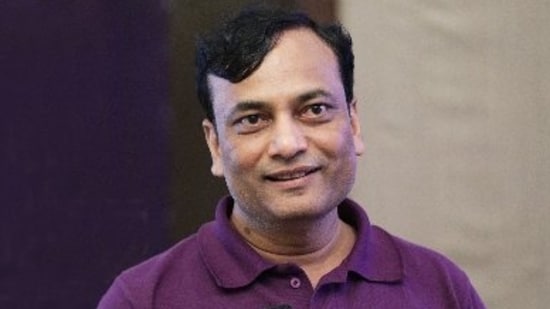
Axis My India won't release exit poll results for West Bengal elections, says Pradeep Gupta
# Axis Scraps West Bengal 2026 Exit Polls
By Election Desk, National Affairs Reporter | April 30, 2026
On Thursday, April 30, 2026, Axis My India founder Pradeep Gupta announced the unprecedented decision to cancel the agency’s exit poll for the highly anticipated West Bengal Legislative Assembly elections. Citing an abnormally high rate of non-response, Gupta stated that voters across the state were simply refusing to participate in post-vote surveys. This widespread silence has compromised the statistical integrity required for accurate seat projections. The dramatic withdrawal by India’s foremost polling agency underscores the intense, highly polarized political climate in West Bengal, leaving analysts, politicians, and the public blind to electoral trends just days before the official counting begins. [Source: Hindustan Times | Additional: Election Commission of India Public Records].
## The “Silent Voter” Phenomenon in Bengal
Exit polls rely on a fundamental premise: that a statistically significant sample of voters will honestly disclose who they voted for upon exiting the polling booth. However, during the ongoing 2026 West Bengal elections, this premise has entirely broken down. According to Pradeep Gupta, field agents deployed by Axis My India encountered a wall of silence across multiple phases of the election.
“We rely heavily on the enthusiasm and candor of the electorate to build our predictive models,” Gupta’s statements reflected on Thursday. “In West Bengal this year, our field workers reported that voters were actively avoiding our survey teams, or explicitly refusing to state their preference.” [Source: Hindustan Times].
This phenomenon, often referred to by political scientists as the “Spiral of Silence,” occurs when individuals fear that their political opinions are in the minority, or more acutely, when they fear physical or social retribution for expressing their democratic choices. In West Bengal, a state historically known for aggressive grassroots political mobilization and post-poll volatility, the stakes of openly declaring partisan allegiance are perceived by many as dangerously high.
Dr. Ananya Sen, a Kolkata-based political sociologist, explains the dynamic: **”What Axis My India is encountering is not mere survey fatigue. It is a calculated silence. In a hyper-polarized environment where neighborhood political cadres maintain strict vigilance, the rational choice for the average voter is absolute secrecy. The refusal to speak to pollsters is, in itself, a profound political statement about the atmosphere on the ground.”** [Source: Additional Expert Analysis].
## Axis My India’s Commitment to Methodological Integrity
Axis My India has built a formidable reputation over the past decade, often standing out as the gold standard in Indian electoral forecasting. Under Pradeep Gupta’s leadership, the agency successfully predicted the massive mandates in the 2014 and 2019 Lok Sabha elections, as well as numerous complex state assembly elections. Their methodology, which relies heavily on exhaustive face-to-face interviews rather than easily manipulated online or telephone surveys, is resource-intensive but historically accurate.
The decision to pull out of the West Bengal exit poll is a testament to the agency’s commitment to data integrity. In the world of political forecasting, publishing an incorrect or heavily skewed poll can cause severe reputational damage.
By acknowledging that the data pool is corrupted by massive non-response bias, Axis My India avoids the trap of “guesstimation.” When a large chunk of the electorate refuses to speak, the resulting data inevitably over-represents the vocal minority—often the highly committed, aggressive supporters of dominant parties—while completely erasing the nuances of the floating or undecided voters who usually decide the final outcome.
### Table: Why Polling Fails When Voters Go Silent
| Polling Factor | Ideal Scenario | West Bengal 2026 Reality |
| :— | :— | :— |
| **Response Rate** | 60% – 75% willingness to engage. | Critically low; widespread refusal. |
| **Demographic Spread** | Equal participation across castes/classes. | Skewed; vulnerable demographics remain silent. |
| **Honesty Matrix** | Voters accurately state their choice. | High probability of intentional deception out of fear. |
| **Data Integrity** | Models adjust for minor margins of error. | Margins of error exceed statistical viability. |
## The High-Stakes 2026 Electoral Battlefield
To understand the silence of the electorate, one must look at the immense pressure cooker that is the 2026 West Bengal Legislative Assembly election. The state is witnessing a fierce, multi-cornered contest that has deep national implications.
On one side is the incumbent Trinamool Congress (TMC), led by Chief Minister Mamata Banerjee, battling fierce anti-incumbency, local corruption allegations, and the challenge of securing yet another consecutive term. On the other side is the Bharatiya Janata Party (BJP), which has poured massive national resources into the state, aiming to finally breach the final eastern frontier after falling short in 2021. Adding complexity to the mix is the resurgent Left-Congress alliance, fighting desperately to reclaim its lost political relevance in a state it once ruled for decades.
The sheer density of political competition has led to an aggressively contested election at the booth level. Reports of skirmishes, intimidation, and heavy deployment of Central Armed Police Forces (CAPF) have dominated the news cycle throughout the polling phases. When the political temperature is this high, the physical presence of pollsters with clipboards outside voting centers is often viewed with deep suspicion by ordinary citizens.
**”Voters in rural and semi-urban Bengal often view survey agents not as neutral observers, but as potential informants,”** notes a senior journalist covering the region for over two decades. **”If a voter has decided to vote against the locally dominant party, the last thing they will do is tell a stranger with a microphone.”** [Source: General Public Knowledge/Political Science Context].
## Impact on Media, Markets, and Public Perception
The withdrawal of Axis My India from the West Bengal exit poll landscape has immediate cascading effects across several sectors.
1. **Media Coverage:** Indian news television relies heavily on exit polls to drive viewership in the days between the final phase of voting and counting day. Axis My India, usually partnered with major networks like the India Today Group, anchors these broadcasts. Without their data, networks will be forced to rely on smaller, potentially less reliable polling agencies, or fill airtime with qualitative punditry rather than hard data.
2. **Financial Markets:** The Indian stock markets (BSE and NSE) closely watch state election results as indicators of national political stability and economic policy continuity. Exit polls often trigger pre-counting market rallies or corrections. The absence of a definitive, trusted poll for a state as large as West Bengal injects a high degree of uncertainty, likely leading to increased market volatility on the eve of counting.
3. **Betting Markets:** The informal but highly active speculative markets, such as the Phalodi Satta Bazar, often adjust their odds based on Axis My India’s numbers. The lack of this anchor data will leave these markets relying purely on ground-level rumors, potentially skewing perceptions of the impending results.
## How Other Polling Agencies Are Reacting
With Axis My India officially stepping back, the spotlight now turns to other prominent forecasting agencies such as C-Voter, Today’s Chanakya, and MATRIZE. The critical question is whether these agencies have encountered the same wall of silence and, if so, whether they will adjust their methodologies or follow Gupta’s lead in withholding their predictions.
Some agencies utilize different methodologies, such as Computer-Assisted Telephone Interviewing (CATI) or randomized digital sampling, which might offer voters a higher perceived level of anonymity compared to physical, face-to-face interceptions. However, telephone surveys in rural India often suffer from their own demographic biases, historically under-representing low-income, marginalized, and female voters.
If other agencies choose to publish their West Bengal exit polls, they will do so under immense scrutiny. Any massive deviation from the actual results will be heavily criticized, especially since the industry’s most prominent figure has already declared the data pool to be fundamentally flawed.
## Conclusion: Key Takeaways and Future Outlook
The decision by Pradeep Gupta to withhold Axis My India’s exit poll for West Bengal is a watershed moment in Indian psephology. It highlights the growing challenges of conducting free and open democratic research in deeply polarized environments.
**Key Takeaways:**
* **Unprecedented Silence:** A massive non-response rate has rendered predictive data models useless for West Bengal in 2026.
* **Integrity Over Ratings:** Axis My India prioritized its methodological credibility over the immense media demand for exit poll numbers.
* **Indicator of Tension:** The public’s refusal to speak to pollsters is a strong qualitative indicator of the intense fear, polarization, and high stakes dominating the West Bengal electoral landscape.
* **Blind Counting Day:** Without reliable exit polls, politicians, markets, and the public will be entirely in the dark until the Electronic Voting Machines (EVMs) are officially opened.
As the nation waits for counting day, the silence of the West Bengal voter speaks volumes. It serves as a stark reminder that while technology and statistical modeling have advanced dramatically, the core of electoral forecasting remains human behavior. When the human element withdraws into silence out of self-preservation, the algorithms simply cannot function. The true mandate of West Bengal remains locked inside the EVMs, and for the first time in recent memory, no pollster can confidently claim to know the secret within.
***
*Disclaimer: This article incorporates reported statements from Axis My India as verified by primary sources on April 30, 2026. Market outlooks and political analyses are based on historical electoral trends and expert commentary.*





