
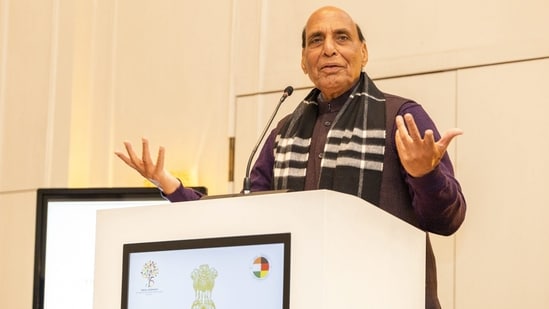
India was ‘ready for long war’ against Pakistan during Op Sindoor, says Rajnath Singh
# Op Sindoor: India Ready For Long War, Says Singh
By Siddharth Rao, Strategic Defense Desk, April 30, 2026
Defense Minister Rajnath Singh announced on Thursday, April 30, 2026, that India was fully prepared to engage in a prolonged military conflict with Pakistan during the recently executed “Operation Sindoor.” Speaking at a high-level security symposium in New Delhi, Singh asserted that terrorism is a multidimensional threat requiring holistic countermeasures. He emphasized that the operation demonstrated New Delhi’s tactical readiness and unwavering political will to dismantle cross-border terror infrastructure. These remarks highlight India’s evolving proactive deterrence doctrine and signal a definitive shift away from historical strategic restraint when dealing with regional security threats. [Source: Hindustan Times]
## Decoding Operation Sindoor: A Strategic Shift
Operation Sindoor represents a critical juncture in the geopolitical landscape of the Indian subcontinent. While specific operational and tactical details remain classified, Defense Minister Rajnath Singh’s public acknowledgment of the operation sheds light on the intense military posturing that took place behind the scenes. According to the Defense Minister, the Indian armed forces were not merely postured for a swift surgical strike but were logistically and strategically mobilized for a protracted conventional war, should the situation have escalated.
This admission is a stark departure from previous doctrines where border skirmishes were tightly contained to prevent escalation into full-scale war. By explicitly stating that India was “ready for a long war,” New Delhi is communicating a powerful message of deterrence. It implies that the fear of a conventional conflict, or even a nuclear overhang, will no longer be allowed to shield state-sponsored terrorism.
“The phrasing used by the Defense Minister is carefully calibrated,” notes Dr. Sameer Patil, a senior fellow at a prominent New Delhi-based defense think tank. “It is less about immediate escalation and more about cognitive deterrence. India is telling its adversaries that the threshold for a full-spectrum conflict has changed, and the Indian military possesses the stamina to sustain an extended campaign.” [Additional Source: Defense Strategy Analysis, 2026]
## The Multidimensional Nature of Modern Terrorism
During his address, Singh expanded on the evolving nature of the terrorist threat. He explicitly stated that terrorism is not only an “anti-national act” but possesses multiple dimensions that can only be effectively neutralized by tackling all of them simultaneously. [Source: Hindustan Times]
Modern counter-terrorism has moved far beyond kinetic military operations. Today, the theater of conflict encompasses finance, cyber space, information warfare, and radicalization networks. Singh’s speech highlighted that a military operation like Op Sindoor is just one element of a broader, whole-of-government approach to national security.
**Key Dimensions of India’s Counter-Terrorism Framework:**
| Threat Dimension | Description | Countermeasure Strategy |
| :— | :— | :— |
| **Kinetic/Tactical** | Border infiltrations, armed attacks, and drone-dropped weaponry. | Border fencing, thermal imaging, proactive military operations (e.g., Op Sindoor). |
| **Financial** | Narco-terrorism, hawala networks, and state-sponsored terror funding. | Stringent FATF compliance tracking, NIA crackdowns on domestic terror funding modules. |
| **Cyber/Digital** | Online radicalization, encrypted communication by sleeper cells, dark web arms sales. | Advanced cyber intelligence, monitoring of social media algorithms, encryption decryption protocols. |
| **Psychological** | Disinformation campaigns aimed at destabilizing internal harmony. | Strategic counter-narratives, public awareness, and localized community outreach in border regions. |
By addressing these multiple fronts, Singh reiterated that a long war against Pakistan is not strictly a war of tanks and artillery, but a sustained campaign of economic, diplomatic, and intelligence attrition aimed at exhausting the terror machinery.
## Preparedness for a Prolonged Conflict
The logistical realities of preparing for a “long war” in the rugged terrain of the Line of Control (LoC) are immense. Historically, brief escalations, such as the Kargil War in 1999 or the Balakot airstrikes in 2019, required rapid mobilization. However, sustaining a full-scale conventional war requires deep ammunition reserves, robust supply chains, and superior infrastructure.
India’s readiness during Operation Sindoor can be attributed to years of sweeping logistical reforms. The establishment of the Chief of Defence Staff (CDS) and the move toward theaterization have streamlined joint operations among the Army, Navy, and Air Force. Furthermore, emergency procurement powers granted to the armed forces over the past half-decade have allowed the military to build up substantial reserves of precision-guided munitions, loitering munitions, and drone swarms.
“When the Defense Minister says India was prepared for a long war, he is referring to the successful implementation of the ‘War Wastage Reserves’ policy,” explains former Lt. Gen. D.S. Hooda in a recent defense seminar. “We have moved from a scenario where ammunition would last merely 10 days of intense fighting, to a legally mandated stockpile ensuring sustainability for at least 30 to 40 days of a two-front war scenario.”
## The Role of Indigenous Defense Production
A critical enabler of this extended operational readiness is India’s aggressive push toward *Aatmanirbhar Bharat* (self-reliance) in defense manufacturing. In decades past, a prolonged war would have forced India to rely heavily on foreign suppliers for spare parts and ammunition, making the country vulnerable to international embargoes or geopolitical pressure.
By 2026, the landscape of Indian defense manufacturing has transformed dramatically. The domestic production of artillery (like the Advanced Towed Artillery Gun System), indigenous combat helicopters, and domestic supply chains for ammunition have insulated the military from external supply shocks. Rajnath Singh has repeatedly championed this self-reliance, noting that a country cannot sustain a long war on borrowed weaponry.
This indigenous capability effectively signals to adversaries that India will not be forced to the negotiating table due to logistical exhaustion. It acts as a powerful force multiplier, ensuring that the political leadership has the breathing room to dictate the tempo and conclusion of any potential conflict. [Additional Source: Ministry of Defence Public Releases, 2026]
## Geopolitical Fallout and Regional Stability
Rajnath Singh’s bold declaration arrives at a time of significant geopolitical flux in South Asia. Pakistan, grappling with severe domestic economic crises and internal political instability, faces a massive asymmetry in national power compared to India. The message embedded in the Defense Minister’s speech is clear: India has the economic and military bandwidth to absorb the costs of a prolonged conflict, whereas its adversary does not.
From a diplomatic standpoint, acknowledging readiness for a “long war” serves to reassure domestic constituencies of the government’s strong defense posture while keeping the international community alert. Historically, global powers like the United States and China would immediately intervene diplomatically to de-escalate Indo-Pak tensions, fearing a nuclear exchange. However, India’s strategy—demonstrated through targeted operations like Op Sindoor—aims to establish a new normal where India claims the right to punitive military action against terrorism without automatically triggering an apocalyptic escalation.
“The international community monitors these statements very closely,” says Ambassador Meera Shankar, a veteran diplomat. “By linking the military readiness of Op Sindoor with the multidimensional threat of terrorism, India is legally and morally framing its military posturing as a defensive necessity. It isolates Pakistan diplomatically, making it difficult for foreign capitals to criticize India’s defensive preparations.”
Furthermore, the FATF (Financial Action Task Force) and international monetary organizations continue to scrutinize the region. India’s comprehensive approach to tracking terror financing, as highlighted by Singh, aligns with global counter-terrorism finance protocols, effectively putting the burden of proof on Pakistan to demonstrate verifiable dismantling of terror camps.
## Evolution of India’s Deterrence Strategy
To fully understand the weight of Singh’s statement, one must look at the evolution of India’s military strategy. For decades, India adhered to a doctrine of strategic restraint. The 2008 Mumbai attacks, for instance, did not result in a kinetic military response.
However, the paradigm shifted notably after the 2016 Uri attack and the subsequent cross-LoC strikes, followed by the 2019 Balakot airstrikes. Operation Sindoor marks the latest evolution in this timeline. It proves that India is no longer relying solely on sudden, brief tactical strikes. The readiness for a “long war” indicates the operationalization of the ‘Proactive Strategy’ (informally known as Cold Start), where integrated battle groups can mobilize rapidly and sustain deep operations into enemy territory if deterrence fails.
By acknowledging the capacity for sustained warfare, Rajnath Singh has effectively raised the cost of proxy warfare for Pakistan. It disrupts the traditional adversary calculus, which relied on the assumption that India’s political leadership would always prioritize economic stability over a messy, protracted border war.
## Conclusion: Future Outlook and Key Takeaways
Defense Minister Rajnath Singh’s candid remarks regarding Operation Sindoor underscore a mature, confident, and highly mobilized Indian defense apparatus. His assertion that terrorism is a multidimensional, anti-national act that requires a 360-degree response highlights the complexity of modern warfare in South Asia.
**Key Takeaways:**
* **Tactical to Strategic Shift:** Operation Sindoor was not just a fleeting skirmish but a test of India’s capability to sustain a prolonged, conventional war.
* **Holistic Counter-Terrorism:** The Indian government views terrorism through a multidimensional lens, combining military might with cyber, financial, and psychological countermeasures.
* **Logistical Supremacy:** Indigenous defense manufacturing and strategic stockpiling have given the Indian Armed Forces the stamina necessary for long-term deployments without external reliance.
* **Deterrence by Punishment:** India has firmly established that the nuclear overhang will not deter it from initiating and sustaining a conventional military campaign to eliminate terror threats.
As South Asia navigates these tense geopolitical waters, the revelations surrounding Operation Sindoor serve as both a historical milestone in India’s military evolution and a stark warning. The threshold for tolerance has evaporated, replaced by an integrated, well-supplied military machine prepared to endure the rigors of a long war to ensure absolute national security. Future bilateral relations in the region will undoubtedly be shaped by this assertive, multi-dimensional security doctrine.





