
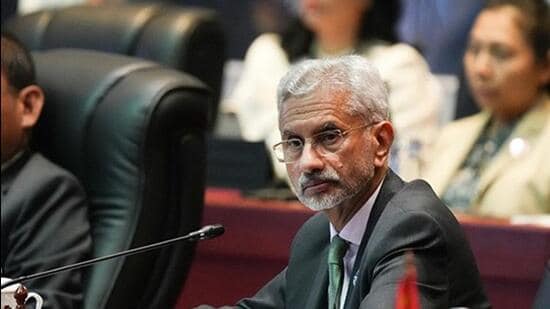
EAM Jaishankar visits Jamaica, Suriname, Trinidad and Tobago to boost ties
# Jaishankar Tours Caribbean to Boost India Ties
By Senior Correspondent, International Desk | May 2, 2026
India’s External Affairs Minister, Dr. S. Jaishankar, embarked on a high-stakes diplomatic tour of Jamaica, Suriname, and Trinidad and Tobago on Saturday to significantly strengthen bilateral relations. Driven by New Delhi’s broader strategy to champion the Global South, the multi-nation Caribbean visit aims to deepen trade, energy security, and technological cooperation. According to official itineraries, Jaishankar will hold high-level bilateral engagements with heads of state and interact extensively with prominent business leaders and the vibrant Indian diaspora. This calculated diplomatic outreach underscores India’s commitment to expanding its geopolitical and economic footprint across the strategically vital Caribbean basin. [Source: Hindustan Times].
## A Strategic Pivot to the Caribbean
Over the past decade, India’s foreign policy has undergone a notable transformation, expanding its diplomatic horizons far beyond its immediate neighborhood and traditional Western alliances. The Caribbean, historically viewed through the narrow lenses of cricket diplomacy and shared colonial pasts, has emerged as a vital theater for India’s strategic interests.
By visiting Jamaica, Suriname, and Trinidad and Tobago, the External Affairs Minister is actively advancing the India-CARICOM (Caribbean Community) partnership. This visit, taking place in early May 2026, builds upon the momentum generated by India’s recent G20 presidency and its sustained efforts to position itself as the undisputed voice of the Global South. For New Delhi, these island nations represent critical partners in multilateral forums, offering crucial support for India’s long-standing bid for permanent membership in the United Nations Security Council (UNSC).
Furthermore, this diplomatic push is widely viewed by international observers as a strategic counterbalance. While Beijing has heavily invested in the Caribbean through its Belt and Road Initiative (BRI), India is offering an alternative model of South-South cooperation—one focused on capacity building, transparent lines of credit, and the export of Digital Public Infrastructure (DPI) without the looming threat of debt traps.
## Bilateral Engagements in Jamaica
The first leg of Jaishankar’s tour brings him to Kingston, Jamaica, a nation with which India shares a robust and multifaceted relationship. The engagements here are heavily focused on modernizing the economic partnership.
While historical ties forged through cricket and the Commonwealth remain strong, contemporary discussions are pivoting toward **technological integration, digital governance, and healthcare capability**. India has been actively promoting its “India Stack”—a unified software platform encompassing digital identity, payment systems, and data management—as a scalable model for developing nations. Jamaica, currently undergoing a digital transformation of its public services, stands to benefit significantly from this knowledge transfer.
“The Caribbean is no longer peripheral to Indian diplomacy; it is central to New Delhi’s strategy of globalizing its technological and pharmaceutical sectors,” notes Dr. Rajeev Sharma, Senior Fellow at the Institute of Global South Studies. “Jamaica, with its strategic location and growing economy, is an ideal partner for India’s expanding digital footprint.” [Additional Source: Institute of Global South Studies Analysis].
Additionally, the pharmaceutical sector remains a key area of focus. India, often dubbed the “pharmacy of the world,” is exploring avenues to establish more direct supply chains to Jamaica, ensuring affordable access to life-saving generic medications for the broader Caribbean market.
## Deepening Roots in Suriname
The tour’s second stop, Suriname, highlights a unique blend of cultural heritage and emerging economic opportunity. Located on the northeastern coast of South America but culturally and politically tied to the Caribbean, Suriname holds a special place in Indian diplomacy.
**Over 27% of Suriname’s population is of Indian descent**, tracing their roots back to the arrival of indentured laborers in the late 19th and early 20th centuries. The preservation of the Sarnami Hindi dialect and vibrant cultural festivals provide a natural bridge between the two nations. Jaishankar’s visit follows the historic 2023 state visit by Indian President Droupadi Murmu, indicating sustained high-level engagement.
During this visit, the External Affairs Minister is expected to review the progress of various development projects funded by Indian Lines of Credit. Key sectors of focus include:
* **Agriculture and Agro-processing:** Leveraging Indian expertise to boost Suriname’s food security and agricultural export capacity.
* **Traditional Medicine:** Expanding the reach of Ayurveda and integrating it into regional wellness tourism.
* **Defense Cooperation:** Enhancing training programs for Surinamese defense personnel under the Indian Technical and Economic Cooperation (ITEC) framework.
## Trinidad and Tobago: Energy and Commerce
The final leg of the tour takes the Indian delegation to Port of Spain, Trinidad and Tobago (T&T), the economic powerhouse of the Caribbean. This phase of the journey is distinctively driven by economic pragmatism, specifically energy security and bilateral commerce.
Trinidad and Tobago is a major global player in the hydrocarbon sector, particularly as a leading exporter of Liquefied Natural Gas (LNG), ammonia, and methanol. As India’s economy continues its rapid expansion, securing diverse and reliable energy sources is a paramount national security priority. Jaishankar’s meetings with T&T’s leadership will likely explore long-term energy supply agreements and potential joint ventures in petrochemicals.
Beyond fossil fuels, discussions will also pivot toward climate change mitigation. Both India and T&T are exploring synergies in renewable energy, particularly solar power, under the framework of the International Solar Alliance (ISA), an initiative co-founded by India.
## Engaging the Diaspora and Business Leaders
A crucial element of the Minister’s itinerary across all three nations is his scheduled interactions with prominent business leaders and members of the Indian community. [Source: Hindustan Times].
The Indian diaspora in the Caribbean—often referred to as Indo-Caribbeans—represents a massive, yet traditionally underutilized, soft power asset. Numbering in the millions across the region, this community has integrated deeply into the political, economic, and cultural fabric of their respective nations while maintaining strong spiritual and cultural affinities with India.
Jaishankar’s strategy involves transitioning this cultural goodwill into tangible economic partnerships. During town hall-style meetings and exclusive business roundtables, the Minister is expected to encourage diaspora-led investments into India’s burgeoning manufacturing and tech sectors. Concurrently, he will advocate for Indian conglomerates to view the Caribbean not just as a market, but as a strategic gateway to broader Latin American and North American trade networks.
“The diaspora is India’s living bridge to the world,” noted Dr. Elena Martinez, a trade analyst specializing in Latin American-Asian relations. “By directly engaging with business leaders of Indian origin in Trinidad and Jamaica, India is fostering a network of trusted economic advocates who can navigate local bureaucracies and accelerate bilateral trade.” [Additional Source: Public Trade Analysis 2026].
## Geopolitical Implications: Voice of the Global South
To view Jaishankar’s tour merely as a series of bilateral check-ins would be to miss the broader geopolitical calculus. Small Island Developing States (SIDS), a category encompassing most Caribbean nations, are disproportionately affected by global crises—from climate change-induced natural disasters to supply chain disruptions and inflation.
India has actively championed the cause of SIDS on the global stage. Through initiatives like the **Coalition for Disaster Resilient Infrastructure (CDRI)**, India is providing actionable solutions to the Caribbean nations to fortify their infrastructure against increasingly severe hurricanes and rising sea levels.
Furthermore, by engaging deeply with Jamaica, Suriname, and Trinidad and Tobago, India is consolidating a bloc of reliable votes within the United Nations General Assembly. In an era marked by shifting global alliances and the decline of traditional unipolarity, securing the steadfast support of the 14-member CARICOM voting bloc is a masterstroke in diplomatic coalition-building.
## Conclusion and Future Outlook
External Affairs Minister S. Jaishankar’s comprehensive tour of Jamaica, Suriname, and Trinidad and Tobago marks a critical milestone in India’s modern foreign policy. By focusing on a holistic matrix of cooperation—ranging from digital public infrastructure and energy security to diaspora engagement and climate resilience—India is offering a compelling, mutually beneficial partnership model to the Caribbean.
**Key Takeaways:**
1. **Economic Diversification:** The visit shifts the focus from traditional cultural ties to robust economic partnerships, particularly in tech, IT, and pharmaceuticals.
2. **Energy Security:** Engagements in Trinidad and Tobago underscore India’s proactive approach to securing diverse hydrocarbon and renewable energy avenues.
3. **Diaspora as a Catalyst:** Utilizing the influential Indo-Caribbean business community to facilitate cross-border investments.
4. **Geopolitical Consolidation:** Strengthening the India-CARICOM axis serves India’s broader ambitions in multilateral forums and the UN.
Looking ahead, the success of this tour will be measured by the speed at which Memorandums of Understanding (MoUs) are translated into on-the-ground projects. If India can successfully deploy its digital infrastructure models and fulfill its capacity-building promises, the Caribbean could well become a premier showcase for India’s leadership of the Global South in the late 2020s. The foundation is being laid, and the international community will be watching closely as New Delhi continues to extend its diplomatic reach across the oceans.





