
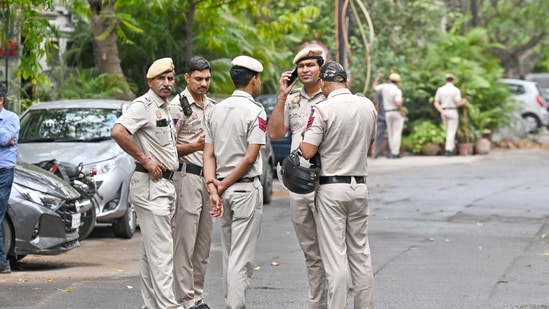
35-year-old Delhi judge dies by suicide at Safdarjung home
# Delhi Judge, 35, Dies by Suicide at Home
By Senior Correspondent, Legal Chronicle, May 03, 2026
On Saturday evening, the legal fraternity of the national capital was plunged into mourning following the tragic death of Aman Kumar Sharma, a 35-year-old Delhi judge. Authorities discovered the judicial officer deceased at his residence in the Safdarjung enclave. Police officials have preliminarily confirmed the incident as a suicide, with an investigation currently underway to ascertain the surrounding circumstances. The sudden loss of the young, promising judge has not only devastated his family and colleagues but has also urgently reignited conversations regarding the immense occupational stress, overwhelming case backlogs, and silent mental health crises pervasive within the Indian judiciary. [Source: Hindustan Times].
## The Incident and Immediate Response
The alarm was raised late Saturday afternoon, May 2, 2026, when Judge Sharma failed to respond to repeated calls from family members and court staff. Upon arrival at his Safdarjung residence, local police authorities entered the premises to find the judicial officer deceased. According to the initial police briefing, the scene suggested suicide, though law enforcement has maintained a strict perimeter to allow forensic teams to conduct a thorough analysis.
Senior police officials from the South West Delhi district confirmed the discovery. “We received a distress call regarding an unresponsive individual at the Safdarjung residence. Our teams secured the location, and inquest proceedings have been initiated under Section 194 of the Bharatiya Nagarik Suraksha Sanhita (BNSS). At this preliminary stage, no foul play is suspected, but a comprehensive inquiry is being conducted,” a senior police spokesperson stated.
The mortal remains have been transferred to the Safdarjung Hospital mortuary for a post-mortem examination. Authorities are currently examining the residence for any notes or documents that might shed light on the exact reasons behind the extreme step. Colleagues from the district courts rushed to the hospital late Saturday night to offer their condolences and support to the grieving family. [Additional Source: Local Police Briefings, May 2026].
## A Promising Legal Career Cut Short
Aman Kumar Sharma was widely regarded as a meticulous, deeply committed, and highly competent judicial officer. Having cleared the rigorous Delhi Judicial Services Examination in his late twenties, he had quickly built a reputation for his unyielding integrity and sharp legal acumen. Stationed at one of Delhi’s bustling district court complexes, Judge Sharma handled a heavy daily roster, presiding over a myriad of complex civil and criminal matters.
Colleagues remember him as a soft-spoken individual who was deeply invested in the pursuit of justice. “He was brilliant, always thorough with his case files, and profoundly empathetic toward litigants,” shared a fellow magistrate who requested anonymity. “However, the sheer volume of the docket he managed was staggering. He often stayed back hours after the court had risen to dictate judgments and clear the administrative backlog.”
The tragedy of his untimely demise highlights a grim reality often obscured by the prestige of the judicial office: the extraordinary human toll exacted by an overburdened justice system. For a 35-year-old presiding officer, the transition from a hopeful legal scholar to the daily grind of an under-resourced district court can be a jarring, isolating experience.
## The Hidden Toll: Mental Health in the Judiciary
The death of Judge Sharma has pulled back the curtain on a crisis that the legal sector has long struggled to address: the deteriorating mental health of its practitioners and adjudicators. Judicial officers occupy a unique, highly scrutinized position in society. The Bangalore Principles of Judicial Conduct, alongside localized service rules, require judges to maintain a degree of social detachment to preserve their impartiality and independence.
While this isolation is ethically necessary, it often leads to profound personal loneliness. Judges cannot easily socialize, vent about their work to non-colleagues, or seek public support. They are the silent absorbers of society’s most bitter disputes, violent crimes, and tragic family breakdowns.
“When you sit on the dais, you are expected to be an infallible machine of justice,” explains Dr. Aarohi Varma, a New Delhi-based clinical psychologist who has consulted on occupational hazards in high-stress government roles. “Judicial officers suffer from severe vicarious trauma. Day in and day out, they are exposed to the darkest elements of human behavior—murder, sexual assault, financial ruin. Without mandatory, institutionalized psychological debriefing, this trauma compounds, leading to severe burnout, anxiety, and in tragic cases, clinical depression.”
Furthermore, the stigma surrounding mental health in India is magnified within the judiciary. Admitting to psychological struggles is often erroneously equated with professional weakness or an inability to handle the rigors of the bench. Consequently, many judicial officers suffer in silence, fearing that seeking psychiatric help might stall their career progression or invite administrative scrutiny.
## Systemic Challenges: India’s Crushing Case Backlog
It is impossible to contextualize the pressures faced by judicial officers without examining the sheer arithmetic of the Indian justice system. As of early 2026, data from the National Judicial Data Grid (NJDG) indicates that over 50 million cases remain pending across various tiers of the Indian judiciary, with the vast majority languishing in the district and subordinate courts.
A magistrate in Delhi may have anywhere from 80 to 150 matters listed before them on a single day. The expectation to afford a fair hearing to every litigant, while simultaneously meeting institutional targets for case disposal, creates an unsustainable pressure cooker environment.
**Key factors contributing to judicial stress include:**
* **Staggering Caseloads:** The judge-to-population ratio in India remains woefully below global standards. The Law Commission of India has repeatedly recommended 50 judges per million people; the current reality hovers at less than half that figure.
* **Infrastructural Deficits:** Many subordinate courts lack adequate support staff, modern stenography services, and essential digital infrastructure, forcing judges to take on administrative burdens alongside their adjudicatory duties.
* **Legislative Transitions:** The recent implementation of the new criminal codes—the Bharatiya Nyaya Sanhita (BNS), Bharatiya Nagarik Suraksha Sanhita (BNSS), and Bharatiya Sakshya Adhiniyam (BSA)—has required judges to undergo massive unlearning and relearning processes, temporarily slowing down proceedings and adding to cognitive fatigue.
## Expert Perspectives on Judicial Burnout
The legal community has reacted to the Safdarjung incident with a mixture of grief and frustration. Many senior advocates and retired jurists are calling for an immediate structural overhaul regarding how judicial wellness is managed.
Senior Advocate Meenakshi Desai, who has actively campaigned for mental health awareness in the legal profession, noted the urgency of the situation. “We are losing our brightest legal minds to an institutional apathy toward mental wellness,” Desai remarked. “A judge is not merely a cog in the wheel of justice; they are human beings bearing the ultimate responsibility of liberty and rights. When the system fails to protect the mental well-being of its protectors, the entire edifice of justice is compromised.”
Desai further highlighted that while corporate sectors have rapidly adopted employee assistance programs (EAPs) and mental health days, the judiciary remains bound by archaic service rules that offer little respite. The relentless push for higher “disposal rates” often overlooks the quality of life of the officer delivering those judgments.
## Calls for Institutional Reform
In the wake of Judge Sharma’s passing, several judges’ associations and bar councils are preparing to formally petition the higher judiciary and the Ministry of Law and Justice for immediate remedial measures. The tragedy has crystalized a set of demands that have been brewing in judicial circles for years.
First and foremost is the call for the establishment of a **National Judicial Wellness Authority**. Such an institution would be responsible for providing mandatory, confidential, and destigmatized psychological support to all sitting judges. Regular mental health check-ins, much like physical health assessments, need to be integrated into the judicial calendar.
Secondly, experts are advocating for a more realistic appraisal system. Performance evaluation of judicial officers must pivot from being purely quantitative (based on the number of cases disposed of) to a more holistic matrix that accounts for the complexity of the cases and the administrative hurdles faced by the judge.
Thirdly, there is an urgent need to expedite the filling of judicial vacancies. The chronic shortage of personnel directly translates to an unmanageable workload for the existing bench. Fast-tracking appointments at the lower judiciary level is critical to distributing the burden of pendency.
## Conclusion: A Wake-Up Call for the System
The death of 35-year-old Judge Aman Kumar Sharma is a profound tragedy that extends far beyond a localized news event; it is a glaring indictment of the immense pressures shouldered by the subordinate judiciary. As police continue their investigation in Safdarjung, the broader legal community must grapple with the uncomfortable reality that the guardians of law and order are themselves vulnerable, unprotected, and overwhelmed.
If the Indian justice system is to function effectively and humanely, it must begin by extending justice and care to its own officers. Recognizing judicial burnout not as a personal failure, but as an occupational hazard requiring institutional intervention, is the first vital step. The legacy of Judge Sharma must be more than a cautionary tale; it must be the catalyst for a systemic transformation that prioritizes the mental health and well-being of the men and women who keep the wheels of democracy turning.
***
*If you or someone you know is struggling with mental health issues, feeling overwhelmed, or experiencing suicidal thoughts, please reach out for help immediately. You are not alone.*
* **KIRAN (Mental Health Helpline by Govt of India):** 1800-599-0019
* **AASRA:** 9820466726
* **Vandrevala Foundation:** 9999 666 555
* **Snehi:** 011-65978181





