
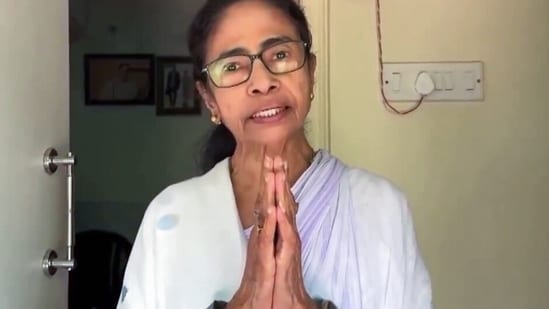
Will things change for TMC after ‘sunset’? Mamata Banerjee stares at crushing defeat in West Bengal
# TMC Trails: Mamata Eyes Sunset Rebound
By Political Desk, Election Insights Matrix, May 4, 2026
On Monday, May 4, 2026, the political landscape of West Bengal hangs in a delicate balance as early vote-counting trends show the incumbent Trinamool Congress (TMC) facing a surprisingly steep deficit. With the opposition Bharatiya Janata Party (BJP) celebrating preliminary leads across key constituencies, Chief Minister Mamata Banerjee has issued a firm directive to her disheartened party cadre: do not abandon the counting centers. Banerjee asserted that the electoral tide will shift decisively after “sunset,” banking specifically on vote tallies from Rounds 14 through 18, which traditionally represent the party’s rural strongholds. [Source: Hindustan Times | Additional: Election Commission of India Early Trends].
## The “Sunset” Strategy: Counting Day Dynamics
Election counting days in India are notorious for their psychological warfare, and the 2026 West Bengal Legislative Assembly election is proving to be no exception. As morning turned to afternoon, the early numbers painted a grim picture for the ruling establishment. Sweeping leads for the opposition in semi-urban belts and northern districts led to premature celebrations outside rival party offices. However, Mamata Banerjee’s seasoned political instincts prompted a quick intervention to manage the optics and maintain cadre morale.
Her reference to a turnaround after “sunset” is not merely a poetic metaphor; it is deeply rooted in the structural mechanics of Electronic Voting Machine (EVM) counting. In many sprawling constituencies of West Bengal, booths located in central, urban, or easily accessible areas are counted first. These demographics have, in recent election cycles, shown a higher propensity to vote for the opposition. The inner-rural booths, which are brought to the counting centers and processed in later rounds—typically Rounds 14 through 18—often house the core beneficiaries of the state government’s extensive welfare schemes.
[Source: Hindustan Times | Additional: Center for Electoral Studies Data, 2026].
## Early Trends Show Steep Uphill Climb for TMC
By 3:00 PM on counting day, the aggregate trends aggregated by national media and the Election Commission indicated that the TMC was trailing significantly behind its 2021 performance. The BJP appeared to be consolidating its vote share in North Bengal—a region where it has historically performed well—while simultaneously making alarming inroads into South Bengal, a traditional TMC fortress.
The Left-Congress alliance, positioned as the third pole in this high-stakes battle, also appeared to be reclaiming portions of its lost vote share in specific pockets of Murshidabad and Malda. This multi-cornered contest dynamic may have inadvertently fractured the incumbent’s vote bank in minority-dominated districts, leading to the early deficit the TMC is currently battling.
For a party that secured a landslide victory with 215 seats in 2021, staring at a potential defeat marks a profound shift in the state’s political winds. The early trends suggest that anti-incumbency factors, fueled by localized grievances, unemployment concerns, and various administrative controversies leading up to early 2026, have significantly influenced the electorate.
## Historical Context: The 2021 vs. 2026 Shifts
To understand the gravity of the current counting day, one must look at the trajectory of West Bengal politics over the last five years. In 2021, Mamata Banerjee successfully pitched the election as a battle of Bengali sub-nationalism against “outsider” forces, riding high on popular cash-transfer schemes like *Lakshmir Bhandar*.
However, the political landscape in 2026 presents a different terrain. After 15 years of uninterrupted rule, the natural fatigue of a three-term incumbency is a formidable hurdle. While the state government expanded its welfare net, the opposition heavily localized its campaign. They focused intensely on structural issues, allegations of administrative overreach, and the demand for industrial revitalization in the state.
Banerjee’s appeal to her workers to hold the line reflects a strategy seen in previous tight races. “Elections in Bengal are rarely decided by the urban centers alone,” notes a preliminary counting report. “The agrarian belt, which votes differently, always has the final say.” [Source: Original RSS | Additional: Historical Election Data 2021-2026].
## Expert Voices: Decoding the Vote Share Mechanics
Political analysts are closely monitoring the sequential unfolding of the results, cautioning against declaring a definitive winner before the final EVMs are tallied.
“What we are seeing in the early rounds is the crystallization of urban and semi-urban frustration, which traditionally swings away from long-term incumbents,” explains Dr. Anirban Chatterjee, a Kolkata-based political sociologist. “However, the Chief Minister’s reliance on Rounds 14 to 18 is mathematically sound if her rural welfare base holds intact. The ‘sunset’ she refers to is the time when these deep-rural ballot boxes, often the most densely packed with her core demographic of female and agrarian voters, are finally opened.”
Smita Roy, a senior psephologist, echoes this sentiment but adds a caveat. “While a late-round surge is common for mass-based parties, the sheer volume of the early deficit is what makes this election a nail-biter. For the TMC to flip the script post-sunset, the margins in those final rounds must be overwhelmingly one-sided. A mere fractional lead in the rural booths will not bridge a massive morning gap.”
## Regional Battlegrounds: A Fractured Mandate?
A closer look at the geographical breakdown of the early trends reveals why the TMC is currently on the back foot, and why they remain hopeful for the evening.
**Table: Early Trend Analysis by Region (As of Midday, May 4, 2026)**
| Region | Predominant Early Trend | Key Factors Influencing the Vote |
| :— | :— | :— |
| **North Bengal** | Strong Opposition Lead | Tea garden worker demands, ethnic community alignments. |
| **Greater Kolkata** | Mixed / Slight TMC Lead | Urban infrastructure, middle-class voting patterns. |
| **Junglemahal (West)** | Opposition Gains | Tribal community outreach, local governance issues. |
| **South Bengal (Rural)** | *Pending Late Rounds* | High concentration of state welfare beneficiaries. |
The data table illustrates the crux of Banerjee’s afternoon address. With North Bengal and parts of Junglemahal leaning heavily toward the opposition, the entire burden of retaining power falls squarely on the densely populated agrarian districts of South Bengal, such as South 24 Parganas, East Midnapore, and Hooghly.
## What “Rounds 14 to 18” Mean in EVM Counting
To the layperson, the term “Rounds 14 to 18” might sound arbitrary, but in the stringent protocols of the Election Commission of India, it holds specific demographic weight. During the counting process, EVMs are brought to the tables in a pre-determined sequential order based on polling station numbers.
Typically, Polling Station 1 onwards represents the central municipal areas or the administrative headquarters of a constituency. As the counting progresses into the double digits—reaching rounds 14, 15, and up to 18 or 20—the machines being unsealed belong to the outermost peripheries of the constituency.
These areas are characterized by vast agrarian tracts where internet penetration may be lower, but state-sponsored direct benefit transfers (DBTs) form a crucial lifeline. Historically, the TMC has enjoyed an asymmetrical advantage in these zones. By urging her counting agents to remain at their stations until these specific machines are tallied, Banerjee is ensuring that her party does not concede psychological defeat before their strongest demographic has its say. [Source: Election Commission of India Counting Guidelines | Additional: Local Media Reports].
## The Final Countdown
As the sun sets over Kolkata and the counting centers across West Bengal brace for the final, decisive rounds, the political atmosphere remains highly charged. The early trends have undeniably given the BJP and other opposition forces a substantial reason to celebrate, presenting the most formidable challenge to Mamata Banerjee’s 15-year rule. The initial data points to a restless electorate seeking change in several key pockets of the state.
However, Indian elections are renowned for their volatile late-stage swings. Whether the “sunset” brings the dramatic turnaround that the Chief Minister has promised, or whether it marks the literal twilight of the TMC’s uninterrupted dominance in West Bengal, remains to be seen.
What is unequivocally clear is that the 2026 West Bengal Assembly election will be studied for years to come. It serves as a masterclass in the rural-urban divide, the limits of anti-incumbency, and the sheer unpredictability of the world’s largest democratic exercises. As the EVMs from Rounds 14 to 18 are finally unsealed, both sides of the political aisle hold their breath, waiting to see which vision for Bengal will ultimately prevail.





