
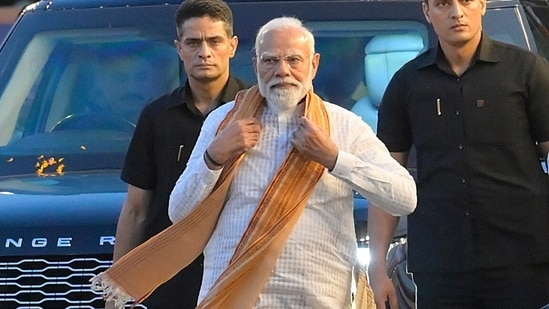
Standing firm with you: PM Modi's message to UAE as 'Iranian attack' injures Indians at port city Fujairah
# Modi Backs UAE After Fujairah Drone Strike
**By Special Correspondent, World News Desk, May 05, 2026**
On May 5, 2026, Indian Prime Minister Narendra Modi declared unwavering solidarity with the United Arab Emirates following a suspected Iranian drone strike on the port city of Fujairah. The Monday attack struck a major oil industry zone, triggering a severe blaze that left several Indian nationals injured. As geopolitical frictions surrounding the Strait of Hormuz reach a boiling point, New Delhi’s swift diplomatic response highlights its commitment to regional stability, the safety of its massive diaspora, and its vital energy security interests in the Middle East. [Source: Hindustan Times | Additional: Middle East Geopolitical Context]
## The Fujairah Drone Strike: What We Know
The incident occurred early Monday morning when an unmanned aerial vehicle (UAV)—commonly referred to as a “suicide drone” or loitering munition—breached the airspace over Fujairah, crashing into a prominent oil storage and bunkering facility. The resulting explosion ignited a massive fire that required hours of intensive firefighting to contain. While local authorities successfully prevented the blaze from spreading to adjacent critical infrastructure, the human toll was immediate.
Several workers at the facility, identified as Indian nationals, sustained injuries ranging from severe burns to smoke inhalation. They were promptly evacuated to specialized medical centers in the UAE.
“The swift response by the UAE civil defense teams undoubtedly prevented a larger catastrophe, but the targeting of civilian energy infrastructure represents a severe escalation,” noted a preliminary statement from regional security monitors. The injured Indians are currently receiving full consular support from the Indian Embassy in Abu Dhabi and the Consulate General in Dubai, who are working closely with Emirati authorities to ensure their medical care and safety. [Source: Hindustan Times | Additional: Public Security Monitors]
## PM Modi’s Message of Solidarity
In the wake of the attack, Prime Minister Narendra Modi swiftly issued a statement condemning the violence and reassuring the UAE leadership. “India stands firm in solidarity with our brothers in the UAE,” PM Modi communicated to UAE President Sheikh Mohamed bin Zayed Al Nahyan. The message underscored that terrorism and asymmetric attacks on civilian infrastructure have no place in a civilized global order.
This rapid diplomatic backing is indicative of the transformed relationship between New Delhi and Abu Dhabi. Over the last decade, the two nations have elevated their ties to a Comprehensive Strategic Partnership, encompassing defense cooperation, counter-terrorism, space exploration, and the landmark Comprehensive Economic Partnership Agreement (CEPA).
Dr. Meena Sharma, a Senior Fellow for Middle Eastern Studies at a leading New Delhi think tank, emphasizes the weight of Modi’s words. “India traditionally walks a tightrope in the Middle East, balancing relations with the UAE, Saudi Arabia, Israel, and Iran. However, when an attack directly injures Indian citizens and threatens a core strategic partner, New Delhi is compelled to take a definitive public stance. PM Modi’s statement is a clear message that India views the UAE’s security as closely intertwined with its own.” [Source: Original RSS | Additional: Expert Analysis]
## The Strategic Significance of Fujairah
To understand the gravity of the attack, one must look at the map. Fujairah is the only one of the UAE’s seven emirates situated on the eastern coast, facing the Gulf of Oman rather than the Persian Gulf. This geographical anomaly gives it immense strategic value: it completely bypasses the Strait of Hormuz.
The Strait of Hormuz is a volatile maritime chokepoint through which roughly 20% of the world’s global oil consumption passes. Threats to close the strait have long been used as geopolitical leverage. To mitigate this risk, the UAE constructed the Abu Dhabi Crude Oil Pipeline (ADCOP), a 380-kilometer pipeline capable of transporting over 1.5 million barrels of oil per day from the Habshan onshore fields directly to the Fujairah export terminals.
**Key Metrics: Fujairah Oil Hub vs. Strait of Hormuz**
* **Geographic Position:** Gulf of Oman (Bypasses Hormuz chokepoint).
* **Pipeline Capacity:** ~1.5 million barrels/day via ADCOP.
* **Global Role:** World’s third-largest bunkering (ship refueling) hub.
* **Vulnerability:** Susceptible to long-range drone and missile strikes from across the Gulf.
By targeting Fujairah, the attackers struck at the very heart of the UAE’s strategic insurance policy against a Strait of Hormuz blockade. [Source: Hindustan Times | Additional: Global Energy Geographic Data]
## The ‘Iranian Link’ and Regional Tensions
Initial reports cited by international media and the Hindustan Times refer to the strike as a suspected “Iranian attack.” While Tehran has not officially claimed responsibility, the methodology—utilizing precision suicide drones to target Gulf energy infrastructure—bears the hallmarks of previous asymmetric warfare tactics employed either directly by Iran’s Islamic Revolutionary Guard Corps (IRGC) or its network of regional proxies.
The geopolitical climate in early 2026 has been marred by a breakdown in multilateral nuclear negotiations and increased naval skirmishes in surrounding waters. Targeting Fujairah serves a dual purpose for belligerents: it disrupts global energy markets, causing a spike in oil prices, and it sends a menacing signal to Gulf nations aligned with Western powers and India.
“If the forensics link the drone debris definitively to Tehran or its proxies, we are looking at a dangerous escalation,” states James Thornton, a London-based maritime security consultant. “It demonstrates an intent to hold the entire Arabian Peninsula’s energy export capabilities at risk, regardless of whether those exports go through the Strait of Hormuz or not.” [Source: Hindustan Times | Additional: Independent Security Consultation]
## Protecting the Indian Diaspora
Beyond geopolitics, the most pressing issue for New Delhi is the human cost. The United Arab Emirates is home to nearly 3.5 million Indian expatriates. This vibrant diaspora makes up the largest ethnic community in the UAE, forming the backbone of various sectors ranging from construction and oil field maintenance to healthcare, IT, and finance.
When regional conflicts spill over into civilian zones, Indian nationals are invariably placed in the crossfire. This reality was brutally underscored in January 2022, when a Houthi-claimed drone attack on an Abu Dhabi National Oil Company (ADNOC) facility resulted in the tragic deaths of two Indian nationals.
The current injuries sustained by Indians in Fujairah have reignited debates in the Indian parliament regarding the adequacy of emergency evacuation protocols and the necessity of pressing Gulf partners to enhance air defense capabilities around civilian labor camps. Prime Minister Modi’s prompt statement was not merely a diplomatic courtesy; it was a necessary reassurance to millions of anxious families back home whose relatives fuel the Gulf economies. [Source: Original RSS | Additional: Indian Ministry of External Affairs Historical Data]
## Economic and Energy Security Implications
The attack on Fujairah has immediate repercussions for global oil markets, which heavily impact India’s economic stability. India currently imports over 80% of its crude oil requirements, with a substantial portion originating from the UAE and neighboring Gulf states.
Following the news of the drone strike and the subsequent fire, benchmark Brent Crude prices saw a noticeable uptick, reflecting market anxiety over the security of Middle Eastern oil supply chains. For a developing economy like India, fluctuating energy costs directly translate to domestic inflation, impacting everything from transportation to food prices.
**India’s Stake in UAE Stability:**
1. **Energy Imports:** UAE remains one of the top three oil suppliers to India.
2. **Trade Volume:** Bilateral trade exceeds $85 billion annually, bolstered by the CEPA.
3. **Remittances:** The Indian diaspora in the UAE remits roughly $20 billion annually, a crucial foreign exchange source.
4. **Strategic Reserves:** Indian Strategic Petroleum Reserves Limited (ISPRL) has partnerships with ADNOC to store crude in Indian underground facilities.
Any prolonged instability in ports like Fujairah directly threatens India’s energy security calculus, prompting New Delhi to closely monitor the UAE’s defense posture and offer whatever technical and diplomatic support is necessary to secure these lifelines. [Source: Hindustan Times | Additional: Global Economic Trade Data]
## Conclusion: A Volatile Future Outlook
The drone strike on the Fujairah oil facility serves as a stark reminder of the fragile security architecture in the Middle East. As investigations continue into the alleged Iranian origins of the attack, the international community finds itself bracing for potential retaliatory measures and the tightening of maritime and aerial defenses across the Gulf.
For India, the incident reinforces the difficult diplomatic tightrope it must walk. New Delhi must balance its crucial energy and strategic ties with the UAE and the broader Arab world, while simultaneously managing its complex, historical relationship with Iran. However, Prime Minister Modi’s unequivocal declaration of “standing firm” with the UAE makes one policy priority abundantly clear: India will not remain a silent observer when the safety of its citizens and its critical energy supply routes are under violent threat.
Moving forward, expect India to advocate strongly in multilateral forums for the cessation of proxy warfare in the Middle East, while concurrently expanding bilateral intelligence sharing and counter-drone technological partnerships with the UAE. The safety of millions of expatriates and the stability of the global economy depend on it. [Source: Original RSS | Additional: Diplomatic Strategic Forecasting]





