
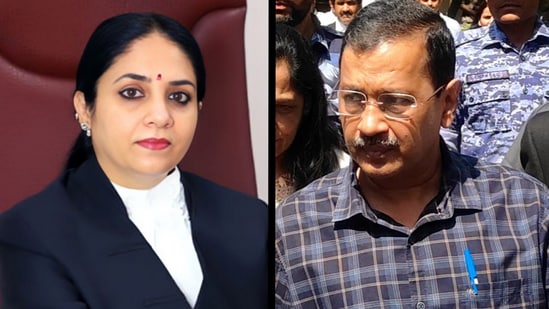
Delhi HC to appoint 3 senior lawyers as amicus for Kejriwal, Sisodia in excise policy case
# Delhi HC Names Amicus in Excise Case
**By Special Correspondent, National Legal Desk | May 05, 2026**
In a crucial procedural development regarding the high-profile Delhi excise policy investigation, the Delhi High Court announced on Tuesday that it will appoint three senior lawyers to act as *amicus curiae* (friends of the court) to assist in the Central Bureau of Investigation’s (CBI) ongoing appeal involving Aam Aadmi Party (AAP) leaders Arvind Kejriwal and Manish Sisodia. Justice Swarana Kanta Sharma, presiding over the single-judge bench, confirmed that the formal appointment of the independent legal panel will take place on Friday, after which the court will officially commence hearing the CBI’s arguments on the merits of the case. [Source: Hindustan Times | Additional: Delhi High Court Live Proceedings]
## The Court’s Directive and Procedural Shift
The legal battle surrounding the scrapped 2021-22 Delhi excise policy has been one of the most closely watched political and judicial sagas in recent Indian history. During Tuesday’s session, Justice Swarana Kanta Sharma emphasized the necessity of objective legal assistance to navigate the labyrinthine chargesheets and counter-claims presented by the investigative agencies and the defense.
By deciding to appoint an *amicus curiae* panel—specifically opting for a robust team of three senior advocates—the High Court has signaled its intent to meticulously scrutinize the evidentiary merits of the CBI’s claims. An *amicus curiae* is typically appointed in matters of significant public interest or profound legal complexity, tasked with offering impartial advice, synthesizing vast amounts of legal documentation, and ensuring that the court’s final judgment is grounded in an exhaustive understanding of statutory law.
“The volume of documents, digital evidence, and witness testimonies in this matter is exceptionally large. The appointment of an amicus will be finalized this Friday, after which the CBI will begin its detailed arguments on the merits of the allegations,” Justice Sharma observed during the proceedings. [Source: Hindustan Times]
## Decoding the Amicus Curiae Strategy
The decision to appoint not just one, but three senior lawyers as *amici curiae* highlights the extraordinary nature of the excise policy dispute. The case spans multiple jurisdictions, intertwining alleged violations of the Prevention of Corruption Act (PCA) with parallel investigations under the Prevention of Money Laundering Act (PMLA) handled by the Enforcement Directorate (ED).
Legal experts note that in cases where the state apparatus is pitted against sitting or former top government executives, an independent amicus serves as a crucial judicial safeguard. The panel will be responsible for distilling the complex web of financial transactions, policy decisions, and bureaucratic procedures that the CBI alleges were manipulated.
**Key Responsibilities of the Amicus Panel:**
* **Evidence Synthesis:** Breaking down thousands of pages of CBI chargesheets into manageable legal queries for the bench.
* **Statutory Interpretation:** Advising the court on the application of the Prevention of Corruption Act in the context of executive policy formulation.
* **Objective Analysis:** Providing a neutral counter-balance to the highly adversarial arguments expected from both the CBI prosecutors and the high-powered defense team representing Kejriwal and Sisodia.
## Background: The Genesis of the Excise Policy Case
To understand the weight of Friday’s impending appointments, it is essential to trace the origins of the controversy. The Delhi government implemented a new excise policy in November 2021, aiming to modernize the capital’s liquor retail sector. The policy marked the exit of government-run liquor vends, handing the retail operations entirely to private entities through a bidding process. The AAP government argued the policy would eradicate the liquor mafia, enhance consumer experience, and boost state revenues.
However, the policy was abruptly withdrawn in July 2022 following a damning report by the Delhi Chief Secretary, which alleged gross procedural lapses, arbitrary waivers, and financial favoritism. The report triggered a recommendation from Delhi Lieutenant Governor V.K. Saxena for a CBI probe, setting the stage for a sprawling multi-agency investigation. [Source: Public Legal Records]
The CBI and ED subsequently alleged that the policy was deliberately riddled with loopholes to favor specific liquor cartels—collectively referred to by the agencies as the “South Group.” According to the investigation, these cartels paid massive kickbacks to AAP leaders in exchange for unmerited profit margins and monopolistic control over retail zones.
Former Deputy Chief Minister Manish Sisodia, who held the excise portfolio, was arrested in early 2023. Delhi Chief Minister Arvind Kejriwal faced a similar fate, drawing international attention and sparking fierce political debates regarding the independence of federal investigative agencies.
## The CBI’s Argument Strategy Moving Forward
When hearings commence on the merits following the Friday appointments, the CBI is expected to deploy an aggressive legal strategy focusing on establishing a direct nexus between the policy’s formulation and the alleged financial kickbacks.
The investigative agency’s core argument rests on Section 120B of the Indian Penal Code (criminal conspiracy) read with the provisions of the Prevention of Corruption Act. The CBI aims to prove that:
1. **Cartelization:** The policy was engineered to promote cartelization by artificially increasing the wholesale profit margin to 12%, allowing for a structured kickback mechanism.
2. **Quid Pro Quo:** Advance payments were allegedly made by the “South Group” to AAP functionaries, which were subsequently used to fund the party’s electoral campaigns in other states.
3. **Bypassing Protocols:** Key decisions regarding the waiver of license fees during the COVID-19 pandemic and the refund of earnest money deposits were allegedly taken without the approval of the Lieutenant Governor or the formal cabinet.
The introduction of the three *amici curiae* will likely force the CBI to present a highly streamlined, evidence-backed narrative, as the independent lawyers will scrutinize every logical leap in the prosecution’s timeline.
## Expert Perspectives on the High Court’s Move
Legal scholars and political analysts have closely monitored the trajectory of this case, noting that the High Court’s latest move reflects the judiciary’s cautious approach to a politically volatile issue.
“By appointing a multi-member *amicus* panel in a case of this magnitude, the High Court is insulating its judicial process from allegations of partisan bias. The court is essentially demanding an unvarnished, purely legal breakdown of the CBI’s evidence before ruling on the merits,” explains Dr. Vikram Seth, a veteran constitutional lawyer and former public prosecutor (expert opinion).
Dr. Seth further adds, “When you have two of a state’s highest-ranking politicians facing serious corruption charges, the line between executive policy-making and criminal conspiracy often becomes blurred. The amicus panel’s job will be to strictly define that line based on the documented evidence, rather than political rhetoric.” [Source: Independent Legal Analysis]
Furthermore, defense advocates for Kejriwal and Sisodia have consistently argued that the entire investigation is a politically motivated witch-hunt designed to decapitate the AAP leadership. They maintain that the formulation of government policy, even if flawed in hindsight, cannot be criminalized without concrete proof of a money trail directly linking to the accused—a point they argue the agencies have failed to conclusively establish.
## Broader Political and Governance Implications
As the hearings on merits draw closer, the political ramifications for the Aam Aadmi Party and the broader governance of the National Capital Territory of Delhi remain significant. The prolonged incarceration of key figures like Manish Sisodia, and the intense legal scrutiny surrounding Chief Minister Arvind Kejriwal, have inevitably impacted the administrative machinery of Delhi.
The AAP has continually utilized the legal proceedings to rally its political base, portraying the CBI and ED actions as an assault on democracy and federalism by the ruling central government. Conversely, political opponents have seized upon the chargesheets as definitive proof of systemic corruption within the AAP ranks, undermining the party’s foundational anti-corruption platform.
The upcoming phase of High Court hearings, mediated by the insights of the *amicus curiae* panel, is likely to generate critical observations that could heavily influence public perception. Should the amicus panel identify glaring holes in the CBI’s evidentiary chain, it could provide the AAP with a monumental political victory. Conversely, if the independent panel validates the strength of the prosecution’s evidence regarding the money trail, it could deal a severe blow to the defense’s long-standing narrative.
## Conclusion and Future Outlook
The Delhi High Court’s decision to appoint three senior lawyers as *amicus curiae* marks a definitive pivot from procedural skirmishes to an in-depth evaluation of the core evidence in the Delhi excise policy case. Justice Swarana Kanta Sharma’s directive ensures that when the CBI begins its arguments on the merits, the bench will have the benefit of independent, expert legal counsel to navigate the complexities of corporate maneuvering, political funding, and statutory law.
All eyes are now on Friday’s session, where the names of the three senior advocates will be officially recorded. Following this appointment, the court will establish a timeline for the CBI to present its arguments, initiating what is expected to be one of the most rigorously contested legal battles of the year. The outcome of these merit-based hearings will not only determine the legal fate of Arvind Kejriwal and Manish Sisodia but will also set a lasting judicial precedent regarding the criminalization of executive policy decisions in India.





