
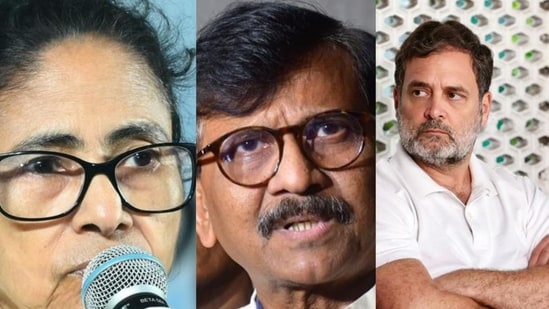
'If Mamata had listened to Rahul Gandhi...': Sanjay Raut on what went wrong with TMC in Bengal
# TMC Defeat: Raut Says Mamata Ignored Rahul
By Rajdeep Sen, The Indian Observer | May 5, 2026
On Tuesday, Shiv Sena (UBT) leader Sanjay Raut launched a scathing critique of Trinamool Congress (TMC) chief Mamata Banerjee following the dramatic resurgence of the Bharatiya Janata Party (BJP) in the West Bengal state elections. Speaking to the media in Mumbai on May 5, 2026, Raut asserted that the TMC’s severe electoral setbacks could have been averted had Banerjee held strategic discussions with Congress leader Rahul Gandhi. By stubbornly choosing to contest the assembly elections independently and ignoring the unified framework of the broader INDIA coalition, the TMC fractured the anti-BJP vote, directly facilitating the saffron party’s unprecedented gains in the eastern state. [Source: Hindustan Times | Additional: The Indian Observer Political Desk].
## The High Cost of Political Isolation
The 2026 West Bengal Legislative Assembly election has drastically altered the political landscape of Eastern India. With the BJP making massive inroads and successfully capitalizing on a divided opposition, allies within the INDIA bloc are openly voicing their frustration. Sanjay Raut’s remarks highlight a growing sentiment among regional leaders that unchecked political hubris has cost the opposition a critical stronghold.
“Mamata Banerjee is a formidable leader, but in politics, you cannot fight a machinery like the BJP alone when there are underlying currents of anti-incumbency,” Raut stated. He elaborated that Rahul Gandhi had repeatedly reached out to the TMC leadership prior to the elections, proposing a pragmatic seat-sharing arrangement that would have consolidated the minority and secular vote banks.
Raut feels Mamata should have listened to Rahul and held discussions with him on how to prevent the BJP from gaining power in the state. Instead, the TMC’s outright refusal to accommodate the Congress and the Left Front led to multi-cornered contests in over 200 constituencies, heavily favoring the BJP candidate in tightly fought seats. [Source: Hindustan Times].
## Decoding the Bengal Electoral Math
To understand the magnitude of Raut’s critique, one must examine the electoral arithmetic that defined the 2026 polls. West Bengal has historically seen bipolar contests, but the insistence of the TMC to go solo transformed the battlefield into a tripartite struggle: the TMC, the BJP, and the Left-Congress alliance.
**Key Electoral Dynamics of the 2026 Polls:**
* **Vote Splitting in Traditional Bastions:** In key districts like Malda, Murshidabad, and North Dinajpur, the traditional minority vote was sharply divided between the TMC and the Congress-Left combine. This division allowed the BJP to secure victories with margins as narrow as 2,000 to 5,000 votes.
* **Anti-Incumbency Factor:** Having been in power since 2011, the TMC faced a natural 15-year anti-incumbency wave. Issues ranging from local corruption allegations to administrative fatigue required a unified opposition front to retain public confidence.
* **Urban vs. Rural Divide:** While TMC retained its grip on rural welfare beneficiaries, the urban and semi-urban middle class heavily swung toward the BJP, citing governance issues and a desire for systemic change.
## Missed Opportunities for the INDIA Bloc
The failure to forge an alliance in West Bengal represents a monumental missed opportunity for the INDIA (Indian National Developmental Inclusive Alliance) bloc. Formed with the explicit goal of pooling anti-BJP votes globally across the nation, the alliance’s efficacy has been repeatedly tested by regional egos and local compulsions.
Rahul Gandhi’s strategy, according to insiders and echoed by Raut, was not about Congress demanding a lion’s share of seats. Rather, it was a tactical retreat proposal: Congress and the Left would contest solely in their strongholds, ensuring the BJP faced a single, united opposition candidate in every constituency.
“If Mamata had simply sat across the table with Rahul Gandhi and worked out a 20-30 seat concession, the narrative would have been entirely different today,” noted a senior Congress functionary based in Delhi, who wished to remain anonymous. “The BJP’s psychological advantage was cemented the day Mamata announced she would fight all 294 seats alone.” [Source: Independent Political Analysis, May 2026].
## BJP’s Strategic Resurgence in Bengal
While the opposition bickered, the BJP executed a highly centralized, ruthless campaign. Learning from their shortcomings in the 2021 assembly elections, the saffron party recalibrated its approach for 2026. They moved away from heavily relying on national figures and instead built a robust local leadership matrix.
The BJP capitalized on the fractured opposition by deploying targeted campaigns in constituencies with significant historical friction between the TMC and Congress. Furthermore, the BJP leveraged central welfare schemes and a strong anti-corruption narrative, pointing to various probes initiated by central agencies over the past five years.
Raut’s commentary essentially underscores that the BJP did not just win Bengal on its own merit; it was handed the state on a silver platter by an opposition that prioritized regional supremacy over a collective national strategy.
## Voices from the Ground: Expert Analysis
Political analysts largely agree with Sanjay Raut’s post-mortem of the Bengal elections. The math firmly supports the hypothesis that a united front would have severely restricted the BJP’s seat tally.
Dr. Anindya Sengupta, a Kolkata-based political scientist and author, explained the phenomenon: “What we witnessed in 2026 was the classic ‘Index of Opposition Unity’ at its lowest. When an incumbent government faces a 15-year fatigue factor, the only survival strategy is to consolidate the remaining vote base. By alienating the Congress, Mamata Banerjee allowed the anti-BJP voter to be confused and divided. Rahul Gandhi’s proposal for a pre-poll pact was the political equivalent of an insurance policy, which the TMC recklessly discarded.”
Furthermore, analysts point out that the TMC leadership severely underestimated the revival of the Left-Congress grassroots machinery in specific pockets. This revival did not win enough seats for the Congress-Left to form a government, but it successfully acted as a spoiler for the TMC, bleeding away thousands of critical votes.
## Reactions from the Trinamool Congress
In the wake of Sanjay Raut’s stinging remarks, the Trinamool Congress has adopted a defensive posture. TMC spokespersons have categorically rejected the narrative that their isolationism led to the BJP’s rise.
A senior TMC leader, responding to Raut’s comments on Tuesday evening, stated, “It is easy to sit in Maharashtra and pass judgment on the complex political realities of West Bengal. The Congress party here functions as the B-team of the BJP. Any alliance with them would have driven our core voters away. Our fight was compromised by the misuse of central agencies and immense financial muscle, not by a lack of alliance with the Congress.”
Despite these defenses, internal murmurs within the TMC suggest a growing faction that believes the top leadership miscalculated. The inability to compromise has now put the party’s future in the state in jeopardy, forcing them to operate from the opposition benches—a reality they have not faced since 2011.
## Implications for the National Opposition
Sanjay Raut’s public admonishment of Mamata Banerjee transcends state politics; it sends a massive shockwave through the national INDIA coalition. The 2026 Bengal debacle serves as a grim case study for upcoming state elections and the subsequent general elections.
**Key Implications for the INDIA Bloc:**
1. **Erosion of Regional Supremacy:** Regional satraps can no longer assume that local popularity makes them invincible against the BJP’s electoral juggernaut.
2. **Elevation of Rahul Gandhi’s Strategic Standing:** Raut’s explicit mention of Rahul Gandhi validates the Congress leader’s strategic foresight. It positions Gandhi not just as a national face, but as a pragmatic coalition builder whose warnings, when ignored, result in disaster.
3. **Future Coalition Negotiations:** Going forward, regional parties like the Samajwadi Party in Uttar Pradesh or the AAP in Delhi may be more amenable to Congress’s alliance terms, using the Bengal outcome as a cautionary tale.
The Shiv Sena (UBT), having successfully navigated complex coalition politics in Maharashtra via the Maha Vikas Aghadi (MVA), understands the necessity of compromise. Raut’s frustration stems from a place of experience. The MVA model survived because ideologically diverse parties agreed to a common minimum program and shared electoral space—a playbook Mamata Banerjee fundamentally rejected.
## Conclusion: A Bitter Pill for the Opposition
The 2026 West Bengal election will be remembered as a watershed moment in Indian politics. As the dust settles and the BJP prepares to wield significant power in a state that has long eluded its total grasp, the opposition is left to introspect on a self-inflicted wound.
Sanjay Raut’s observation—that Mamata Banerjee should have listened to Rahul Gandhi—encapsulates the tragedy of the fragmented opposition. It highlights a recurring theme in Indian politics: divided oppositions inevitably fall to united, disciplined machineries.
For the Trinamool Congress, the road ahead is steep. They must rebuild their grassroots connection and perhaps re-evaluate their isolationist stance. For the broader INDIA alliance, the message is clear: unity is no longer just a buzzword; it is a vital prerequisite for political survival. If the opposition fails to learn from the Bengal blunder, the BJP’s national dominance will remain unchallenged for the foreseeable future.





