
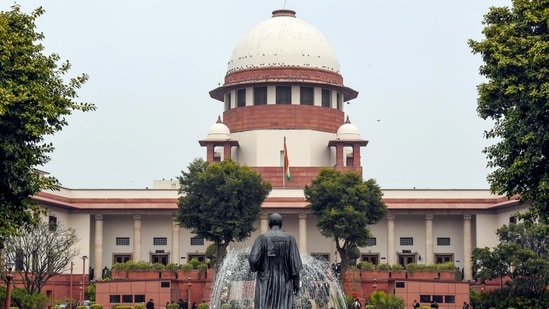
Go after ‘big fish’, Supreme Court of India tells Punjab amid ‘alarming’ narcotics
# SC to Punjab: Target Drug Trade ‘Big Fish’
**By National Affairs Correspondent**
**The Daily Report**
**May 9, 2026**
On May 9, 2026, the Supreme Court of India delivered a severe reprimand to the Punjab state government over its apparent inability to curb an “alarming” surge in narcotics trafficking. Expressing deep concern over the persistent drug epidemic ravaging the border state, the apex court directed law enforcement agencies to immediately pivot their operational focus. Rather than filling prisons with low-level consumers and street peddlers, the judiciary mandated a relentless pursuit of the “big fish”—the deeply entrenched cartel kingpins and cross-border masterminds fueling the crisis. [Source: Hindustan Times].
## The Supreme Court’s Stern Rebuke
The Supreme Court’s critical observations came during the hearing of a batch of petitions related to the **Narcotic Drugs and Psychotropic Substances (NDPS) Act**. The bench did not mince words, pointing out that while the volume of arrests in Punjab appears statistically high, the actual disruption of illicit supply chains remains negligible. The court noted that state resources are disproportionately exhausted on prosecuting addicts found with commercial or intermediate quantities of contraband, while the architects of the drug syndicates evade the judicial dragnet entirely.
“The current approach is analogous to treating the symptoms while allowing the disease to fester,” the bench observed. The top court demanded a comprehensive status report from the Punjab government detailing the specific investigative mechanisms deployed to trace the financial trails of narcotics syndicates. The judiciary underscored that dismantling the economic infrastructure of these cartels is the only viable method to stem the inflow of drugs. [Source: Hindustan Times | Additional: Supreme Court Public Records].
## The Illusion of Action vs. Ground Reality
For years, Punjab’s law enforcement agencies have presented high arrest figures as evidence of an aggressive crackdown on narcotics. However, legal experts and social activists argue that these metrics represent an illusion of action. Prisons across the state are currently operating at over 130% capacity, with a significant majority of inmates booked under various sections of the NDPS Act.
Advocate Meera Swaminathan, a senior criminal lawyer specializing in NDPS jurisprudence, explains the structural flaw in the state’s strategy: *”Arresting a nineteen-year-old carrying a few grams of heroin does nothing to stop the multi-million dollar shipments crossing the border. The foot soldiers are expendable to the cartels. The ‘big fish’—those who organize the logistics, launder the money, and provide political protection—are rarely brought to the stand.”*
The Supreme Court’s directive mandates a paradigm shift from reactive policing to proactive, intelligence-led operations. By utilizing advanced financial forensics and wiretapping, authorities are now expected to reverse-engineer the supply chain, moving upwards from the street peddler to the regional distributor, and ultimately to the cartel bosses.
## The Cross-Border Narco-Terrorism Nexus
Punjab’s geographical vulnerability—sharing a highly porous and heavily guarded 553-kilometer border with Pakistan—has historically made it a prime transit route for Afghan opiates. Over the past three years, the modalities of smuggling have undergone a rapid and dangerous technological evolution. The reliance on human couriers has been largely superseded by unmanned aerial vehicles (UAVs).
Since 2024, the **Border Security Force (BSF)** and the Punjab Police have reported a massive spike in drone sorties originating from across the border, dropping payloads of high-grade heroin, synthetic drugs, and sophisticated weaponry into Indian territory. This narco-terrorism nexus represents a dual threat: it destroys the socio-economic fabric of the state while generating illicit funds that are subsequently channeled into anti-national activities.
**Key Technological Challenges:**
* **Acoustic Evasion:** Modern smuggling drones are equipped with noise-reduction technology, making them difficult to detect at night.
* **GPS Spoofing:** Cartels use advanced software to bypass standard geo-fencing and anti-drone jammers.
* **Encrypted Coordination:** The “big fish” orchestrate these drops using end-to-end encrypted messaging platforms, communicating with local retrieval teams on the ground in Punjab.
Dr. Vikram Randhawa, a former Director General of Police and internal security analyst, notes, *”The traditional methods of border patrol are no longer sufficient. We are fighting a 21st-century technological war with 20th-century policing mindsets. To catch the masterminds, our cyber-intelligence capabilities must outpace those of the syndicates.”*
## Socio-Economic Toll on Punjab’s Youth
The human cost of this unchecked trafficking is catastrophic. Punjab is witnessing the decimation of its most valuable demographic dividend. The prevalence of “Chitta”—a highly adulterated and lethal form of diacetylmorphine (heroin)—has penetrated deeply into both urban centers and rural heartlands.
Beyond heroin, there has been a documented surge in the consumption of cheap, locally manufactured synthetic drugs, including methamphetamines and pharmaceutical opioids. The consequences are visible in overwhelmed hospitals, rising crime rates, and fractured communities.
Families are often pushed into crippling debt to fund a relative’s addiction or to pay for exorbitant private rehabilitation centers. The agricultural and industrial sectors are simultaneously suffering from an acute shortage of healthy, productive labor. The Supreme Court’s intervention highlighted that treating the drug epidemic solely as a law-and-order issue ignores the profound socio-economic decay it precipitates.
## Law Enforcement and Systemic Hurdles
A critical barrier to netting the “big fish” is the deeply entrenched systemic corruption. Investigating agencies frequently hit a brick wall when the money trail leads to individuals possessing substantial political or bureaucratic clout. The Supreme Court’s remarks implicitly acknowledged that without breaking the political-criminal nexus, law enforcement efforts will remain superficial.
Furthermore, state police forces are often hampered by jurisdictional limitations. A narcotics syndicate operating in Punjab may have its financial nerve center in Delhi, its logistical hub in Gujarat, and its international links routed through Dubai.
To address this, experts recommend the formation of dedicated, multi-agency task forces. These units must integrate personnel from the **Narcotics Control Bureau (NCB)**, the **Enforcement Directorate (ED)**, the **National Investigation Agency (NIA)**, and state intelligence wings. Only a coordinated national response, empowered by the Prevention of Money Laundering Act (PMLA), can effectively seize the assets of the top-tier traffickers.
| Agency | Primary Role in Anti-Narcotics Operations |
| :— | :— |
| **Punjab Police** | Local intelligence, street-level enforcement, NDPS prosecution. |
| **Border Security Force (BSF)** | Border domination, interception of drone payloads. |
| **Narcotics Control Bureau (NCB)** | Interstate coordination, international cartel disruption. |
| **Enforcement Directorate (ED)** | Tracing financial trails, attaching illicit cartel assets. |
## The Rehabilitation Deficit
While the Supreme Court focused heavily on the supply side—urging the apprehension of kingpins—public health experts stress that the demand side must be addressed with equal urgency. Punjab’s public rehabilitation infrastructure is woefully inadequate to handle the sheer volume of patients.
Many government-run Outpatient Opioid Assisted Treatment (OOAT) clinics face severe shortages of crucial substitute medications like Buprenorphine. Furthermore, the state lacks a comprehensive post-rehabilitation reintegration policy, leading to exceptionally high relapse rates among recovering addicts.
Dr. Harpreet Kaur, a leading addiction psychiatrist based in Chandigarh, highlights the medical perspective: *”When the Supreme Court says ‘go after the big fish,’ it indirectly protects the victims. Addicts are patients, not criminals. The current legal framework frequently criminalizes the sickness. We need a system where law enforcement targets the suppliers, while the state healthcare apparatus embraces the consumers with empathy and science-backed treatment protocols.”*
Decriminalizing minor possession for personal use—while concurrently ramping up the penalties for large-scale trafficking and money laundering—is a legal reform advocated by many social scientists to align with global best practices in narcotics control.
## Conclusion and Future Outlook
The Supreme Court of India’s sharp rebuke of the Punjab government serves as a critical inflection point in the nation’s war on drugs. By explicitly ordering law enforcement to target the “big fish,” the judiciary has demanded an end to the superficial policing tactics that have failed to secure the state’s borders or protect its youth.
The path forward requires a multifaceted strategy: upgrading anti-drone technology at the international border, enhancing inter-agency coordination to track illicit financial flows, dismantling the political-criminal nexus, and revolutionizing the state’s rehabilitation infrastructure.
As the Punjab government prepares to submit its compliance and strategy report to the apex court, the entire nation is watching. The eradication of deep-rooted narcotics cartels is a monumental challenge, but as the Supreme Court has made unequivocally clear, the survival and prosperity of Punjab depend on severing the head of the snake, rather than endlessly chasing its tail.





