
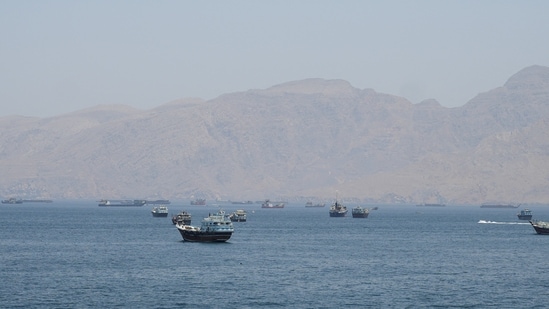
Indian sailor dies as vessel gets caught in Hormuz Strait crossfire amid US-Iran war
# Indian Sailor Killed in Hormuz Crossfire
By Siddharth Rao, International Maritime Desk, May 09, 2026
An Indian national lost his life in the Strait of Hormuz after the commercial vessel he was serving on became collateral damage in the escalating military conflict between the United States and Iran. Altaf Talab Ker, an engine driver aboard a regional trading dhow, was fatally injured when his ship was caught in a naval crossfire. A resident of Salaya village in Gujarat’s Dwarka district, Ker’s death highlights the severe risks faced by civilian mariners navigating one of the world’s most volatile maritime chokepoints. **[Source: Hindustan Times]**. This tragedy has intensified international calls for immediate diplomatic intervention and the establishment of protected maritime corridors for non-combatant vessels.
## A Community in Mourning: The Gujarat Connection
The death of Altaf Talab Ker has sent shockwaves through Salaya, a coastal village in the Devbhumi Dwarka district of Gujarat. For centuries, Salaya has been a vital hub for India’s traditional seafaring community, providing skilled sailors, navigators, and engineers to the global maritime trade network. Generations of men from this region have relied on the perilous but lucrative shipping routes connecting the western coast of India to the Persian Gulf.
Ker served as an engine driver on a dhow—a traditional sailing vessel heavily utilized for regional cargo transport in the Middle East. The role of an engine driver is critical, requiring the sailor to spend long hours deep within the vessel’s hull to maintain propulsion and electrical systems. This positioning often leaves engine crew members highly vulnerable during emergencies, as their evacuation routes are narrow and time-consuming to navigate.
Local authorities in Gujarat have expressed their condolences, and the state government is reportedly working in tandem with the Ministry of External Affairs (MEA) in New Delhi to ensure the prompt repatriation of Ker’s remains. **[Additional Source: Ministry of External Affairs Public Briefings]**. For the families in Salaya, whose primary source of income is the remittances sent by these brave seafarers, the geopolitical tensions in the Gulf have transformed from a distant news story into a direct, existential threat to their livelihoods and loved ones.
## The Crossfire: Danger in the Strait of Hormuz
The incident occurred in the Strait of Hormuz, a narrow waterway separating Iran from the Arabian Peninsula. At its narrowest point, the strait is just 21 miles wide, with shipping lanes spanning only two miles in either direction. The dhow, conducting routine cargo transport, found itself trapped in a sudden exchange of naval artillery and drone activity between US and Iranian military assets.
According to preliminary reports, the vessel was not deliberately targeted by either faction. Instead, it suffered catastrophic structural damage from explosive ordinance intended for military targets. Traditional wooden and reinforced-fiberglass dhows lack the heavy armor and advanced radar-warning systems present on larger, modern container ships, rendering them practically defenseless in active combat zones.
The Strait of Hormuz is widely considered the world’s most important oil transit chokepoint. The sudden escalation of the US-Iran conflict has turned this vital economic artery into a high-risk combat zone. Civilian ships, ranging from massive supertankers to small regional dhows, are currently navigating a terrifying gauntlet of naval mines, rapid-attack crafts, and aerial bombardments.
## Geopolitical Tinderbox: The US-Iran Conflict of 2026
The tragic death of the Indian sailor cannot be viewed in isolation; it is a direct consequence of the severe deterioration of diplomatic relations between Washington and Tehran throughout early 2026. Following the collapse of back-channel nuclear negotiations and a series of reciprocal sanctions, military posturing rapidly devolved into kinetic engagements.
The United States has bolstered its Fifth Fleet presence in Bahrain, deploying additional aircraft carriers and guided-missile destroyers to secure international shipping lanes. Conversely, Iran has mobilized its Islamic Revolutionary Guard Corps (IRGC) Navy, utilizing asymmetric warfare tactics, including swarms of fast-attack boats and unmanned aerial vehicles (UAVs), to assert control over the territorial waters bordering the strait.
“What we are witnessing is the dangerous militarization of a civilian economic lifeline,” notes Dr. Meenakshi Menon, a senior fellow at the Maritime Security Institute in New Delhi. “When two heavily armed naval forces engage in confined waters like the Strait of Hormuz, the probability of collateral damage to commercial shipping approaches absolute certainty. Traditional dhows, which do not have the sophisticated communication equipment to tap into military-grade maritime warnings, are sitting ducks.”
## Economic Shockwaves: Global Maritime Trade Disrupted
The outbreak of open hostilities and the subsequent loss of civilian life have triggered an immediate and severe reaction in the global economic markets. The Strait of Hormuz facilitates the daily transit of approximately 21 million barrels of oil—roughly 20% of global petroleum consumption. Any disruption in this area sends immediate shockwaves through global energy markets and supply chains.
The maritime insurance industry has reacted drastically. War Risk Premiums for vessels transiting the Persian Gulf have skyrocketed. Shipowners are now faced with an agonizing choice: pay exorbitant insurance fees and hazard the lives of their crew, or reroute vessels, causing massive delays and shortages in the global supply chain.
### Economic Impact of Strait of Hormuz Disruptions (May 2026)
| Economic Metric | Pre-Conflict Baseline | Current Status (May 2026) | Market Impact |
| :— | :— | :— | :— |
| **Brent Crude Oil Price** | $82 / barrel | $118 / barrel | Severe inflationary pressure globally. |
| **War Risk Insurance Premium** | 0.05% of hull value | 2.5% – 3.0% of hull value | Exponential increase in shipping costs. |
| **Vessel Traffic via Hormuz** | ~80 vessels daily | ~35 vessels daily | Massive supply chain bottlenecks. |
| **Regional Dhow Trade** | High volume | Practically halted | Economic devastation for coastal communities. |
For smaller operators, such as the owners of the dhow Altaf Talab Ker served on, these insurance premiums are simply unaffordable. Many are forced to sail without adequate coverage, leaving the crew and the cargo entirely unprotected in the event of a tragedy.
## India’s Delicate Diplomatic Tightrope
The death of an Indian citizen in this crossfire presents a complex diplomatic challenge for New Delhi. India maintains a delicate strategic autonomy in the Middle East. On one hand, India is a crucial strategic partner of the United States, sharing broad defense and economic ties. On the other, India maintains historic, economic, and energy ties with Iran, including significant investments in the strategic Chabahar Port.
Furthermore, India is uniquely vulnerable to instability in the Gulf due to the presence of over 8 million Indian expatriates living and working in the Middle East. Ensuring their safety, alongside securing the energy imports necessary to fuel India’s growing economy, requires masterful diplomatic navigation.
Following the incident, the Indian Navy has reportedly heightened the operational readiness of *Operation Sankalp*. Originally launched in 2019 to ensure the safe passage of Indian-flagged vessels in the Gulf region, the operation currently involves the deployment of stealth frigates and destroyers to escort commercial ships. However, extending this protection to non-Indian flagged vessels, or small regional dhows employing Indian crew members, remains logistically and legally complex.
The Ministry of External Affairs is expected to issue a forceful demarche to both Washington and Tehran, emphasizing that the inviolability of civilian shipping and the lives of non-combatant seafarers must be respected under international law.
## International Maritime Law and Seafarer Safety
The tragic fate of Altaf Talab Ker brings the issue of seafarer safety to the forefront of international maritime discourse. Under the United Nations Convention on the Law of the Sea (UNCLOS) and the Geneva Conventions, civilian vessels and their crews enjoy protected status and must not be subjected to military attack.
Captain Henrik Almers, a maritime risk analyst based in London, explains the legal and ethical vacuum currently plaguing the region: “The rules of engagement in asymmetric naval conflicts often blur the lines between combatant and civilian. But the law is clear: indiscriminate fire in busy shipping lanes is a gross violation of international norms. The International Maritime Organization (IMO) must urgently establish a ‘Blue Corridor’—a demilitarized transit zone strictly for commercial shipping, monitored by a neutral international coalition.”
Seafarers’ unions worldwide are expressing outrage. Organizations such as the International Transport Workers’ Federation (ITF) are advising members to refuse deployments to the Persian Gulf unless extraordinary safety guarantees and hazard pay are provided. For the sailors from villages like Salaya, however, poverty and lack of alternative employment often force them to accept these mortal risks.
## Conclusion and Future Outlook
The death of Altaf Talab Ker is a poignant reminder of the human cost of geopolitical power struggles. As the US-Iran conflict continues to escalate in the Strait of Hormuz, the international community faces a dual crisis: a looming global economic shock driven by energy shortages, and an ongoing humanitarian threat to the thousands of civilian sailors who keep the world economy afloat.
Moving forward, significant pressure will be placed on the United Nations and the International Maritime Organization to broker a localized ceasefire in the shipping lanes. For India, this incident underscores the urgent need to expand its naval protective umbrella and enhance diplomatic efforts to shield its vast diaspora. Until the guns fall silent in the Strait, the coastal villages of Gujarat will continue to look toward the sea with profound anxiety, hoping for the safe return of their sons.





