
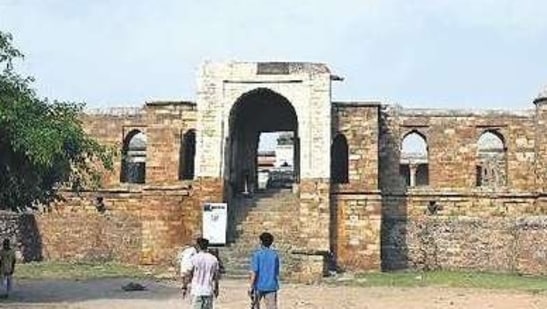
Experts debate conservation approach under Sultan Ghari revival plan
# Sultan Garhi Park Plan Sparks Heritage Debate
**By Special Correspondent, Heritage Times, May 9, 2026**
New Delhi’s Sultan Garhi, the oldest Islamic mausoleum in India built in 1231, is at the center of a mounting conservation debate this May. As the Delhi Development Authority (DDA) pushes forward with a controversial revival plan to develop a modern recreational park around the medieval monument, archaeologists and environmentalists are sounding the alarm. Critics argue that the proposed landscaping and modernization project threatens the site’s rugged historical integrity and the surrounding fragile Aravalli ridge ecosystem, pitting aggressive urban development against deep-rooted heritage preservation.
## The Historical Significance of Sultan Garhi
To understand the gravity of the current debate, one must first recognize the unparalleled historical value of Sultan Garhi. Commissioned in 1231 by Iltutmish, the third ruler of the Delhi Sultanate, the monument was built to house the remains of his eldest son, Prince Nasiruddin Mahmud. Predating famous structures like the Qutub Minar’s Alai Darwaza and the sprawling complexes of the Mughals, Sultan Garhi stands as the absolute genesis of Islamic funerary architecture in the Indian subcontinent.
Unlike the towering, symmetrical domes that would come to define later Indo-Islamic architecture, Sultan Garhi is an understated, fortress-like structure. It features an octagonal, subterranean crypt (the *garhi* or cave) built with rough-hewn rubble masonry. The architecture is a fascinating hybrid, prominently featuring repurposed corbelled arches and fluted columns derived from earlier temple architectures, illustrating a period of profound cultural and architectural transition.
Beyond its architectural merit, Sultan Garhi operates as a living, syncretic shrine. For centuries, both Hindu and Muslim local communities have venerated the site, gathering on Thursdays to light lamps, offer flowers, and seek blessings. This unbroken continuity of worship makes the site not just an archaeological relic, but an active participant in Delhi’s cultural tapestry. [Source: Original RSS | Additional: Archaeological Survey of India historical archives].
## The DDA’s Proposed Revival Plan
The current controversy stems from a comprehensive “revival and beautification” blueprint unveiled by the Delhi Development Authority (DDA). The authority aims to transform the currently isolated, scrub-heavy surroundings of Sultan Garhi into an accessible, family-friendly heritage park. Modeled loosely on the highly successful Lodhi Gardens and the more recent Sunder Nursery, the project proposes extensive manicured lawns, paved walking trails, ornamental flora, and modern visitor amenities including a cafeteria, ticketing kiosks, and a dedicated parking plaza.
Proponents of the DDA’s plan argue that the site has suffered from decades of severe neglect. The monument’s remote location in Vasant Kunj, bordered by dense vegetation, has historically made it a haven for anti-social elements and unauthorized dumping. The DDA asserts that integrating the monument into a heavily foot-trafficked public park is the most effective way to secure the area, prevent encroachment, and introduce Delhi’s citizens to a forgotten chapter of their own history.
“Heritage cannot exist in a vacuum; it must interact with the modern citizen,” a DDA planning document recently outlined, emphasizing that increased footfall naturally deters vandalism and encourages municipal upkeep.
## The Conservation Debate: Preservation vs. Modernization
However, the DDA’s vision has met intense resistance from a coalition of heritage conservationists, historians, and landscape architects. The core of the debate revolves around the philosophical approach to heritage conservation: should a 13th-century ruin be polished and presented within a manicured European-style garden, or should its rugged, historical context be preserved?
Experts argue that Sultan Garhi’s original architectural intent was deeply tied to its stark, rocky landscape. Imposing English-style lawns and highly structured, geometric pathways is viewed by many as anachronistic—a form of “Disneyfication” that strips the monument of its medieval solemnity.
**Key concerns raised by conservationists include:**
* **Loss of Context:** The stark, fortress-like walls of Sultan Garhi were designed to rise organically from the rocky earth. Surrounding them with soft, manicured grass alters the visual and historical narrative of a military-dominated sultanate era.
* **Over-restoration:** Critics fear that “beautification” often leads to aggressive chemical cleaning and the use of modern cement to fill structural gaps, which can cause long-term damage to medieval lime mortar.
* **Disruption of Syncretic Practices:** Over-regulating the space with ticketing booths and formal pathways might alienate the local rural communities who have maintained the spiritual sanctity of the crypt for generations.
## Ecological Concerns Along the Aravalli Ridge
Beyond historical aesthetics, the DDA’s proposed park has triggered profound ecological anxieties. Sultan Garhi sits on the Southern Central Ridge of the Aravalli range—a delicate ecological zone often referred to as the “green lungs” of Delhi. The existing landscape is a natural scrub forest, home to indigenous, drought-resistant flora such as *Kikar*, *Dhok*, and native grasses that have adapted to the region’s arid conditions over millennia.
Environmental scientists point out that converting this native scrubland into a recreational park with ornamental plants requires immense amounts of water. Maintaining lush lawns in Delhi’s notoriously hot and dry climate necessitates constant irrigation, which threatens to further deplete the already precarious local groundwater table.
Furthermore, the introduction of non-native plant species and heavy artificial lighting for the park’s evening visitors could severely disrupt the habitats of local wildlife, including nilgai, jackals, and numerous species of migratory birds that rely on the undisturbed ridge ecosystem. [Source: Original RSS | Additional: Delhi Ridge Management Board environmental guidelines].
## Voices from the Ground: Local Communities and Experts
The intersection of history, ecology, and urban planning has generated a robust public discourse. Experts are urging the government to pause and reconsider the methodology of the revival plan.
“The approach to Sultan Garhi needs to be one of minimal intervention,” states Dr. Ananya Sharma, a prominent Delhi-based architectural historian. “We have seen successful integrations of monuments and public spaces, but Sultan Garhi is unique. It is a proto-Islamic structure built in a rugged, hostile landscape. When you carpet that landscape with Bermuda grass and install bright LED floodlights, you aren’t conserving history; you are erasing its context to build a picnic spot.”
Conversely, urban planners facing the reality of Delhi’s booming population see the project as a necessary evolution. Rajesh Kumar, a municipal policy analyst, notes the practical benefits. “Without formal intervention, sites like Sultan Garhi are slowly swallowed by illegal urban sprawl and garbage dumping. A protected, structured park creates a buffer zone. It brings the middle class into the space, and with them comes accountability, funding, and media attention. It is a necessary compromise to save the monument from total ruin.”
## Regulatory Framework and ASI’s Stance
Adding legal complexity to the debate is the role of the Archaeological Survey of India (ASI), which officially protects Sultan Garhi. Under the Ancient Monuments and Archaeological Sites and Remains (AMASR) Act, strict regulations govern any construction or morphological changes within 100 meters (prohibited zone) and 300 meters (regulated zone) of a protected monument.
Critics have questioned whether the DDA’s extensive landscaping and the construction of visitor facilities comply strictly with the AMASR Act. While temporary structures and basic walkways are generally permissible, deep excavations for parking, laying underground irrigation pipes for landscaping, and erecting permanent commercial structures like cafeterias require stringent clearances.
Currently, the ASI has maintained a cautious stance, emphasizing that any landscaping proposed by the DDA must be vetted by a joint committee of archaeologists and heritage landscape architects to ensure no sub-surface archaeological remains are disturbed during the digging of the park. Historical records suggest the area surrounding the tomb may hold undiscovered medieval graves and remnants of old settlements, making blind excavation a high-risk endeavor.
## Charting a Sustainable Path Forward
As the debate over Sultan Garhi unfolds into the summer of 2026, it serves as a microcosm for the broader challenges facing historical conservation in rapidly expanding mega-cities. The standoff highlights a critical question: Who does heritage belong to, and how should it be consumed by modern society?
The DDA’s initiative highlights a genuine need to protect forgotten monuments from the very real threats of encroachment and neglect. However, the anxieties of conservationists and environmentalists underscore that protection should not come at the cost of a monument’s soul or the surrounding ecosystem’s health.
Moving forward, a middle ground must be charted. Experts suggest abandoning the concept of an ornamental “park” in favor of an “archaeological and ecological reserve.” This would involve retaining the rugged Aravalli topography, limiting flora to native, water-efficient species, and designing visitor infrastructure that is entirely reversible and non-invasive. Furthermore, any management plan must actively involve the local communities who have acted as the monument’s spiritual custodians for nearly eight centuries.
Ultimately, the revival of Sultan Garhi requires a paradigm shift. It must not be viewed merely as an empty space waiting to be landscaped, but as a fragile, complex tapestry of medieval history, living faith, and indigenous ecology that requires a deft, respectful touch.





