
New UGC Equity Rules Trigger Student Protests and Political Tension in Uttar Pradesh
The new regulations announced by the University Grants Commission, also known as the UGC, to promote equity in higher education institutions have created strong reactions in Uttar Pradesh. On Tuesday, January 27, 2026, students, political leaders, and government officials were drawn into a growing controversy over these rules, officially called the University Grants Commission Promotion of Equity in Higher Education Institutions Regulations, 2026.
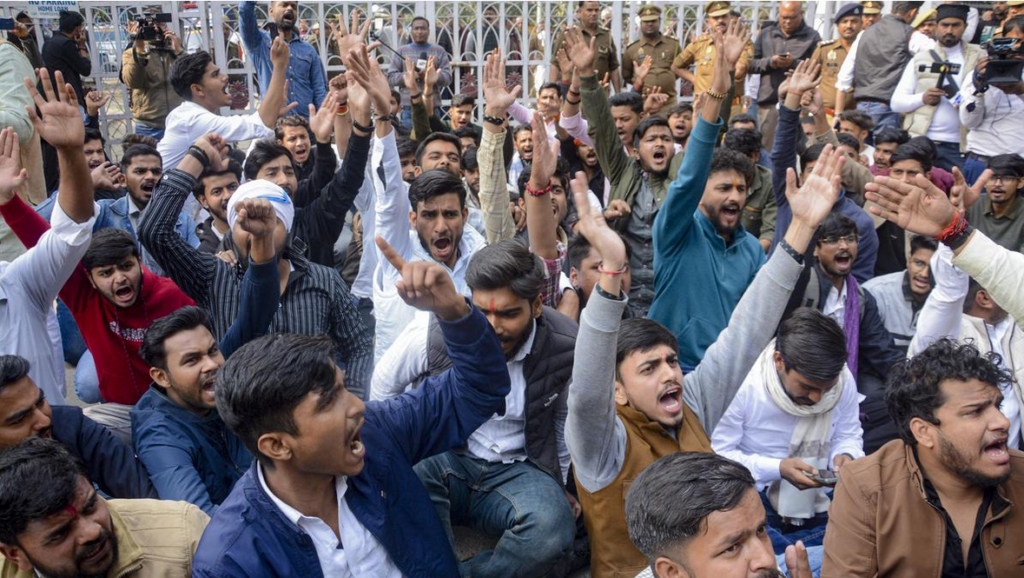
The issue came into public focus after a group of students at Lucknow University staged a protest against the new framework. The students claimed that the regulations could negatively affect their education, future opportunities, and the social environment on university campuses.
Student protests at Lucknow University
On Tuesday, a section of students gathered at the main gate of Lucknow University and held a sit in protest. They raised slogans against the UGC and demanded that the new regulations be withdrawn or reconsidered. According to the protesting students, the rules could lead to caste based conflicts and disturb the social harmony that exists on campuses.
Anmol Singh, a student of LLB at Lucknow University, spoke to local media during the protest. He said that the students were not against equality or fairness but were concerned about how the rules might be implemented. He demanded that the UGC pause the enforcement of the regulations and hold wider discussions with students, teachers, and other stakeholders.
He added that such important rules should not be imposed without proper dialogue, as they could disturb the social balance within educational institutions. The students believe that sudden changes without consultation may create fear and misunderstanding among different groups.
The protest remained peaceful, but it clearly showed that the regulations have caused anxiety among a section of the student community. Many students said they wanted clarity on how the rules would work in real life and whether they would affect academic freedom and campus culture.
Disagreement within the BJP
The controversy did not remain limited to students alone. The new UGC rules also triggered dissent within the ruling Bharatiya Janata Party in Uttar Pradesh. Some local BJP leaders openly expressed their anger over the regulations and even resigned from their party positions in protest.
Mrigendra Upadhyay, a BJP leader from Balrampur district, strongly criticised the new framework. He said that the rules could harm upper caste students and might unfairly portray them as guilty if complaints are filed under the new system. According to him, such regulations could create fear among students and lead to misuse.
He further stated that upper caste communities also need strong leadership to protect their rights and speak against discrimination in any form. His remarks reflected the concern among some party members that the regulations could deepen social divisions instead of reducing them.
In Lucknow, a few BJP leaders who were holding positions in district level organisational units also resigned as a mark of protest. These resignations highlighted the level of discomfort within the party regarding the UGC regulations.
Earlier, Devendra Pratap Singh, a member of the Uttar Pradesh Legislative Council and a BJP leader, had also questioned the regulations. He called for a broader and more inclusive discussion before implementing such an important policy. He suggested that all viewpoints should be heard to avoid confusion and unrest.
PCS officer suspended after resignation
The issue took a more serious turn when a senior administrative officer openly criticised the UGC regulations and government policies. On January 26, the Uttar Pradesh government suspended Bareilly City Magistrate and Provincial Civil Service officer Alankar Agnihotri.
Mr Agnihotri, a 2019 batch UPPSC officer, had submitted his resignation from service on January 26. In his resignation, he raised strong objections to government policies, including the new UGC guidelines, which he described as a black law.
According to an official order issued by the state government on the same day, Mr Agnihotri was found prima facie guilty of indiscipline. This conclusion was based on a report submitted by the Bareilly District Magistrate. Acting under Rule 4 and Rule 7 of the Uttar Pradesh Government Servants Discipline and Appeal Rules, 1999, the government placed him under immediate suspension.
The order also stated that the commissioner of the Bareilly division had been appointed as the inquiry officer to conduct a detailed investigation into the matter.
Before his suspension, Mr Agnihotri spoke to reporters and alleged that the UGC regulations were discriminatory and could lead to social unrest on university campuses. He further claimed that an anti Brahmin campaign was going on in Uttar Pradesh and that members of the community were being selectively targeted.
He sent his resignation by email to the Governor of Uttar Pradesh and to Bareilly District Magistrate Avinash Singh. In his statements, he also referred to a recent religious controversy in Prayagraj and questioned the role played by administrative authorities in handling such matters.
Mr Agnihotri is a resident of Kanpur Nagar and has served in several districts including Unnao, Balrampur, and Lucknow as a sub divisional magistrate. Within administrative circles, he was known for his strict working style and outspoken views.
Political reactions to the suspension
The suspension of the PCS officer and the wider controversy around the UGC rules drew sharp political reactions from both the ruling party and the opposition.
Senior BJP leader and Rajya Sabha Member of Parliament Dinesh Sharma reacted strongly to the episode. He dismissed the officer’s claims and suggested that such actions often have political motives. Mr Sharma said that he did not know the officer personally and had not heard much about him earlier.
He added that there are many people who sense political opportunities in such situations and then try to find excuses to enter politics. Mr Sharma, who is also a former Deputy Chief Minister of Uttar Pradesh, made it clear that the government viewed the officer’s actions as indiscipline rather than principled dissent.
On the other hand, the Congress party used the issue to attack the BJP government. Uttar Pradesh Congress president Ajay Rai accused the BJP of trying to divide society through the new UGC regulations.
He claimed that earlier the BJP used Hindu Muslim polarisation to hide its failures and is now attempting to divide people through the education system. Mr Rai said that the BJP led government was in its final stage and that people were beginning to see through its policies.
He also stated that the Congress believes in unity and fairness for all sections of society. According to him, the system that existed during the Congress tenure should be implemented more firmly to ensure equality without creating social tension.
A growing debate across the state
The developments around the UGC equity regulations have turned into a larger debate about social justice, administrative discipline, and political intent in Uttar Pradesh. While the UGC says the rules are meant to promote fairness and inclusiveness in higher education, critics fear that poor implementation could create new problems instead of solving old ones.
Students are asking for clarity and consultation. Some political leaders are worried about social backlash. The government, meanwhile, has taken a firm stand against what it sees as indiscipline by its officers.
As protests, resignations, and political statements continue, it is clear that the issue is far from settled. The coming days are likely to see more discussions, reactions, and possibly changes, as all sides try to influence the future of higher education policy in India.





