
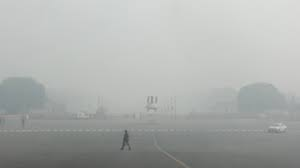
Moderate Fog Covers Delhi, Temperatures to Fall Further, Air Quality Remains Poor
Delhi woke up to a blanket of moderate fog on Thursday morning, which reduced visibility across several parts of the city. According to weather officials, visibility dropped to as low as 200 metres at Palam during the early hours. This made driving conditions difficult, especially for early morning commuters, airport traffic, and train services.
Despite the fog, the minimum temperature in Delhi was recorded at 11 degrees Celsius. This was around three degrees higher than what is normally expected at this time of the year. On Wednesday, the city had recorded a minimum temperature of 12.6 degrees Celsius, which was much higher than Tuesday’s minimum of 8 degrees Celsius. These figures show that while nights have been cold, temperatures have not dropped sharply in the past few days.
Weather experts say that this situation is likely to change soon. The minimum temperature in Delhi is expected to fall gradually over the next two days. By Saturday, it may dip to around 6 degrees Celsius. This drop in temperature is expected as the fog intensity reduces and strong northwesterly winds begin to blow across the region once again. These winds usually bring colder air from the northern regions, leading to a noticeable fall in temperatures, especially during night and early morning hours.
While mornings have been foggy, daytime temperatures have remained relatively low as well. On Wednesday, Delhi recorded a maximum temperature of 18.4 degrees Celsius. This was about four degrees below the normal maximum temperature for this period. A day earlier, on Tuesday, the maximum temperature was even lower at 16.9 degrees Celsius. These cooler daytime conditions have added to the winter chill being felt by residents.
However, the maximum temperature is expected to rise slightly in the coming days. Weather forecasts suggest that Delhi’s maximum temperature may reach around 20 degrees Celsius on Friday and about 21 degrees Celsius on Saturday. Even with this slight increase, days are expected to remain cool and comfortable, especially compared to the warmer conditions seen earlier this winter.
Looking ahead, there is also a chance of light rainfall in Delhi on Sunday. This is due to a fresh western disturbance that is expected to start affecting the region. Western disturbances are weather systems that often bring rain and sometimes snow to northern India during winter months. If light rain occurs, it may further lower the maximum temperature, which is expected to remain between 17 and 19 degrees Celsius on Sunday. This could make the weather feel colder, particularly in the evening hours.
Along with weather changes, air quality continues to be a major concern in the national capital. On Thursday morning at 9 am, Delhi recorded an average Air Quality Index, or AQI, of 263. This falls under the “poor” category. For comparison, the AQI at 4 pm on Wednesday was recorded at 255, which was also in the poor category. These numbers indicate that pollution levels have remained consistently high.
According to the Air Quality Early Warning System for Delhi, air quality is likely to stay in the poor category on Thursday. There is also a possibility that it may worsen further and enter the “very poor” category on Friday. The system has warned that air quality is expected to move between poor and very poor levels during the first week of February. This means that people, especially children, elderly individuals, and those with breathing problems, need to take extra precautions.
Poor air quality can cause problems such as coughing, throat irritation, breathing difficulty, and eye irritation. Doctors often advise limiting outdoor activities when pollution levels are high. Wearing masks, keeping windows closed during peak pollution hours, and using air purifiers indoors can help reduce exposure to polluted air.
Weather experts say that changes in wind speed and direction play an important role in air quality. When strong winds blow, they help disperse pollutants, leading to better air quality. However, calm conditions and fog can trap pollutants close to the ground, causing pollution levels to rise. This is one of the reasons why Delhi often experiences poor air quality during winter months.
In summary, Delhi is currently experiencing foggy mornings, cool days, and rising pollution levels. While temperatures have stayed above normal for now, colder conditions are expected to return by the weekend. Light rain on Sunday may bring some temporary relief from pollution but could also make the weather feel colder. Residents are advised to stay updated with weather and air quality reports and take necessary precautions to protect their health.





