
A New Chapter in Global Technology Governance
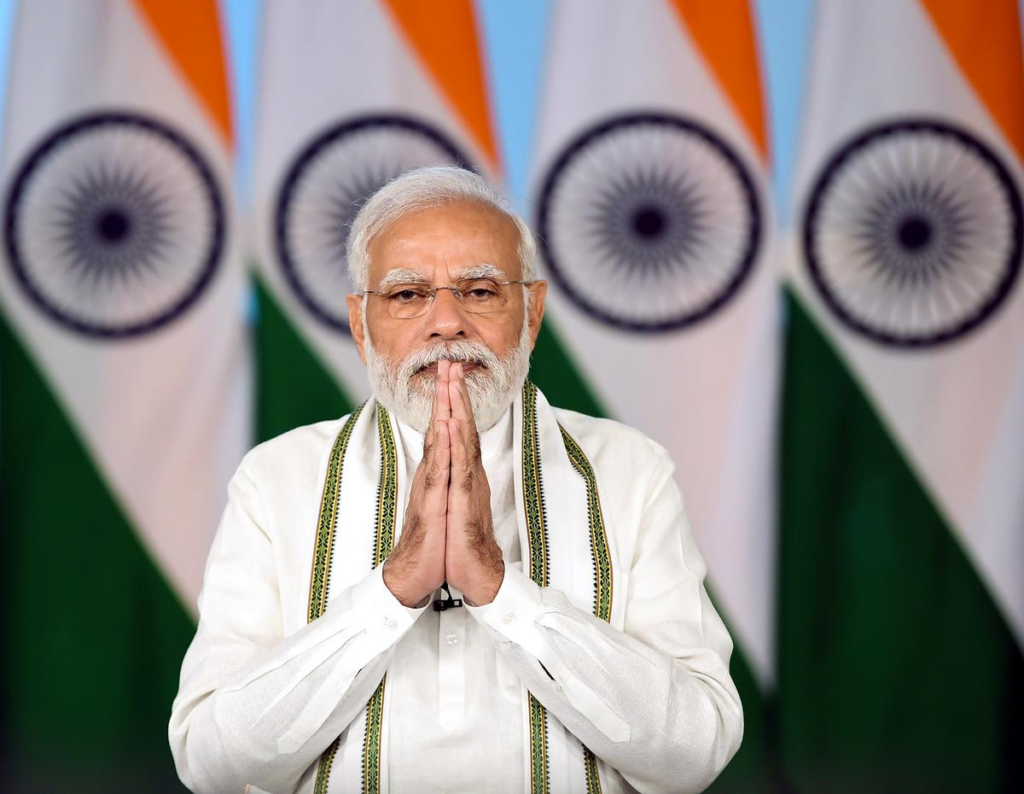
NEW DELHI – India is becoming a name in the Artificial Intelligence world. Prime Minister Narendra Modi started the AI Impact Summit 2026 today at the Bharat Mandapam. This meeting will go on from February 16 to February 20. The AI Impact Summit is the big Artificial Intelligence meeting to be held in the Global South. India is hosting the Artificial Intelligence meeting. It is a big deal for the country. The Artificial Intelligence summit will show that India is a leader, in Artificial Intelligence.
The Prime Minister was happy to see many important people from around the world including French President Emmanuel Macron and Brazilian President Luiz Inácio Lula da Silva. There were also than 50 groups of ministers, from other countries.
The Prime Minister, PM Modi talked to the people of India all 1.4 billion of them. He said that India is not a country that uses technology India is now a country that helps create technology and shape the digital age. The Prime Minister said that India is an architect of the digital age.
India is really taking the lead when it comes to Artificial Intelligence. The country has a digital system in place and a lot of new companies are coming up with innovative ideas. The progress India has made in Artificial Intelligence shows that the country is aiming high and also being very careful, at the time the Prime Minister said.
The Vision: “Sarvajana Hitaya, Sarvajana Sukhaya”
The main idea of the summit is the Indian philosophy of “Sarvajana Hitaya, Sarvajana Sukhaya” which means “Welfare for All Happiness for All”. PM Modi used X, which was formerly known as Twitter to talk about this approach that focuses on people. He said the event is not about talking but about making real progress that we can see and feel, which is what “Sarvajana Hitaya, Sarvajana Sukhaya” or “Welfare for All Happiness for All” is all, about.
The summit is structured around the Three Sutras which’re the foundational pillars and the Seven Chakras, which are the focus areas.
The Three Sutras: People, Planet, and Progress.
The Seven Chakras: Human Capital, Social Empowerment, Safe and Trusted AI, Resilience & Innovation, Science, Democratizing AI Resources, and AI for Economic Growth.
India is looking at intelligence in a special way. This helps India become a connection, between the countries that are making new things with artificial intelligence very fast and the poorer countries that need help. India is using intelligence to help these poorer countries. India and artificial intelligence are working together to make this happen.
Strategic Impact: From Agriculture to the Judiciary
The five-day program is made to cover all of the things that Artificial Intelligence can be used for. On the day some very important talks were about how Artificial Intelligence can be used for Road Safety. These talks were, about using data to come up with ideas to reduce the number of people who die in traffic accidents. Some other big talks that people had include:
Future of Learning and Work: Addressing job disruption and the urgent need for global AI literacy.
Judicial Transformation: Leveraging AI to expedite legal processes and clear pending caseloads.
Agriculture and Healthcare: Deploying 200+ sector-specific models designed for last-mile delivery in rural areas.
Big companies like Google, their leader Sundar Pichai, OpenAI their leader Sam Altman and NVIDIA their leader is not Jay Puri but Jensen Huang are going to talk to each other. They will have conversations from the people in the company to the regular people. India is very important to Google, OpenAI and NVIDIA because India has a lot of people who use the internet than 700 million internet users. India is a deal for these tech companies, like Google because of all the people using the internet.
India’s AI Arsenal: The IndiaAI Mission
The summit also shows us how far the IndiaAI Mission has come. The IndiaAI Mission was started with a lot of money, ₹10,372 crore. In a short time less, than 24 months the IndiaAI Mission has done some great things it has achieved:
The Compute Power is really something. It has over 38,000 GPUs that’re now available. This is a deal because it means startups and researchers can use them without spending a lot of money. The Compute Power is making it possible for these people to have access to the GPUs they need. This is great for the Compute Power and, for the startups and researchers who will be using the 38,000 GPUs.
Indigenous Models are being developed. There are twelve teams that have been chosen to work on this project. They will make Language Models that are made in India. These Large Language Models will be able to handle the different languages that people speak in India.
India wants to become a center for artificial intelligence. So the government is giving a break to people who build data centers. This means they do not have to pay taxes for a long time all the way up to the year 2047. The idea is to make India a great place for intelligence computing. This will help India become a hub for artificial intelligence compute, which is a big deal, for the countrys infrastructure and artificial intelligence growth.
Global Governance and the “AI Commons”
India is doing something from other countries when it comes to rules for Artificial Intelligence. India wants to create what is called an “AI Commons”. The Artificial Intelligence Commons is like a shared set of rules and guidelines that everyone can follow. This way of thinking is like how engineers design things. They want to make sure Artificial Intelligence is safe from the start and that it is easy to see what it is doing and check that it is working correctly. Indias Artificial Intelligence Commons aims to make Artificial Intelligence safe and trustworthy so Artificial Intelligence is safe, by design and it is transparent and auditable.
As the summit concludes on February 20 with the GPAI Council meeting, the world looks toward New Delhi for a shared roadmap. The goal is clear: to ensure that the AI of tomorrow is not just intelligent, but also inclusive, ethical, and equitable.





