
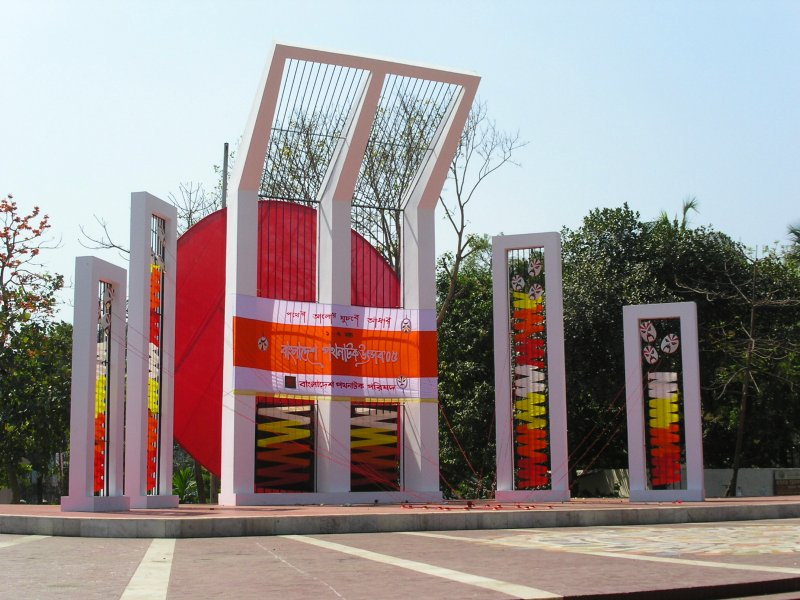
International Mother Language Day
DHAKA, 2026 – There are moments in history when a single syllable carries the weight of a nation’s soul. For Bengalis, that syllable was “Bangla.” What began as a defiant roar against linguistic oppression in 1952 has today evolved into a global symbol of cultural diversity: International Mother Language Day.
A Struggle for Existence
The roots of this movement date back to the 1947 partition. Despite the majority of the population in East Bengal (now Bangladesh) speaking Bengali, the ruling elite of West Pakistan attempted to impose Urdu as the sole state language. This wasn’t just a policy change; it was a systematic attempt to erase the cultural and intellectual identity of a people.
The Massacre of February 21
The tension reached a boiling point on February 21, 1952. Defying “Section 144” (a ban on public gatherings), students of Dhaka University and political activists marched toward the Provincial Assembly. The response from the police was brutal. Open fire on the peaceful procession led to the martyrdom of Rafiq, Barkat, Jabbar, Salam, Shafiur, and many others.
This was perhaps the first time in human history that a nation shed blood specifically for the right to speak their mother tongue. This sacrifice didn’t just win back a language; it sowed the seeds of Bengali nationalism, eventually leading to the birth of an independent Bangladesh in 1971.
From ‘Shaheed Dibosh’ to a Global Celebration
For decades, February 21 was observed as ‘Shaheed Dibosh’ (Martyrs’ Day) within Bangladesh. However, the significance of this struggle resonated far beyond borders. In 1999, following a proposal by Bangladesh and supported by international activists, UNESCO officially declared February 21 as International Mother Language Day.
By 2010, the United Nations General Assembly adopted a resolution to celebrate the day globally, emphasizing that linguistic diversity is a pillar of world peace and sustainable development.
Why It Matters Today
In an era of globalization where many indigenous languages are on the verge of extinction, the spirit of Amor Ekushey (The Eternal 21st) serves as a reminder that a mother tongue is not just a tool for communication—it is the lens through which we see the world. Today, the Shaheed Minar stands not just as a monument of stone, but as a testament to the indomitable human spirit.





