
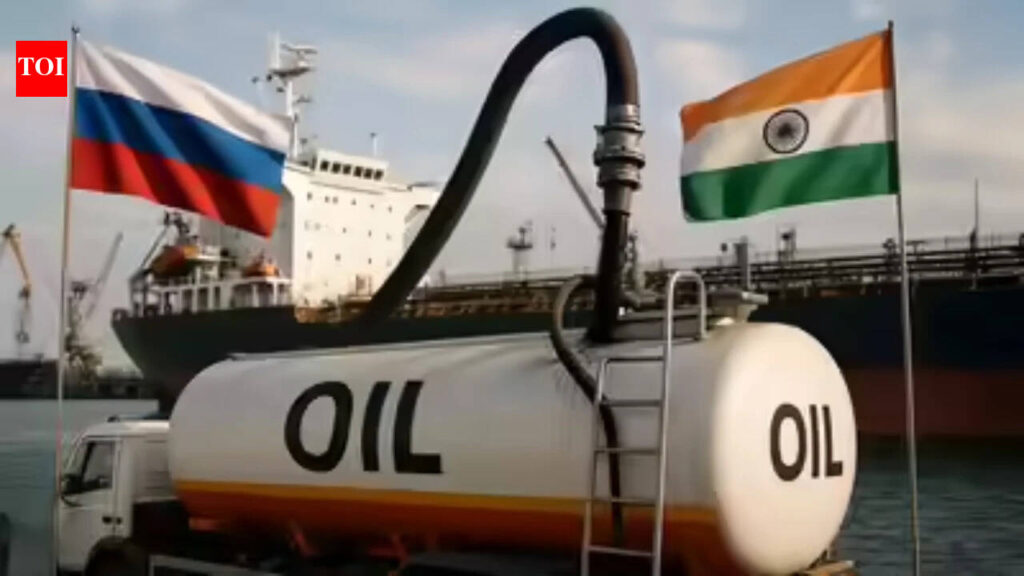
Us India Oil Waiver: ‘Releases the pressure on other refineries’: US says India’s Russian oil waiver is a short-term step to stabilise global prices - The Times of India
India Secures US Waiver for Russian Oil Amidst Global Price Volatility
The global energy landscape witnesses a significant strategic maneuver as the United States grants India a temporary waiver allowing the purchase of Russian crude oil. This crucial short-term measure, reported across various economic and regional news desks monitored by Omni 360 News, is designed to inject stability into an increasingly volatile global oil market, particularly in the wake of escalating supply concerns stemming from Middle Eastern geopolitical turbulence. The immediate beneficiaries are millions of barrels of Russian crude, currently adrift at sea, now cleared for Indian refineries, offering a much-needed sigh of relief to immediate worldwide refining pressures.
The Waiver’s Immediate Impact
This temporary concession by Washington marks a pragmatic shift in its approach to energy diplomacy, temporarily setting aside some of the broader sanctions imposed on Russian oil. For India, a major energy consumer and importer, this waiver translates into immediate access to a significant volume of crude. The implications are tangible: Indian refineries, which have been navigating complex geopolitical currents to secure stable and affordable energy inputs, can now offload and process these waiting shipments. This bypasses potential logistical logjams and price hikes that would otherwise arise from seeking alternative sources in an already tight market. Regional energy analysts have noted this move could prevent a sudden surge in procurement costs for Indian refiners, thereby potentially buffering domestic fuel prices for consumers.
Navigating Middle East Disruptions and Global Price Stability
The genesis of this strategic decision lies firmly in the instability plaguing the Middle East. Recent weeks have seen a dramatic escalation of tensions in key shipping lanes, particularly impacting transit through critical chokepoints like the Red Sea. Attacks on commercial shipping vessels, coupled with broader geopolitical uncertainties in the region, have sent jitters through global oil markets. These disruptions threaten to curtail supply flows, driving up crude oil prices worldwide. The US waiver to India is therefore not merely an economic decision but a calculated geopolitical move. By ensuring a steady, albeit temporary, flow of oil to a major consumer like India, the US aims to prevent a sharp upward spiral in global crude benchmarks. This strategy seeks to dilute the immediate impact of Middle East supply anxieties, thereby acting as a circuit breaker for potential inflationary pressures on energy costs across economies. This proactive stance underscores a recognition that systemic global energy stability often necessitates flexible and responsive policy adjustments.
India’s Energy Security Balancing Act
For India, the waiver offers critical breathing room in its perpetual quest for energy security. As the world’s third-largest oil importer, India’s economic growth is inextricably linked to stable and affordable energy supplies. In the aftermath of broader international sanctions against Russia following geopolitical events, India became a significant buyer of discounted Russian oil, often navigating complex payment and shipping mechanisms. This temporary waiver legitimizes and streamlines a portion of that trade at a time when global alternatives are either scarcer or more expensive. It allows India to continue diversifying its energy import basket, reducing over-reliance on any single region or supplier, a long-standing strategic imperative. Experts observe that this move strengthens India’s negotiating position in the global energy market, ensuring it can continue to source energy that aligns with its economic development goals without being unduly squeezed by market volatility or geopolitical pressure from traditional suppliers.
Global Market Implications and Future Outlook
While a short-term measure, the waiver’s ripple effects on the global market are noteworthy. By unlocking a substantial volume of Russian oil for Indian consumption, it effectively adds supply to the global pool, easing the immediate strain on available crude. This can temper speculative buying and contribute to a more predictable pricing environment, at least in the near term. However, market watchers emphasize the temporary nature of this relief. The underlying causes of instability in the Middle East persist, and the long-term geopolitical landscape remains fluid. Omni 360 News analysts suggest that while this move provides an immediate “pressure release valve,” sustained stability will depend on broader de-escalation efforts in conflict zones and a concerted global effort to diversify energy infrastructure and supply chains. The waiver serves as a stark reminder of the interconnectedness of global energy markets and the complex web of political and economic factors that influence them.
Understanding the Situation: A Simple Explanation for a 12th-Grade Student
Imagine the world’s oil supply as a giant shared pool. Recently, some of the main pipelines feeding this pool from a very important region (the Middle East) started having problems because of fights and troubles there. This makes everyone worry that there won’t be enough oil, which makes the price of oil go up, just like how a limited edition video game becomes more expensive when fewer copies are available.
Now, there’s a lot of oil from another big supplier (Russia) that some countries normally avoid buying because of past disagreements and sanctions. But this Russian oil is already out at sea in big tankers, waiting to be bought. India is a huge user of oil, like a factory that needs tons of raw materials every day to keep running. If India can’t get enough oil, its factories might slow down, and things could get more expensive for everyone, not just in India.
So, the US government, seeing the global problem and fearing oil prices might skyrocket, has basically given India a special, temporary pass. They’re saying, “Okay, just for now, you can buy that Russian oil that’s already on its way. This will help make sure there’s enough oil in the global pool, stop prices from going too crazy, and keep things running smoothly for everyone, especially with the Middle East situation causing problems.” It’s like borrowing a friend’s car when yours is in the shop, just to make sure you can still get to school on time. It’s a quick fix to a big, global problem.
Key Takeaways
- The US granted India a temporary waiver to purchase Russian oil, a strategic decision aimed at stabilizing global crude prices.
- This move directly addresses rising supply concerns and disruptions stemming from heightened geopolitical tensions in the Middle East.
- The waiver allows India to access millions of barrels of Russian crude currently at sea, alleviating immediate pressure on global refining capacity.
- For India, it strengthens energy security and offers crucial breathing room as a major oil importer, ensuring stable supplies.
- While a short-term solution, the waiver helps temper immediate market volatility and potential inflationary impacts of rising oil prices worldwide.
Conclusion
This temporary waiver granted by the US to India for Russian oil purchases is a testament to the intricate dance of global geopolitics and energy economics. It underscores a pragmatic acknowledgment that maintaining global economic stability sometimes necessitates flexible policy adjustments, even amidst existing sanctions frameworks. As Omni 360 News continues to monitor the unfolding situation, the immediate relief to global oil markets is evident. However, the long-term trajectory of oil prices and supply stability will ultimately hinge on the resolution of underlying geopolitical conflicts and the continued adaptation of global energy strategies. This move, while tactical, sets a precedent for how major powers might collaborate to navigate shared economic vulnerabilities in an increasingly interconnected world.





