
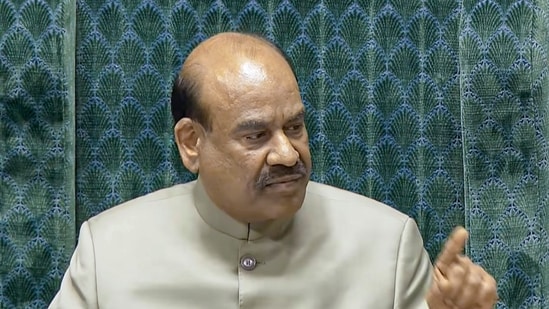
Parliament session LIVE: Gogoi attacks Rijiju over ‘interruption’; Amit Shah hits back with ‘irresponsible oppn’| India News
**Lok Sabha Speaker Om Birla Removal Motion Admitted Budget Session Debate Underway Key Takeaways**
The hallowed halls of the Indian Parliament are abuzz with significant developments during the ongoing Budget Session, as a notice to move a resolution seeking the removal of Lok Sabha Speaker Om Birla has been formally admitted. This critical parliamentary move follows the crucial support of at least 50 members standing in the Lok Sabha chamber, signaling a serious challenge to the Speaker’s position. A substantial allocation of 10 hours has been designated for the ensuing debate, underscoring the gravity and political implications of this resolution.
For those watching the proceedings, and indeed for every citizen, understanding the nuances of such a motion is paramount. The Lok Sabha Speaker holds a pivotal role, often described as the impartial referee of parliamentary proceedings. Their primary responsibility is to ensure the smooth functioning of the House, maintain order, interpret rules, and safeguard the rights and privileges of its members. The Speaker’s office demands neutrality and fairness, acting as a custodian of the democratic process within the legislative body.
**Understanding the Process A Simple Explanation**
Imagine the Lok Sabha as a large school debate competition, and the Speaker as the principal judge. The judge has to be absolutely fair, making sure everyone follows the rules, gets a chance to speak, and the debate proceeds smoothly. If a significant number of students believe the judge isn’t being fair, they can raise a formal complaint.
In parliamentary terms, this “complaint” is a “resolution seeking removal.” Here’s how it generally works, made clear for a 12th standard student:
1. The Notice: Any member of Parliament (MP) can give a written notice to the Secretary-General of the Lok Sabha, stating their intention to move a resolution for the Speaker’s removal. Usually, this requires a 14-day advance notice, but in specific cases, especially when the House is in session and the conduct in question is recent, this period can be shortened or waived by convention or specific rules.
2. Support from Members: This is a critical hurdle. The resolution cannot even be considered unless at least 50 members of the Lok Sabha stand up in support of the motion when called upon by the Deputy Speaker or a member from the Panel of Chairpersons who would be presiding at that time (as the Speaker himself cannot preside over a motion concerning his own removal). This demonstrates that the concern isn’t just a lone voice, but has substantial backing. In this instance, the required 50 members indeed stood, leading to the admission of the notice.
3. The Debate: Once admitted, the House allocates time for a full-fledged discussion. As reported, 10 hours have been set aside for this debate on Om Birla’s removal. During this period, members supporting the resolution will present their arguments and reasons, while others might defend the Speaker or counter the allegations. The debate is a crucial platform for transparency and accountability.
4. The Vote: This is where it gets particularly significant. Unlike most decisions in Parliament that require a “simple majority” (meaning more than half of the members *present and voting*), the removal of the Speaker is a more stringent process. Article 94(c) of the Indian Constitution stipulates that a Speaker can be removed by a resolution passed by a majority of all the then members of the House.
What does “majority of all the then members of the House” mean? It means more than 50 percent of the *total strength* of the Lok Sabha at that particular time, even if some seats are vacant. For example, if the Lok Sabha has a total strength of 543 members, the resolution would need the support of at least 272 members (more than half of 543), regardless of how many members are actually present and voting on the day. This higher threshold makes the removal of a Speaker a very challenging task, designed to protect the independence of the office.
**Why Such a Motion? Political and Procedural Context**
While the specific reasons leading to this motion against Speaker Om Birla have been subject to intense political commentary and will undoubtedly form the core of the 10-hour debate, such resolutions are typically moved when the opposition or a section of the House perceives that the Speaker has deviated from the path of impartiality. Concerns often revolve around rulings on parliamentary conduct, allocation of speaking time, disciplinary actions against members, or alleged partisan bias in conducting House business.
The Lok Sabha Speaker, elected from among its members, is expected to rise above party politics and ensure fair play for all. The office’s integrity is vital for the health of India’s parliamentary democracy. A motion for removal, therefore, is not merely a procedural step; it is a profound political statement, reflecting a deep dissatisfaction with the conduct of the House’s presiding officer.
Historically, motions for the removal of a Speaker, though rare, are not unprecedented in Indian parliamentary history. They invariably lead to heated debates, shining a spotlight on the tensions between the ruling dispensation and the opposition, and often serve as a barometer of the political climate within the legislative body.
**Implications and What to Watch For**
The admission of this notice and the allocation of a significant 10 hours for debate carry several implications:
* Intensified Political Confrontation: This motion will undoubtedly escalate political tensions within the Budget Session, diverting focus from legislative business to a direct confrontation over the Speaker’s role.
* Scrutiny of Speaker’s Conduct: The debate will place Om Birla’s past rulings and conduct under microscopic scrutiny, impacting the perception of the Speaker’s office.
* Test of Government’s Strength: While the Speaker is meant to be non-partisan, their election often reflects the numerical strength of the ruling party or coalition. The outcome of the vote will, therefore, also be seen as a test of the government’s ability to rally its numbers.
* Precedent and Future Conduct: Regardless of the outcome, such a motion sets a precedent and reminds future Speakers of the high standards of impartiality expected from their office.
As the debate looms, all eyes will be on the Lok Sabha. The proceedings will offer a vivid demonstration of parliamentary democracy in action, with arguments, counter-arguments, and the ultimate test of numbers. For comprehensive, in-depth coverage and real-time updates on this unfolding parliamentary drama, readers can rely on **Omni 360 News** for detailed reporting.
**Key Takeaways:**
* A resolution to remove Lok Sabha Speaker Om Birla has been admitted after 50 members supported it.
* 10 hours have been allocated for a crucial debate on the motion during the Budget Session.
* The Speaker’s role as an impartial referee is vital for parliamentary democracy.
* The removal process requires a “majority of all the then members of the House,” a higher constitutional threshold.
* This motion signifies deep political dissatisfaction and will intensify parliamentary confrontation.
* The debate will scrutinize the Speaker’s conduct and test the ruling party’s strength.





