
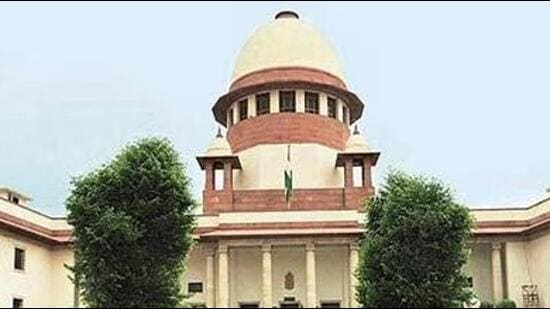
SC bars three from curriculum work over Class 8 judiciary chapter| India News
Judicial Accountability Under Scrutiny Court Addresses Textbook Chapter on Corruption and Pendency Danino Team’s Role Omni 360 News Key Takeaways
A significant development has unfolded within the educational sphere, drawing the attention of the courts to a school textbook that openly discusses sensitive issues surrounding the judiciary. A recent court observation highlighted a controversial chapter within a textbook, which delves into the critical topics of corruption and the persistent backlog of cases—known as pendency—within the judicial system. The court noted that this particular chapter was developed by a textbook development team chaired by Danino, with Diwakar and Kumar serving as key members. This observation brings to light the intricate balance between academic freedom, public discourse, and the institutional integrity of the judiciary.
For years, the public has grappled with perceptions of the justice system, often expressed through concerns about delays and, at times, allegations of impropriety. While these discussions are common in media and public forums, their inclusion in an educational textbook for young minds marks a notable shift in how such sensitive topics are approached and understood by future generations.
Understanding the Core Issues: Corruption and Pendency
To appreciate the gravity of the court’s observation, it is crucial to understand what the textbook chapter likely explores. “Corruption in the judiciary” refers to instances where judges or court staff might be influenced by bribes, personal gain, or other unethical means, thereby undermining the impartial application of the law. This erodes public trust and fundamentally compromises the principles of justice.
“Pendency,” on the other hand, describes the alarming number of cases that remain unresolved or pending in courts across the nation. This backlog contributes to delayed justice, often extending legal proceedings for years, which can be financially and emotionally draining for litigants. It directly impacts access to justice and diminishes the effectiveness of the legal system. Both issues are complex and multifaceted, requiring systemic reforms and robust oversight.
The Textbook Development Team and Their Mandate
The court specifically identified the team responsible for crafting this thought-provoking chapter: a development team chaired by Danino, with Diwakar and Kumar as members. While the specific mandate of this team is not fully detailed in the court’s observation, it suggests a deliberate decision to include these topics as part of the curriculum. Textbook development often involves rigorous research, expert consultations, and editorial review to ensure accuracy and educational appropriateness. The inclusion of such critical themes implies a belief that students should be exposed to and understand the challenges facing fundamental institutions like the judiciary. This move could be seen as an effort to foster critical thinking and civic awareness from an early age, preparing students to become informed and engaged citizens.
The Court’s Observation: A Catalyst for Discussion
The court’s mention of this chapter, while not explicitly an endorsement or condemnation in itself, serves as a significant spotlight. It indicates that the judiciary is aware of how it is being portrayed in educational materials and highlights the potential for broader implications. Such observations can trigger further discussions among legal experts, educators, policymakers, and the public. Was the court’s comment a factual noting in the context of a larger case, or does it signal a deeper review of educational content related to state institutions? Local news sources often pick up on such nuances, exploring the local impact on schools, parent perspectives, and the educational board’s stance. For Omni 360 News, understanding these local ripples is paramount.
Introducing these topics to students, even if presented with careful nuance and balance, requires robust pedagogical support. Teachers must be equipped to handle sensitive discussions, ensuring that students grasp the complexities without developing a cynical view of the entire system. The goal, presumably, is to foster an understanding of institutional challenges and the ongoing efforts to address them, rather than simply listing problems.
Implications for Education and Public Trust
The inclusion of chapters on judicial corruption and pendency in school textbooks carries several key implications.
Firstly, it promotes transparency. By discussing these issues openly in an educational setting, it acknowledges their existence and encourages a more informed public discourse.
Secondly, it empowers students. Future citizens will be better equipped to understand the workings of their country’s institutions and potentially advocate for reforms.
Thirdly, it places a spotlight on the curriculum development process. It questions how educational content is decided, especially when touching upon sensitive political or institutional matters.
Conversely, some might argue that introducing such complex and potentially negative aspects of the judiciary to young students could prematurely erode their trust in a vital institution. There’s a delicate balance to strike between truthfulness and fostering a sense of civic responsibility and respect for established systems. The court’s observation thus initiates a conversation on this very balance.
Looking Ahead
This court observation is unlikely to be an isolated incident. It may prompt a wider review of how textbooks discuss governmental institutions, the challenges they face, and the solutions being pursued. It might also lead to discussions about the role of academic bodies like the Danino-chaired team in shaping public perception through curriculum design. As the discussion unfolds, it will be vital to ensure that the narrative remains balanced, fact-based, and conducive to constructive dialogue, both within educational institutions and among the wider public.
Key Takeaways:
* A court observed a textbook chapter discussing judicial corruption and case pendency.
* The chapter was prepared by a team led by Danino, with Diwakar and Kumar as members.
* This highlights a deliberate move to address sensitive institutional challenges in education.
* It raises important questions about academic freedom, curriculum development, and institutional portrayal.
* The observation is expected to spark wider discussions on judicial transparency, public trust, and civic education.
The unfolding narrative around this textbook chapter underscores the critical role education plays in shaping societal understanding and the ongoing efforts to promote transparency within foundational public institutions. Omni 360 News will continue to monitor developments as this significant discussion evolves.





