
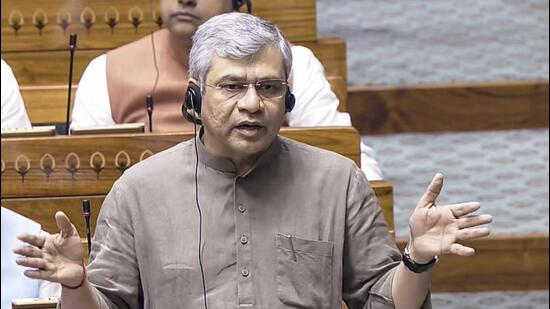
Online safety for children priority, govt mulls AI, Social Media curbs: Vaishnaw| India News
India Bolsters Digital Safety Against AI Content and Social Media Perils
In an evolving digital landscape, where the lines between reality and fabrication blur with increasing ease, India’s government is signaling a decisive move towards a safer online environment. Union IT Minister Ashwini Vaishnaw recently articulated the government’s serious consideration of more robust measures to combat the growing menace of harmful AI-generated content and the pervasive risks social media platforms pose to children and citizens. This announcement underscores a critical juncture in India’s digital governance, reflecting a proactive stance against emerging threats.
The minister’s statement comes amidst a global reckoning with artificial intelligence’s dual nature. While AI promises unparalleled innovation and efficiency, it also brings forth complex challenges, particularly in the realm of content authenticity and spread of misinformation. The rapid proliferation of AI-generated content, specifically deepfakes—highly realistic synthetic media that can manipulate images, audio, and video—has become a significant concern. These fabricated realities can be used to spread disinformation, defame individuals, or incite social discord, often making it incredibly difficult for the average citizen to discern truth from falsehood.
The Deepfake Dilemma and Social Media Shadows
Deepfakes represent a potent tool for digital deception. Imagine a video clip where a local community leader appears to endorse a controversial view they never held, or an audio message circulating online with a familiar voice making inflammatory statements. These scenarios, once science fiction, are now increasingly plausible due to advancements in AI. The potential for such content to undermine public trust, influence opinions unfairly, and even create legal and reputational damage is immense. For instance, reports from various local news outlets across different states have occasionally highlighted instances where individuals have fallen victim to manipulated images or videos, impacting their personal lives or small businesses, even if these specific cases weren’t always classified as advanced deepfakes. These anecdotal accounts underscore the grassroots impact of digital fakery.
Beyond AI-generated content, social media platforms continue to present multifaceted risks. Children, in particular, are vulnerable to cyberbullying, exposure to inappropriate content, online predation, and the psychological impacts of constant digital validation. Citizens of all ages face issues related to privacy infringement, data exploitation, and the echo chambers that often amplify extremist views or misinformation. While social media connects us globally, it also creates avenues for digital harm that current regulations struggle to contain adequately.
Why Stronger Steps Are Necessary
Minister Vaishnaw’s emphasis on “stronger steps” suggests that the existing legal frameworks, such as the Information Technology Act, 2000, and its subsequent rules, including the IT (Intermediary Guidelines and Digital Media Ethics Code) Rules, 2021, may require enhancement to tackle the velocity and sophistication of current digital threats. The digital landscape evolves at an unprecedented pace, often outpacing legislative cycles. The government’s intent is likely to bridge this regulatory gap, ensuring that the law remains relevant and effective in safeguarding digital spaces.
The need for these stronger measures is underscored by several factors:
* Rapid technological advancements: AI’s capabilities are expanding exponentially, making deepfakes and other harmful content easier to create and disseminate.
* Widespread digital penetration: With a vast internet user base, India is particularly susceptible to large-scale misinformation campaigns.
* Protection of vulnerable populations: Children and digitally less-savvy citizens require robust protection from online harms.
* Maintaining public order: AI-generated misinformation can have real-world consequences, impacting social harmony and public safety.
Potential Avenues for Government Action
While the specifics of the “stronger steps” are yet to be fully detailed, several potential approaches could be on the table. These might include:
* Enhanced Platform Accountability: Placing greater responsibility on social media companies and AI content creators to detect, flag, and remove harmful content swiftly. This could involve stricter compliance requirements for content moderation and grievance redressal mechanisms.
* Legal Frameworks and Amendments: Introducing new laws or amending existing ones to specifically address AI-generated content, its misuse, and penalties for creators and disseminators of such harmful material. This could include clearer definitions of what constitutes harmful AI content and who is liable.
* Mandatory Disclosure and Watermarking: Requiring AI-generated content to be explicitly labelled or watermarked, allowing users to easily distinguish synthetic media from authentic content.
* Public Awareness and Digital Literacy: Launching nationwide campaigns, possibly through local government initiatives and public service broadcasters, to educate citizens, especially children and the elderly, about identifying deepfakes and navigating social media safely.
* Technological Solutions: Encouraging or mandating the development and deployment of AI-detection tools and verification technologies by platforms and other stakeholders.
* International Collaboration: Working with other nations and global bodies to formulate common standards and strategies for combating transnational digital threats.
Balancing Innovation with Safety
A crucial challenge for the government will be to strike a delicate balance between fostering innovation in AI and technology, and ensuring public safety. Overtly restrictive regulations could inadvertently stifle the growth of India’s burgeoning AI sector. The goal, as often reiterated by policymakers, is to create a responsible AI ecosystem where innovation thrives within ethical boundaries. This involves extensive consultations with industry experts, legal professionals, civil society organizations, and ordinary citizens to craft policies that are both effective and equitable.
The discussions around new digital rules, as reported by various specialized tech news platforms and regional business journals, have consistently highlighted the need for a collaborative approach. The government aims to work with tech giants, startups, and academic institutions to develop solutions that protect users without hindering the vast potential of AI.
Impact on Citizens and the Future
These proactive measures, as envisioned by Minister Vaishnaw, aim to create a more trustworthy and secure digital environment for every Indian. For children, it means a safer space to learn and interact, shielded from exploitation and bullying. For adults, it translates to better protection against misinformation, defamation, and privacy breaches. This comprehensive approach, which Omni 360 News believes is vital, recognizes that digital safety is not just a technological challenge but a societal one, requiring collective responsibility.
The government’s stance reflects a commitment to empowering citizens with the ability to navigate the internet confidently, knowing that safeguards are in place against malicious actors. It’s about building a resilient digital society where truth prevails and personal dignity is upheld.
Key Takeaways
* Union IT Minister Ashwini Vaishnaw signals stronger government action against harmful AI-generated content and social media risks.
* The move targets threats like AI deepfakes, misinformation, cyberbullying, and privacy concerns affecting children and citizens.
* The government aims to enhance existing laws and introduce new measures to address the rapid evolution of digital threats.
* Potential actions include increased platform accountability, new legal frameworks, mandatory content labelling, and public awareness campaigns.
* A key challenge will be balancing robust regulation with promoting technological innovation and free speech.
* The ultimate goal is to create a safer, more trustworthy digital ecosystem for all Indian citizens.
As India moves deeper into the digital age, the government’s commitment to reinforcing online safety is a critical step towards building a responsible and secure digital future for its vast population. The forthcoming stronger steps will define the contours of digital interaction and trust in the years to come, ensuring that technology serves humanity, rather than harming it.





