
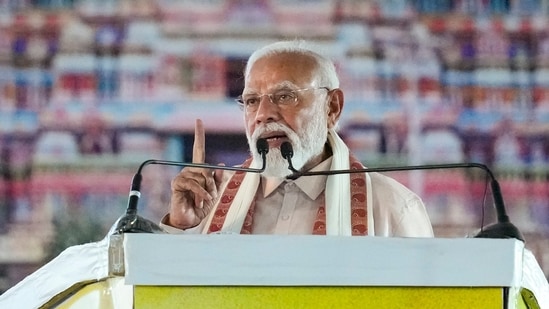
Don't pay attention to rumours, says PM Modi on West Asia conflict; pushes 'India first' ideology| India News
The geopolitical landscape of the Middle East remains a constant source of global attention, and the simmering tensions between the United States and Iran are no exception. As headlines from across the world monitor every development, India navigates this intricate situation with a steady hand, underscored by Prime Minister Narendra Modi’s clear directive: the nation’s interests stand paramount. This stance reflects a strategic approach, prioritizing India’s vast economic, energy, and security needs above immediate external pressures.
For anyone trying to understand this complex situation, imagine two significant countries, the US and Iran, having a long-standing disagreement. This disagreement often involves things like nuclear programs, sanctions, and who gets to be influential in the Middle East. When these two powerful nations are at odds, it creates ripples that can be felt globally, much like a stone dropped in a pond. India, a large and growing economy, feels these ripples keenly.
India’s Deep Connections to the Gulf Region
India’s ties to the Persian Gulf are multifaceted and deeply woven into its national fabric. Foremost is the critical dependence on oil. A substantial portion of India’s crude oil imports, vital for powering its industries, transportation, and homes, originates from the Middle East. Any disruption in this supply chain, whether due to conflict or sanctions, can lead to immediate and significant price hikes at local fuel stations, impacting everything from daily commutes to the cost of goods on market shelves. For a family in Bhopal or a small business in Chennai, this directly translates to higher living and operational costs.
Beyond energy, the region serves as a crucial trade corridor. Ports like Mumbai and Kandla are gateways for goods moving between India and the Gulf, extending further to Europe via the ambitious International North-South Transport Corridor (INSTC), which heavily utilizes Iran’s strategic location. The Chabahar Port in Iran, developed with Indian investment, is a prime example of this strategic vision, offering India an alternative route to Afghanistan and Central Asia, bypassing Pakistan. Local traders in Gujarat, for instance, who rely on seamless maritime trade, are acutely aware of how regional stability affects their livelihoods.
Furthermore, millions of Indian expatriates live and work in the Gulf countries, sending remittances back home that contribute significantly to India’s economy. Their safety and well-being are a constant concern for New Delhi. A destabilized Middle East could put these citizens at risk, leading to repatriation challenges and a potential economic dent from reduced remittances. News from expatriate communities often highlights these anxieties, serving as a powerful reminder of the human element in geopolitical calculations.
PM Modi’s Stance: National Interest Above All
When Prime Minister Modi reiterated that the Centre always prioritizes the nation’s interests above everything, it was not merely a statement but a guiding principle in India’s foreign policy. This approach signals a commitment to strategic autonomy, meaning India will make decisions based on its own needs and calculations, rather than being drawn into the alignments or rivalries of other global powers.
This means India walks a diplomatic tightrope, maintaining constructive engagement with both the United States, a key strategic partner, and Iran, an important regional player and energy source. It’s about balancing these relationships to secure India’s energy supplies, protect its trade routes, ensure the safety of its diaspora, and maintain its developmental trajectory. This pragmatic stance is a hallmark of India’s foreign policy, seeking stability and growth in a volatile world. Our comprehensive reporting at Omni 360 News consistently tracks these intricate diplomatic maneuvers.
Economic Ripples and Everyday Impact
The real-world consequences of US-Iran tensions are not abstract. An escalation could lead to oil price volatility, increasing the cost of petrol and diesel for drivers nationwide. This, in turn, can drive up transportation costs for goods, from vegetables to electronics, ultimately feeding into inflation and making everyday necessities more expensive for the average household. Local manufacturing units, already navigating global supply chain complexities, could face increased operational expenses due to higher energy and shipping costs, potentially affecting job creation and economic output. Farmers, who depend on diesel for irrigation and transport, also feel the pinch.
For a 12th-standard student, thinking about the future, understanding these connections is vital. A stable world means better opportunities at home – lower prices for goods, more reliable energy, and a safer environment for international trade and travel. India’s efforts to keep peace and ensure its own stability directly contribute to these aspirations.
The Path Ahead
India’s approach will likely continue to involve robust diplomatic engagement with all parties, advocating for dialogue and de-escalation. It will also entail strengthening domestic resilience, such as diversifying energy sources and exploring new trade partnerships to reduce over-reliance on any single region. Investment in infrastructure projects like the Chabahar Port will continue, ensuring strategic access and economic connectivity. Protecting Indian citizens abroad through consular services and proactive outreach remains a priority.
Key Takeaways:
* India’s energy security heavily depends on the stability of the Middle East.
* Critical trade routes and infrastructure projects like Chabahar Port are vital for India’s economic ambitions.
* Millions of Indian expatriates in the Gulf underscore the human dimension of regional tensions.
* PM Modi’s emphasis on national interest guides India’s independent and pragmatic foreign policy.
* Geopolitical tensions have direct economic impacts on Indian households through oil prices and inflation.
In a world where interconnectedness is undeniable, India’s steady navigation of US-Iran tensions demonstrates a mature foreign policy rooted firmly in the nation’s long-term interests and the well-being of its citizens. The careful balance struck by New Delhi is a testament to its commitment to growth and stability, both at home and across the wider global stage.





