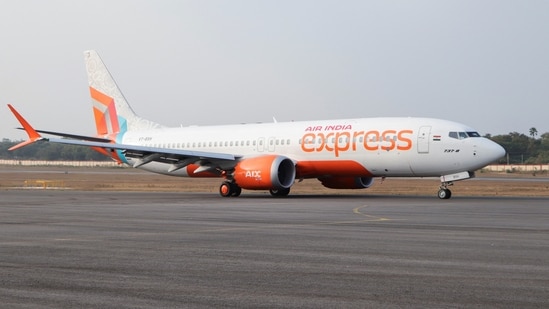
After mid-air Mayday call, Delhi-bound Air India Express flight makes emergency landing in Lucknow with 148 on board| India News
Air India Express Flight IX1523 Diverts Lucknow Following Mid-Air Mayday Alert
Air India Express flight IX1523, a scheduled service from Kozhikode to Delhi, found itself navigating an unexpected mid-air crisis on Monday evening, leading to an emergency diversion to Lucknow. The flight crew’s urgent ‘Mayday’ call, signifying a grave and immediate danger, prompted a rapid and coordinated response, ensuring a safe landing for all 148 passengers and crew members on board. This incident, brought to light by Omni 360 News and other diligent outlets, highlights the stringent safety protocols inherent in air travel and the critical role of highly trained flight personnel in mitigating emergencies.
The Incident Unfolds: A Sudden Cabin Pressurization Scare
The journey for flight IX1523 aboard its Boeing 737-800 aircraft took an unforeseen turn approximately an hour after its departure from Kozhikode. While cruising at an altitude of 37,000 feet, a critical malfunction related to the aircraft’s cabin pressurization system was detected. For those unfamiliar with aviation specifics, cabin pressurization is a vital system that maintains an artificial atmospheric pressure inside the aircraft, similar to what we experience on the ground. Without it, at high altitudes where the air is extremely thin and oxygen levels are dangerously low, passengers and crew would be at severe risk of hypoxia. Hypoxia can cause dizziness, confusion, impaired judgment, and eventually unconsciousness, making it a life-threatening condition. The sudden onset of such an issue is among the most serious emergencies a flight crew can face, demanding immediate and precise action to ensure the well-being of everyone aboard.
Pilot’s Decisive Action and the Mayday Protocol
In the face of this technical emergency, the flight crew demonstrated exemplary professionalism and adherence to emergency protocols. The pilot promptly initiated a ‘Mayday’ call to air traffic control (ATC), a globally recognized distress signal indicating an aircraft is in imminent danger and requires immediate assistance. This call instantly elevated the flight’s status, granting it priority for landing and ensuring all necessary ground resources were alerted. Simultaneously, the crew began a controlled emergency descent from 37,000 feet to a much safer altitude of 10,000 feet. At this lower altitude, the ambient air pressure is significantly higher, reducing the risk of hypoxia even with a compromised pressurization system. As part of this critical maneuver, oxygen masks automatically deployed throughout the cabin, providing passengers with a supplemental supply of breathing oxygen. Passengers later recounted moments of understandable alarm quickly followed by reassurance from the composed crew, whose calm demeanor was crucial in preventing panic in the cabin. The rigorous training pilots undergo specifically for such scenarios proved invaluable in this high-stakes situation.
Emergency Landing at Lucknow Airport
With the ‘Mayday’ call received, air traffic controllers swiftly rerouted flight IX1523 towards the nearest suitable airport: Chaudhary Charan Singh International Airport in Lucknow. The ground teams at Lucknow were immediately put on high alert, preparing for an emergency landing. This involved clearing runways, mobilizing airport emergency services—including fire tenders, ambulances, and medical teams—and ensuring all necessary personnel were in position. The coordination between the flight crew and ground control was seamless, a testament to the robust communication systems and well-rehearsed emergency procedures in aviation. The aircraft executed a textbook emergency landing, touching down safely around 7:30 PM IST, bringing to an end a tense period for everyone involved. The rapid deployment of ground support ensured that any unforeseen issues upon landing could be addressed instantly, prioritizing the safety and well-being of all on board.
Passenger Care and Logistics Post-Landing
Following the safe disembarkation of all 148 passengers and 6 crew members, Air India Express promptly activated its passenger care protocols. Recognizing the stress and inconvenience caused by the diversion, the airline offered immediate assistance. Passengers were provided with refreshments, meals, and comfortable accommodation in Lucknow for the night. The airline also arranged for an alternative flight to Delhi, their original destination, ensuring minimal further disruption to their travel plans. This comprehensive approach to passenger welfare in crisis situations reflects an airline’s commitment beyond just safe operation, extending to compassionate handling of its customers during unforeseen circumstances. Such logistical efforts, while challenging, are critical for maintaining passenger trust and comfort.
Thorough Investigation Underway for Enhanced Flight Safety
In the aftermath of the incident, the Directorate General of Civil Aviation (DGCA), India’s primary aviation regulatory body, has launched a comprehensive investigation. This critical inquiry aims to pinpoint the exact cause of the cabin pressurization failure. Investigators will meticulously examine various elements, including the aircraft’s maintenance records, the flight data recorder (often called the ‘black box’ which records flight parameters), the cockpit voice recorder, and conduct interviews with the flight crew and maintenance personnel. The findings of such investigations are invaluable; they not only determine accountability but, more importantly, lead to recommendations for improved safety procedures, maintenance protocols, or even design modifications, thus continuously enhancing overall flight safety across the industry. Air India Express has affirmed its full cooperation with the DGCA to facilitate a transparent and thorough review. Omni 360 News believes that understanding these details is paramount for public confidence in air travel.
Key Takeaways
- Exemplary Pilot Performance: The Air India Express flight crew demonstrated exceptional skill and composure, following critical emergency procedures to ensure passenger safety.
- Effective Safety Systems: The automatic deployment of oxygen masks and the controlled descent highlight the robust, multi-layered safety mechanisms built into modern aircraft.
- Seamless Air Traffic Coordination: The swift response and guidance from air traffic control played a crucial role in facilitating a safe emergency landing in Lucknow.
- Comprehensive Passenger Support: Air India Express’s immediate provision of accommodation, meals, and alternate travel underscored their commitment to passenger welfare after the stressful event.
- Commitment to Aviation Safety: The ongoing DGCA investigation emphasizes the continuous, rigorous efforts by regulatory bodies to uphold and enhance air travel safety standards.
This incident with Air India Express flight IX1523 stands as a powerful testament to the intricate dance between human expertise, advanced technology, and stringent protocols that collectively safeguard air travel. It reinforces the understanding that while emergencies can arise, the systems and people in place are designed to manage them effectively, prioritizing human life above all else. Omni 360 News will continue to provide factual and detailed reports on developments that matter to our readers.