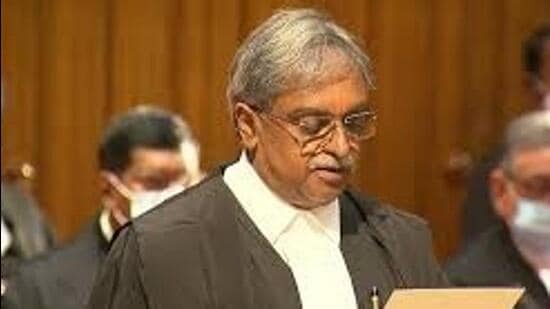
AI can aid judiciary but not replace judges: SC Justice Vikram Nath| India News
Justice Vikram Nath Urges AI Integration as Support, Not Substitute, for Human Judges in Courts
The evolving intersection of artificial intelligence and the judiciary continues to spark considerable discussion within legal circles. At a recent conclave on legal technology held in Chennai, Justice Vikram Nath offered a clear perspective on this critical subject, affirming that while AI presents powerful tools to assist courts, it must never replace the indispensable role of human judges. His remarks, reported by regional legal publications and local media, underscore a balanced view that embraces technological advancement without sacrificing the core tenets of justice.
Justice Nath’s address emphasized that the judicial process is far more intricate than mere data processing. It demands a profound understanding of human nature, societal norms, and the subtle nuances of intent and consequence that algorithms simply cannot grasp. The sentiment resonated deeply with legal practitioners and academics present, highlighting the importance of ethics, empathy, and human judgment in judicial decision-making.
For many, including a 12th-standard student trying to understand this complex topic, it helps to think of AI in courts like a super-smart assistant or a powerful search engine. Imagine you have a massive library of books—all the laws, previous court decisions, and legal documents. AI can swiftly read through all these books, find specific information, identify patterns, and even summarize large amounts of data much faster than any human ever could. This capability can significantly streamline legal research, organize case files, and help lawyers and judges prepare.
For example, AI systems can analyze vast quantities of past judgments to identify precedents relevant to a new case. They can help with document review, sifting through thousands of pages of evidence to find crucial details. Some AI tools can even assist in predicting the likely duration of a case or the potential outcomes based on historical data, which can improve court efficiency and resource allocation. This is where AI truly shines as an aid: by handling the laborious, repetitive tasks that consume valuable human time, allowing legal professionals to focus on higher-level analytical and interpretive work.
However, Justice Nath firmly stressed that this assistance does not equate to replacement. He explained that a judge’s role extends beyond applying legal statutes robotically. It involves weighing conflicting testimonies, assessing the credibility of witnesses, understanding the emotional context of a dispute, and interpreting laws in light of evolving societal values. These are inherently human tasks that require intuition, moral reasoning, and a deep sense of fairness—qualities that AI, in its current or foreseeable future state, lacks.
Consider a case involving intent. Did someone commit an act accidentally, or was it premeditated? An AI might analyze patterns of behavior, but it cannot truly comprehend the human psyche, the motivations driven by desperation, love, or malice. These are subjective elements that demand a judge’s human experience and moral compass to evaluate. Similarly, ethical dilemmas frequently arise in legal disputes where there isn’t a clear-cut answer, and a judge must apply principles of equity and justice, often making a decision that balances competing rights and values. This requires not just logic, but wisdom and empathy.
The concept of ‘nuance’ is central to Justice Nath’s argument. Legal cases are rarely black and white. They are filled with shades of gray, subtle interpretations, and unforeseen circumstances that defy algorithmic categorization. A human judge can understand the unspoken, the cultural context, the socio-economic factors influencing a situation—elements that are incredibly difficult, if not impossible, for a machine to process effectively. The sanctity of human judgment, with its inherent capacity for compassion and moral rectitude, ensures that justice remains humane and responsive to individual circumstances.
Moreover, the accountability aspect is crucial. If an AI system makes an error, who is responsible? The programmer? The data provider? A human judge, on the other hand, is accountable for their decisions and the rationale behind them, providing a fundamental pillar of trust in the judicial system. The public’s faith in justice relies on the belief that decisions are made by impartial, yet understanding, human beings.
Omni 360 News recognizes the significance of this discussion. As technology advances, these conversations become even more vital. The legal community, guided by experienced voices like Justice Vikram Nath, is carefully navigating how to harness the immense potential of AI without compromising the foundational principles of justice and human rights. It’s about finding the right balance: empowering judges with cutting-edge tools while safeguarding the irreplaceable human element at the heart of the legal system.
Key Takeaways:
- AI as an Aid: Justice Vikram Nath supports AI integration to enhance court efficiency through tasks like legal research, document review, and data analysis.
- Human Judgment is Paramount: He stresses that AI cannot replace judges due to the necessity of human judgment, ethics, empathy, and the understanding of nuance in judicial decision-making.
- Ethical and Nuanced Decision-Making: Judges bring irreplaceable qualities such as moral reasoning, intuition, and the capacity to interpret complex human situations and societal values, which are beyond AI’s current capabilities.
- Accountability and Trust: The human element ensures accountability and maintains public trust in the justice system, as judges are responsible for their decisions and their rationale.
- Balanced Approach: The goal is to leverage AI to empower legal professionals and streamline processes, without undermining the fundamental human core of dispensing justice.
The future of justice, as envisioned by Justice Nath and many legal experts, is one where technology and human wisdom work hand-in-hand, creating a more efficient, yet profoundly humane, legal system for all.