‘Airport samosas’, prepaid recharge: 7 ‘soft’ issues Raghav Chadha raised in Parliament| India News
Raghav Chadha’s Focus on Daily Life Issues Meets AAP’s Political Critique Key Takeaways
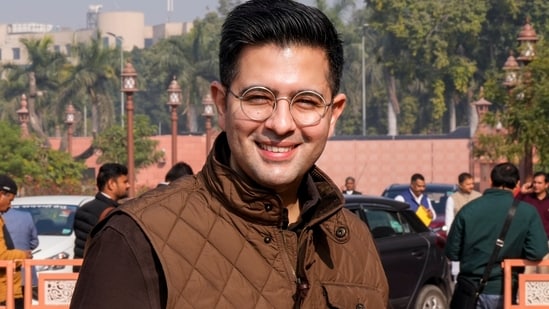
In the bustling arena of India’s Parliament, where grand policy debates often dominate headlines, a different kind of conversation has emerged, sparking a significant political ripple. Aam Aadmi Party (AAP) leader and Rajya Sabha Member, Raghav Chadha, has recently articulated concerns about being “silenced” within the parliamentary framework. His assertion centers on his consistent efforts to bring forth issues that, while seemingly minor to some, directly impact the everyday lives of ordinary citizens. This stance, however, has drawn a pointed counter-narrative from sections within his own party, with accusations suggesting he focuses on “soft PR.”
At Omni 360 News, we delve into the heart of this unfolding political discussion, examining the specific issues Chadha has championed and the broader implications of his party’s response. This isn’t just about an individual lawmaker; it’s about the very nature of representation and the priorities that shape legislative discourse in India.
Raghav Chadha’s parliamentary interventions have, indeed, touched upon matters often overlooked in high-level political dialogues. Consider his vocal protest against the exorbitant prices of food items at airports. He highlighted how a simple samosa, a common snack, could cost hundreds of rupees at airport terminals, making travel unnecessarily expensive for many. This isn’t a complex economic policy, but a tangible pain point for travelers, a direct hit to their wallets. His arguments, reported widely by outlets like The Print and Times Now, resonated with many who felt similar frustrations.
Another significant concern raised by Chadha involves the issue of prepaid mobile recharge validity. He questioned the practice of telecom companies offering plans with validity periods shorter than a full month, effectively forcing consumers to recharge more frequently. This seemingly small detail affects millions of mobile phone users across the country, particularly those in lower-income brackets who rely on precise budgeting. This was not just a passing comment, but a detailed point brought to national attention, as corroborated by reports from Business Today and Moneycontrol.
Beyond these specific examples, Chadha has also voiced concerns about the Goods and Services Tax (GST) imposed on residential rent, which impacts tenants, and the broader challenges faced by the common person in the banking sector. He has also raised the issue of increased airfare prices, a burden on common travelers, and even the controversial “Platform Fees” charged by online food delivery apps, which add an extra cost to every meal ordered. These are not abstract policy debates; they are the everyday realities that shape household budgets and consumer experiences. His interventions, consistently highlighted by various news platforms including CNBC TV18 and Livemint for economic issues, underscore a lawmaker’s attempt to focus on micro-economic pressures.
The argument put forth by Raghav Chadha is straightforward: if Parliament, the highest legislative body, does not discuss the small but persistent problems faced by its citizens, then what is its true purpose? He maintains that these are not trivial matters, but rather fundamental aspects of the cost of living and quality of life that warrant legislative attention and potential solutions. From this perspective, being “silenced” on such issues signifies a disconnect between parliamentary priorities and the public’s daily struggles.
However, the Aam Aadmi Party, of which Chadha is a prominent member, has presented a different viewpoint. Sections within the party have reportedly characterized his focus on these consumer-centric issues as “soft PR.” This criticism, highlighted in reports from various national media outlets analyzing the internal party dynamics, suggests that perhaps a more substantial engagement with macro-economic policies, state-specific governance challenges, or broader national security matters might be expected from a parliamentarian. The implication is that while these issues are relatable, they might not represent the weightier policy battles that a national party expects its representatives to lead.
This contrasting perspective raises important questions about political strategy and public perception. Is a politician more effective by addressing the immediate, tangible grievances of the populace, or by engaging in complex policy formulation that might have a longer-term, but less immediately visible, impact? For a party like AAP, which rose to prominence on a platform of anti-corruption and delivering basic services, this internal debate is particularly poignant. It forces a re-evaluation of what constitutes effective parliamentary representation and what kind of advocacy best serves both the party’s image and the public’s interest.
The public, too, holds diverse opinions on this matter. Many citizens appreciate a representative who speaks to their immediate financial concerns, feeling that such an approach truly reflects their lived experience. For them, a debate about airport samosas or mobile recharge validity might feel far more relevant than an abstract discussion on national debt or international relations. Conversely, some might expect their lawmakers to focus on systemic reforms and large-scale legislative changes, viewing micro-issues as less impactful in the grand scheme of governance.
Key Takeaways:
* Focus on Daily Grievances: Raghav Chadha’s parliamentary efforts highlight issues like high airport food prices, mobile recharge validity, and GST on rent, directly affecting common citizens’ pockets.
* Claim of Being Silenced: Chadha asserts he has been sidelined for consistently raising these “people’s issues,” suggesting a disconnect in parliamentary priorities.
* AAP’s Counter-Narrative: Sections within AAP view this focus as “soft PR,” implying a preference for engagement on broader policy matters rather than seemingly smaller, consumer-centric concerns.
* Debate on Representation: The situation sparks a vital discussion on what constitutes effective parliamentary representation—addressing immediate daily struggles versus engaging in large-scale policy debates.
* Public Resonance: While some appreciate attention to micro-issues, others expect lawmakers to tackle more expansive legislative and economic challenges.
Ultimately, the discussion surrounding Raghav Chadha’s parliamentary approach and the AAP’s reaction reflects a deeper tension in modern politics: how best to serve constituents and maintain a relevant public profile. For Omni 360 News, it underscores the intricate dance between populist appeal and policy substance in the democratic process.