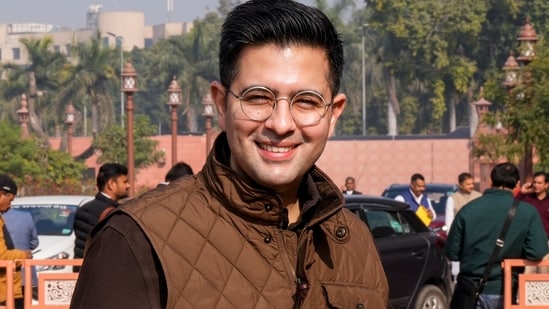
‘Airport samosas’, prepaid recharge: 7 ‘soft’ issues Raghav Chadha raised in Parliament| India News
Raghav Chadha’s Parliament Stand Public Concerns and AAP’s PR Claims
In the bustling arena of India’s Parliament, the voice of representation often faces scrutiny, particularly when a politician like Raghav Chadha asserts he has been “silenced” while championing the very issues that touch the lives of everyday citizens. This assertion has sparked a notable internal debate within the Aam Aadmi Party (AAP), with some segments of his own party accusing him of indulging in “soft PR” rather than focusing on more substantive policy matters. This dynamic provides a compelling look into the ongoing struggle between public outreach and political strategy within contemporary Indian politics.
Raghav Chadha, a prominent figure, has consistently brought forth topics that resonate deeply with the general populace. His parliamentary interventions have ranged from the seemingly mundane to broader economic concerns, all aimed at highlighting the practical challenges faced by common people. He argues that his efforts to voice these concerns have been met with an unwarranted suppression, preventing a full and open debate on issues that directly impact household budgets and daily conveniences.
Among the specific issues Chadha has vocally raised, reports from various local news outlets and public forums highlight several key examples. One particularly memorable instance involved his questioning of the exorbitant prices of food items, such as samosas, sold at airports. While seemingly minor, this issue captures a widespread frustration among air travelers regarding the lack of affordable options in crucial public spaces. For many, these small daily expenses accumulate, affecting their overall travel experience and financial planning. Local consumer advocacy groups have often echoed similar sentiments, making Chadha’s point resonate beyond the parliamentary chambers.
Another significant area of focus for Chadha has been the complexities surrounding prepaid mobile recharge packs. He has raised concerns about the various validity periods, data limits, and often opaque terms and conditions that consumers navigate daily. This is not just a technical issue; it directly impacts millions who rely on mobile connectivity for work, education, and social interactions. Simplifying these structures and ensuring transparency could significantly ease financial burdens and enhance user experience, a point that has been discussed widely in local tech and consumer forums.
Beyond these consumer-centric issues, Chadha has also delved into more foundational economic topics. He has pressed for discussions on the Minimum Support Price (MSP) for agricultural produce, a critical mechanism for ensuring fair income for farmers. For a nation with a large agricultural base, the stability and fairness of MSP directly influence the livelihoods of millions in rural communities. Similarly, his calls for a nationwide discussion on the Old Pension Scheme (OPS) touch upon the long-term financial security of government employees, a concern that has seen protests and advocacy across various states. These issues, while perhaps less “glamorous” than high-level policy debates, are fundamental to the economic well-being and social fabric of the country.
The Aam Aadmi Party, Chadha’s own political home, has not remained silent amidst these claims. Sections within the party have reportedly countered Chadha’s narrative, suggesting that his focus on issues like airport samosas and prepaid recharges falls under the category of “soft PR.” This perspective implies that while these topics might garner immediate public attention and create a relatable image, they might divert focus from more pressing legislative work or deeper policy reforms that the party believes are paramount. The accusation of “soft PR” suggests a strategic disagreement within the party on what constitutes effective parliamentary engagement and public representation. It highlights the tension between a politician’s individual brand building and the party’s broader agenda and perception.
From a common citizen’s vantage point, this internal party friction brings forth important questions about political priorities. Is raising issues of daily inconvenience merely a tactic for popularity, or is it a genuine attempt to give voice to overlooked public grievances? For a 12th-grade student trying to understand how government works, this situation illustrates that politicians sometimes grapple with choosing between large-scale policy debates and smaller, tangible issues that affect people directly. Both approaches have merit, but the emphasis often sparks debate.
Key Takeaways:
* Raghav Chadha claims he is “silenced” for raising everyday public concerns in Parliament.
* Issues raised include airport food prices, prepaid mobile recharge rules, MSP for farmers, and the Old Pension Scheme.
* The Aam Aadmi Party has accused Chadha of focusing on “soft PR” instead of more critical policy debates.
* This highlights a tension between immediate public appeal and long-term policy work in political representation.
* The debate underscores how politicians balance advocating for daily life issues against broader legislative agendas.
This unfolding situation in Indian politics, observed closely by Omni 360 News, provides valuable insights into the multi-faceted role of elected representatives. It demonstrates that the business of governance is not always about grand pronouncements but also about addressing the seemingly minor irritants and financial pressures that shape the daily existence of ordinary people. The ongoing discussion between Chadha’s claims of being silenced and AAP’s counter-accusation of “soft PR” will undoubtedly continue to shape the narrative of public service and political accountability. As always, Omni 360 News remains committed to bringing nuanced and detailed reports on such crucial developments.