Allahabad HC seeks UP official's explanation for not mentioning 'Hon'ble' for Union minister in FIR| India News
Allahabad High Court Questions Omission of ‘Hon’ble’ For Union Minister in FIR
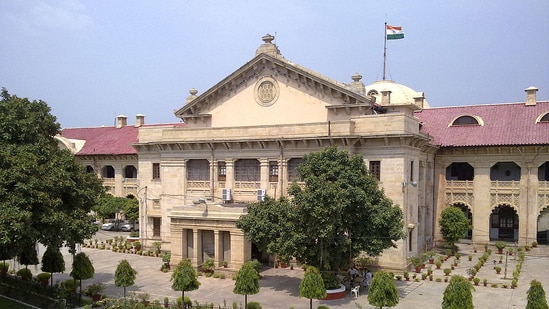
The Allahabad High Court has recently taken a significant step, directing Uttar Pradesh’s Additional Chief Secretary (Home) to provide a clear explanation regarding the absence of the honorific ‘Hon’ble’ when referring to a Union Minister in an official First Information Report (FIR). This directive, issued by Justice Raj Beer Singh, stems from a petition highlighting a procedural oversight in a matter concerning electoral conduct. This development, closely monitored by Omni 360 News, brings into focus the delicate balance between legal procedure and appropriate decorum for constitutional office holders.
Background of the Case
The core of the issue lies in an FIR lodged against Union Minister S.P.S. Baghel, who currently serves as the Minister of State for Health and Family Welfare. The complaint originates from alleged electoral malpractices during the 2019 Lok Sabha elections. A judicial magistrate had previously ordered the registration of this FIR based on a complaint filed by a defeated candidate, Yashveer Singh, who accused the minister of offences under various sections of the Indian Penal Code and the Representation of the People Act. These allegations involve issues such as voter intimidation and electoral bribery.
The specific point of contention for the High Court is that in the FIR filed against Mr. Baghel, the respectful prefix ‘Hon’ble’ was conspicuously missing from his title as a Union Minister. This is not merely a linguistic quibble but touches upon established protocols for addressing individuals holding high public office within legal documents.
The Court’s Expectation of Protocol
During the hearing, the High Court bench emphasized that while an individual might be subject to investigation, the office they hold demands a certain level of respect and adherence to protocol in official communications, including FIRs. The court’s order underlines the expectation that constitutional functionaries, irrespective of the nature of allegations against them, should be addressed with due deference in formal legal paperwork. Omitting ‘Hon’ble’ in such a context is viewed as a departure from accepted norms.
To explain this simply for a 12th standard student, an FIR is like the very first police report when someone suspects a crime has happened. Imagine a school principal is being investigated for something. Even if they are being investigated, official school documents would still refer to them as “Principal [Name]” out of respect for their position. The court is saying that for a Union Minister, the ‘Hon’ble’ title is like that “Principal” title – it signifies respect for the high office they hold, even when they are part of a police investigation. It’s about respecting the institution, not overlooking the investigation itself.
Implications for Official Procedure
The court has granted the Additional Chief Secretary (Home) two weeks to file a personal affidavit explaining the oversight and outlining measures to prevent such occurrences in the future. This order serves as a reminder to administrative and law enforcement agencies about maintaining procedural correctness and showing appropriate respect for constitutional posts. It reinforces that legal processes, while impartial, must also uphold the dignity of institutions.
This directive from the Allahabad High Court is more than just a procedural note; it highlights the judiciary’s role in upholding standards of official conduct and respect for public offices within the legal framework. For Omni 360 News readers, this incident underscores the meticulous attention to detail required in governance and the consistent application of established protocols.
Key Takeaways:
* The Allahabad High Court has ordered an explanation for the omission of ‘Hon’ble’ for a Union Minister in an FIR.
* The FIR concerns Union Minister S.P.S. Baghel and allegations from the 2019 Lok Sabha elections.
* The court emphasizes the importance of protocol and respect for constitutional office holders in official documents.
* Uttar Pradesh’s Additional Chief Secretary (Home) must file a personal affidavit explaining the lapse.
* The ruling underscores the judiciary’s role in upholding procedural decorum and institutional respect.