
Anti-Maoist forces to be deployed for regular policing in Chhattisgarh’s Bastar| India News
Bastar’s Evolving Security Landscape As Extremism Declines
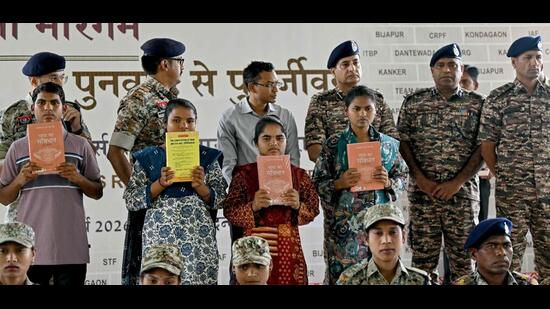
The dense forests and rugged terrains of Chhattisgarh’s Bastar region, long synonymous with the grim shadow of Left-wing extremism (LWE), are witnessing a profound shift. In a development that signals a significant victory in India’s protracted battle against Maoist insurgency, elite anti-Maoist forces, including the formidable CoBRA unit, are being progressively redeployed from their conventional combat roles to undertake regular policing duties. This pivotal move follows a marked decline in extremist activities across the nation, a sentiment echoed by Union Home Minister Amit Shah, who recently informed Parliament that India is steadily moving towards becoming “Maoist-free.”
For decades, Bastar, encompassing districts like Sukma, Bijapur, and Narayanpur, has been at the epicenter of Maoist insurgency. The region’s challenging geography, coupled with socio-economic disparities, provided fertile ground for extremist groups to entrench themselves, often isolating local communities from mainstream development and governance. The presence of armed Maoist cadres meant constant threats to life, property, and any governmental initiative aimed at progress. Roads were unsafe, schools remained dilapidated, and healthcare facilities were non-existent in many remote pockets. The primary focus of security forces was often area domination, counter-insurgency operations, and protecting vital infrastructure from sabotage.
The current strategic pivot marks a profound change from this entrenched reality. Instead of relentless jungle warfare, these highly trained personnel will now concentrate on maintaining general law and order, fostering community relations, and safeguarding ongoing development projects. The decision, as reported by various regional news outlets and confirmed by central government statements, reflects the substantial gains made by security forces through sustained operations, improved intelligence, and a dual approach of robust security action combined with accelerated development. Local news reports from Chhattisgarh frequently highlight the opening of new police camps in previously inaccessible areas, which in turn has allowed government services, roads, and communication networks to reach remote villages for the first time.
Union Home Minister Amit Shah’s declaration of India’s trajectory towards a “Maoist-free” status, made during a parliamentary session, underscores the government’s confidence in these achievements. While the term “Maoist-free” signifies the near-complete elimination of major extremist strongholds and a drastic reduction in violence and geographical influence, it also acknowledges the continued need for vigilance against residual elements and sleeper cells. Data from the Ministry of Home Affairs, often cited by local administration in Chhattisgarh, indicates a significant contraction of Maoist influence, now largely confined to a few pockets compared to its widespread presence a decade ago. This progress is a testament to the integrated approach adopted by central and state agencies.
For the residents of Bastar, this strategic redeployment carries immense promise. A shift in security focus means less overt militarization and a greater emphasis on civilian policing, which can help bridge the historical trust deficit between security forces and tribal communities. Local authorities in Bastar have expressed optimism that this new phase will further accelerate development projects – ranging from road construction and irrigation to establishing schools and health centers – which were previously hampered by extremist threats. When security forces are actively engaged in civil action, assisting in medical camps, or ensuring the safe passage of construction materials, it fosters a sense of security and belonging among the populace. Local police officials, as observed by Omni 360 News reporters on the ground, often speak of this as a crucial step towards “winning hearts and minds.”
However, the transition is not without its complexities. While the large-scale armed confrontations have dwindled, the threat of improvised explosive devices (IEDs) and sporadic acts of violence from fragmented groups remains. The forces now tasked with regular policing must adapt their highly specialized combat skills to a more nuanced role of community engagement, intelligence gathering through civilian sources, and crime prevention. Training programs are reportedly being adjusted to prepare these units for their new responsibilities, which demand different sensitivities and approaches than counter-insurgency operations. The challenge lies in ensuring that the peace achieved is sustainable and that development truly reaches the last person in the remotest village, preventing any resurgence of extremist ideology.
The changing landscape in Bastar signifies a broader narrative of resilience and progress in regions once plagued by LWE. It is a story of how persistent efforts in security and development can transform the lives of millions. As India moves forward, the focus will undoubtedly be on solidifying these gains, ensuring that the fruits of peace and progress are equitably distributed, and nurturing an environment where extremism finds no fertile ground to sprout again. The redeployment of anti-Maoist forces for community-centric policing is not merely a tactical change; it is a symbolic step towards healing historical wounds and integrating long-marginalized populations into the national mainstream.
Key Takeaways:
* Strategic Shift Anti-Maoist forces, including CoBRA, are transitioning from combat to regular policing duties in Chhattisgarh’s Bastar region.
* Decline in Extremism This move underscores a significant reduction in Left-wing extremist (Maoist) activity across India.
* Ministerial Confirmation Union Home Minister Amit Shah stated in Parliament that India is nearing “Maoist-free” status, highlighting successful operations.
* Focus on Development and Law Enforcement Redeployed forces will now prioritize maintaining public order, protecting infrastructure projects, and fostering community trust.
* Impact on Bastar The shift promises to accelerate development, improve access to government services, and enhance overall security for local residents.
* Lingering Challenges Vigilance against residual extremist elements and ensuring sustainable development remain crucial for long-term peace.