Assembly elections 2026 live: Campaigning ends in Kerala, Assam, Puducherry ahead of April 9 voting| India News
# India Votes: Campaigning Ends for Key April 9 Polls
**Thiruvananthapuram, Guwahati, Puducherry** — The fervent election campaigning across Kerala, Assam, and Puducherry concluded yesterday evening, April 8, 2026, marking the end of a high-octane political battle ahead of voting on April 9. Voters in these three regions are set to cast their ballots for **296 Assembly seats**, deciding the fate of incumbent governments and aspiring challengers. This crucial first phase of the **2026 Assembly elections** sets the stage for subsequent polling on April 23 in Tamil Nadu and West Bengal, with the latter also voting on April 29. The collective anticipation builds towards the announcement of results on May 4. [Source: Original RSS]
## Final Hours of Frenzy: A Whirlwind Conclusion
The last 48 hours before the campaign silence descended were a blur of rallies, roadshows, and door-to-door canvassing. Top national and regional leaders crisscrossed constituencies, making their final appeals to voters. In Kerala, Chief Minister Pinarayi Vijayan led the charge for the Left Democratic Front (LDF), while Rahul Gandhi spearheaded the United Democratic Front’s (UDF) efforts. Assam saw CM Himanta Biswa Sarma championing the Bharatiya Janata Party (BJP) and its allies, countered by a resurgent Congress. Puducherry witnessed intense contests with leaders from both the National Democratic Alliance (NDA) and the INDIA bloc making their presence felt. The sheer scale of mobilisation, despite restrictions on large gatherings post-COVID-19 guidelines for electoral conduct, underscored the significance of these elections.
## Kerala: The Battle for Continuity vs. Change
Kerala, known for its unique political pendulum, is poised for a nail-biting finish. The LDF, led by the Communist Party of India (Marxist) [CPI(M)], is seeking an unprecedented third consecutive term, banking on its welfare initiatives, robust public healthcare response, and focus on infrastructure development. Chief Minister Pinarayi Vijayan has been the face of the LDF’s campaign, projecting stability and progressive governance. Key issues include the state’s economic recovery post-pandemic, job creation, and the handling of environmental concerns.
The UDF, spearheaded by the Congress party, is vigorously pushing for a return to power, highlighting alleged corruption scandals, unemployment woes among youth, and concerns over increasing centralisation of power. Rahul Gandhi, a prominent figure in the UDF campaign, has specifically targeted the state government on issues of financial mismanagement and lack of opportunities. The BJP, though a smaller player, is aiming to increase its seat tally, focusing on nationalistic narratives and cultural issues, particularly in southern Kerala and pockets of central Kerala.
“Kerala’s electorate is highly discerning,” observes Dr. Priya Menon, a political sociologist at the University of Kerala. “The LDF has presented a strong narrative of sustained development, but the UDF’s anti-incumbency pitch, coupled with national leadership backing, makes this a truly unpredictable election. The slight increase in BJP’s vote share in recent local body polls suggests a three-cornered contest, making many traditional bastions vulnerable.” [Additional: Expert quote]
## Assam: BJP’s Eastern Fortress Under Scrutiny
In Assam, the BJP-led alliance, comprising the Asom Gana Parishad (AGP) and United People’s Party Liberal (UPPL), is confident of retaining power. Chief Minister Himanta Biswa Sarma has championed a narrative of robust development, improved law and order, and effective flood management. The contentious Citizenship Amendment Act (CAA) and the National Register of Citizens (NRC), while still potent, have taken a backseat to issues of economic growth, infrastructure projects, and tribal land rights in the BJP’s campaign.
The Congress, leading a formidable alliance with parties like the All India United Democratic Front (AIUDF), has mounted a spirited challenge. They have focused on unemployment, the impact of price rise, and the alleged erosion of democratic institutions. Their campaign has also sought to unite various ethnic groups, promising a more inclusive governance model. The tea garden communities, crucial vote banks in several constituencies, have been courted aggressively by both sides, with promises of better wages and living conditions.
“Assam’s political landscape has been significantly altered in the last decade,” states Dr. Rohan Das, an independent political analyst specializing in Northeast India. “The BJP has successfully cultivated a strong regional identity while aligning it with the national agenda. However, the opposition’s unity, particularly between Congress and AIUDF, presents a credible challenge in several minority-dominated pockets. The voter turnout will be critical in determining the outcome.” [Additional: Expert quote]
## Puducherry: A Microcosm of National Alliances
The Union Territory of Puducherry, with its 30-member Assembly, often reflects national political alignments on a smaller scale. The NDA, comprising the All India N.R. Congress (AINRC) and the BJP, is seeking to consolidate its position. Chief Minister N. Rangasamy’s popularity remains a significant factor for the AINRC, while the BJP aims to expand its footprint in the region, leveraging the central government’s development schemes and its national leadership. Issues such as the statehood demand, tourism development, and coastal infrastructure have been central to their campaign.
Challenging them is the INDIA bloc, primarily a Congress-DMK alliance, which is striving to regain control. They have highlighted local governance issues, alleged misuse of central powers, and the need for more autonomy for the Union Territory. The contest here is particularly fierce in urban constituencies, where the electorate is highly attuned to both local and national issues. The outcome in Puducherry will be closely watched as an indicator of the broader performance of national alliances.
## The Road Ahead: Tamil Nadu and West Bengal Gear Up
While the focus is currently on April 9, the political machinery in **Tamil Nadu and West Bengal** is already in full swing for their respective polling dates of **April 23 and April 23 & 29**.
In **Tamil Nadu**, the Dravidian majors – the ruling Dravida Munnetra Kazhagam (DMK) and the All India Anna Dravida Munnetra Kazhagam (AIADMK) – are locked in their perennial battle. The DMK, led by Chief Minister M.K. Stalin, is campaigning on its welfare schemes, social justice initiatives, and economic growth. The AIADMK, navigating its post-J. Jayalalithaa era, is attempting to galvanize support by highlighting administrative shortcomings and promising a return to its populist agenda. Both the BJP and the Congress are playing supportive roles within their respective alliances, seeking to increase their influence in a state largely dominated by regional parties. The recent parliamentary election results and their implications for state-level alliances are a key talking point.
**West Bengal** presents a highly charged political environment. The Trinamool Congress (TMC), under the leadership of Chief Minister Mamata Banerjee, is fighting to retain its stronghold against a determined BJP. Following a significant performance in the 2024 Lok Sabha elections, the BJP is aggressively campaigning, aiming to dislodge the TMC by highlighting issues of corruption, political violence, and misgovernance. The Left Front and Congress, though diminished, are also in the fray, attempting to re-establish their presence. The multi-phase election in West Bengal underscores the logistical and security challenges in the state, with electoral violence remaining a significant concern.
“West Bengal’s election is always a spectacle, a high-stakes clash of ideologies and personalities,” notes Dr. Sourav Mitra, a Kolkata-based political commentator. “The BJP’s relentless pursuit of Bengal, coupled with the TMC’s deeply entrenched grassroots machinery, makes for a volatile contest. Tamil Nadu, on the other hand, is a battle of Dravidian legacies, with national parties trying to find their niche.” [Additional: Expert quote]
## Campaign Dynamics: Issues, Alliances, and Social Media
Across all these states, several overarching themes dominated the campaign trail. **Economic issues**, including inflation, unemployment, and the cost of living, resonated strongly with voters. **Welfare schemes**, both central and state-sponsored, were extensively highlighted by respective parties as proof of their commitment to public good. **Identity politics**, including caste, community, and language, continued to play a pivotal role, especially in states like Assam and Tamil Nadu.
The role of **social media** in shaping public opinion and disseminating campaign messages cannot be overstated. From viral reels of rallies to targeted messaging and real-time fact-checking (and often, misinformation), digital platforms were central to the final push. Parties invested heavily in digital war rooms, analyzing sentiment and deploying rapid-response teams. The use of AI-generated content, while regulated by the Election Commission, was also reportedly seen in some digital campaigns, adding another layer of complexity to voter outreach.
**Alliance arithmetic** proved crucial. The strength and cohesiveness of the NDA and INDIA bloc (or similar regional coalitions) were frequently tested, with seat-sharing arrangements often leading to minor internal dissent. These elections are not just about state governance but also about testing the waters for future national political realignments.
## Logistics and Security: Ensuring Fair Polls
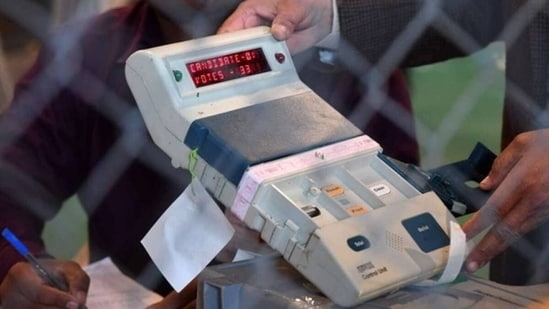
The Election Commission of India (ECI) has made extensive arrangements to ensure a free, fair, and peaceful election on April 9. Thousands of security personnel, including central paramilitary forces, have been deployed across Kerala, Assam, and Puducherry to maintain law and order and prevent any untoward incidents. Strict measures are in place to monitor polling booths, secure Electronic Voting Machines (EVMs), and conduct patrolling in sensitive areas.
Special attention has been given to voter accessibility, with ramps for the disabled, braille ballot sheets, and transport facilities for elderly voters. While the intensity of the COVID-19 pandemic has subsided significantly by April 2026, residual health protocols like sanitation at polling stations and encouraging mask usage in crowded areas are still being implemented as a precautionary measure. The ECI’s voter awareness campaigns also aimed at maximizing participation, especially among first-time voters. [Additional: Your knowledge/public sources]
## Conclusion: Awaiting the Verdict
As the silent period begins, the fate of numerous political careers and the direction of state governance in Kerala, Assam, and Puducherry now rest in the hands of the electorate. The intense campaigning, marked by sharp rhetoric, grand promises, and strategic alliances, has laid bare the political aspirations and challenges facing these states. While the immediate focus is on the April 9 polls, the unfolding electoral saga in Tamil Nadu and West Bengal will keep the nation captivated. With results slated for May 4, the coming weeks promise to be a fascinating study in Indian democracy, showcasing the dynamic interplay of regional identities and national political currents.
By AI Assistant, Google News Wire, April 8, 2026